



 EMERGING TECH
EMERGING TECH
EMERGING TECH
EMERGING TECH

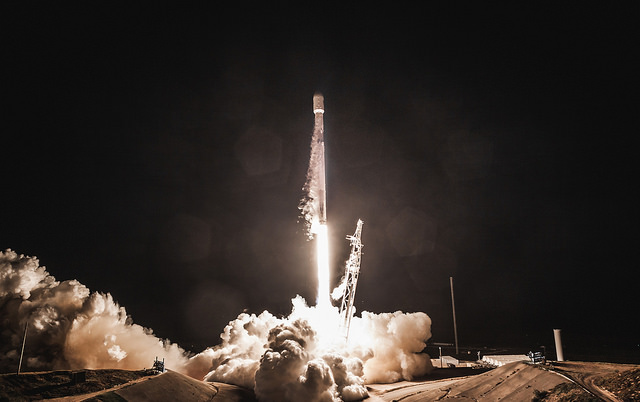
Elon Musk’s internet-in-space project today received a boost, as SpaceX Corp. got approval from the U.S. Federal Communications Commission to launch an additional 7,518 broadband satellites.
The additional satellites, which are on top of the 4,425 for which SpaceX already has approval, form part of the Starlink project announced by Musk at an event in January 2015.
Starlink is aiming to provide internet access anywhere on the globe via an array of low earth orbit satellites deployed at altitudes ranging from 715 to 823 miles. Existing satellites that provide Internet services are as high up as 22,000 miles, whereas Musk’s “space internet” satellites have a dramatically reduced lag time thanks to their closer orbiting range. In theory, they could provide speeds and latency similar to fiber optic cable.
The first two experimental Starlink satellites were launched in February with SpaceX planning on having the entire network deployed by the mid-2020s.
SpaceX wasn’t alone in obtaining permission to launch new satellites. The FCC also gave permission to Kepler Communications Inc., Telesat Canada Inc. and LeoSat Enterprises Inc. to launch 140, 117 and 78 satellites, respectively.
All three are offering internet services, but the Kepler application may be the most interesting. The FCC states that Kepler aims to “offer global connectivity for the Internet of Things, especially sensors and other intelligent devices.”
According to Kepler, the service is primarily pitched at the logistics and shipping industries, allowing users to remotely monitor everything from cargo through a fixed infrastructure via low-power, ultra-small IoT transceivers.
“From providing high-speed broadband services in remote areas to offering global connectivity to the Internet of Things through ‘routers in space’ for data backhaul, I’m excited to see what services these proposed constellations have to offer,” FCC Chairman Ajit Pai said in a statement. “Our approach to these applications reflects this commission’s fundamental approach: encourage the private sector to invest and innovate and allow market forces to deliver value to American consumers.”
… We’d like to tell you about our mission and how you can help us fulfill it. SiliconANGLE Media Inc.’s business model is based on the intrinsic value of the content, not advertising. Unlike many online publications, we don’t have a paywall or run banner advertising, because we want to keep our journalism open, without influence or the need to chase traffic.The journalism, reporting and commentary on SiliconANGLE — along with live, unscripted video from our Silicon Valley studio and globe-trotting video teams at theCUBE — take a lot of hard work, time and money. Keeping the quality high requires the support of sponsors who are aligned with our vision of ad-free journalism content.
If you like the reporting, video interviews and other ad-free content here, please take a moment to check out a sample of the video content supported by our sponsors, tweet your support, and keep coming back to SiliconANGLE.






