



 INFRA
INFRA
INFRA
INFRA
INFRA

Manchester was a boomtown of the Industrial Revolution, leading the world into the era of factories and urbanization. So it is fitting that the city is now one of the top U.K. centers for technological transformation.
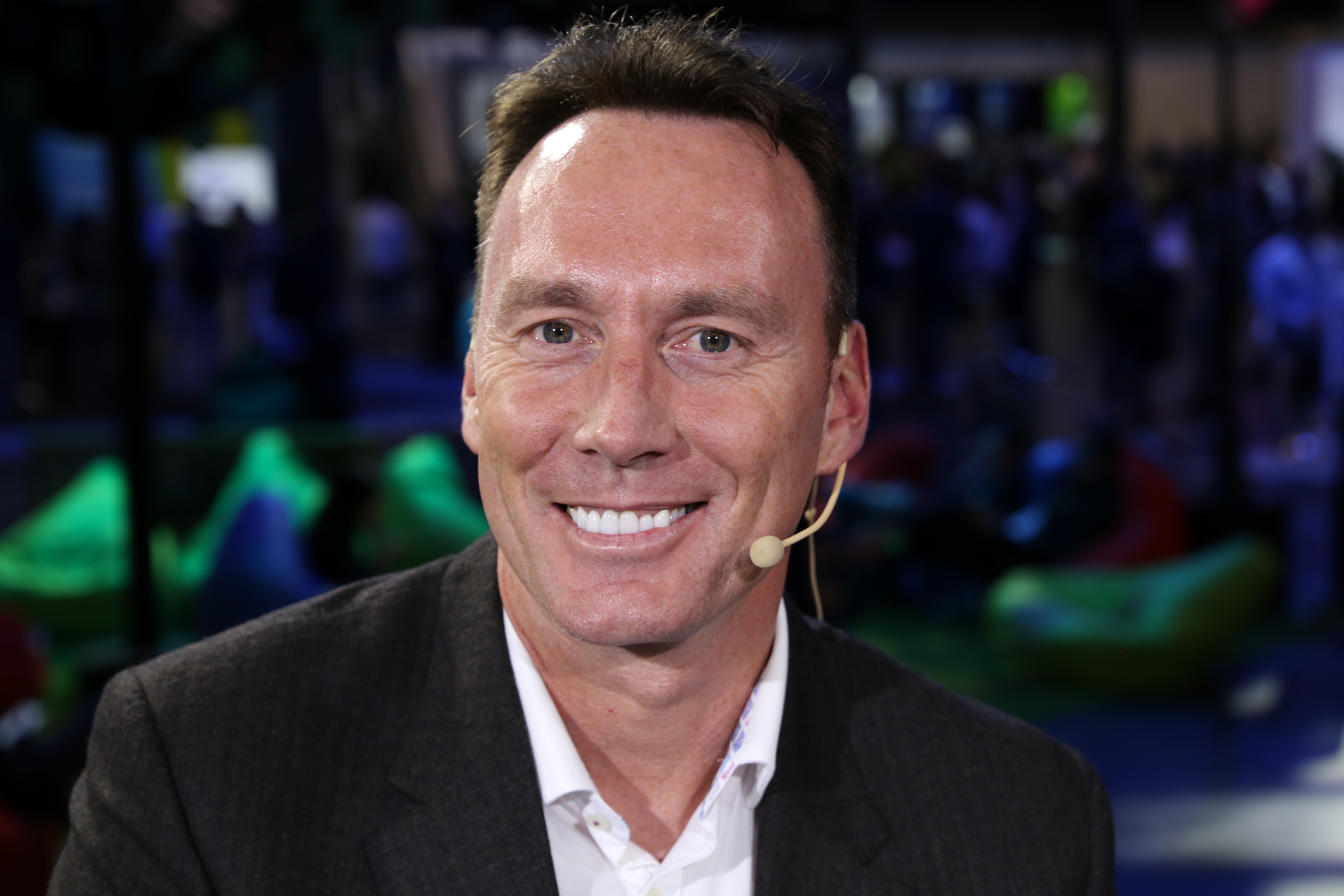
“Outside of London, Manchester is the place that people want to be,” said Bob Brown, (pictured), chief information officer of the Manchester City Council. “We’ve got big brands. Google is there. Amazon just launched new services, bringing new, high-quality digital jobs into the area. We’ve got Microsoft. … This is an enormous digital economy that’s constantly evolving.”
Brown spoke with Stu Miniman (@stu), host of theCUBE, SiliconANGLE Media’s mobile livestreaming studio, and guest host Joep Piscaer (@jpiscaer), technical pathfinder, cloud and infrastructure at Jumbo Supermarkten and blogger at VirtualLifestyle.nl, during the .NEXT Conference in London. They discussed the role of the chief information officer within government and how Brown is leading Manchester City Council’s digital transformation process. (* Disclosure below.)
Brown took the helm of Manchester City Council’s information technologies department three years ago, and with typical British understatement he described the services when he arrived as “[not] quite where they needed to be.” A fundamental change was required in how technology functioned within the department. His first step was to invest in people: recruiting new talent and up-skilling existing employees.
Once the transformation journey started, it progressed rapidly. The transition to hyperconverged infrastructure was completed in a little over six months, and Brown is already experiencing benefits. “Our fundamental business case was around our ability to be able to clearly change our whole dynamics around resilience, but also reduce our carbon footprint, reduce the number of servers that we have to power so our power consumption has changed. We’re already delivering on some of those business case values in a very, very short space of time,” he said.
Manchester City Council employees 7,500 people and oversees critical services for an inner city of 600,000 people within the greater metropolis’ population of nearly 3 million. “Our business is 24/7,” Brown said, highlighting the critical nature of the services provided by his department. “In my world, if certain services aren’t available, we’re not helping some of the most vulnerable people. … We’re dealing with, truly, the lives of the people who use our services. … Technology, for me, is an enabling function that has got to be always available.”
The company’s reputation for reliability was key to Brown’s choice of Nutanix hyperconverged infrastructure. “The core infrastructure is our foundation level on which we build our reputation, we build our services, we build the reliance that we have as an organization. Our use of Nutanix as a technology enables us to be able to build greater levels of resilience. … If we do have a failure, the reality is that our user base will likely never know it’s happened,” he said.
Looking to the future, Brown envisions a scenario where predictive analytics allow services to be provided proactively, helping prevent events that are costly both in emotional stress and money. He cites the example of healthcare, where potential problems can be recognized early to prevent patients reaching the stage where they require emergency care.
Brown calls upon other governmental entities and partner networking to help identify common issues and smooth the transformation process. “I’d like more local authorities to be [sharing their challenges], but it’s true to say today that I’m probably one of, if not the only, local authority doing that. And I’d like our partners to be pushing us … [and] to be able to recognize how they can collaborate to bring solutions through to us,” he concluded.
Watch the complete video interview below, and be sure to check out more of SiliconANGLE’s and theCUBE’s coverage of the .NEXT Conference. (* Disclosure: TheCUBE is a paid media partner for the .NEXT Conference. Neither Nutanix Inc., the event sponsor, nor other sponsors have editorial control over content on theCUBE or SiliconANGLE.)
… We’d like to tell you about our mission and how you can help us fulfill it. SiliconANGLE Media Inc.’s business model is based on the intrinsic value of the content, not advertising. Unlike many online publications, we don’t have a paywall or run banner advertising, because we want to keep our journalism open, without influence or the need to chase traffic.The journalism, reporting and commentary on SiliconANGLE — along with live, unscripted video from our Silicon Valley studio and globe-trotting video teams at theCUBE — take a lot of hard work, time and money. Keeping the quality high requires the support of sponsors who are aligned with our vision of ad-free journalism content.
If you like the reporting, video interviews and other ad-free content here, please take a moment to check out a sample of the video content supported by our sponsors, tweet your support, and keep coming back to SiliconANGLE.






