



 EMERGING TECH
EMERGING TECH
EMERGING TECH
EMERGING TECH

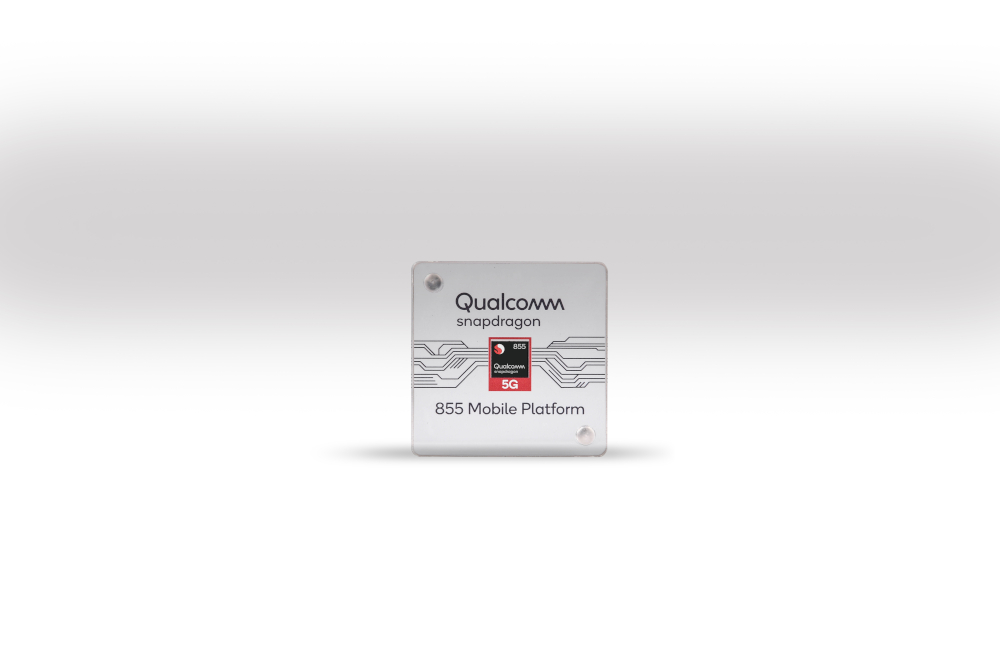
Qualcomm Inc., whose Snapdragon chip series powers most of the world’s high-end Android devices, has unveiled a new iteration of the processor and a novel fingerprint sensor that works with sound waves.
The company debuted the products at an event in Hawaii late Tuesday. The new Snapdragon 855 processor will take over as the company’s flagship mobile chip, bringing with it several major improvements. Chief among them is support for “multigigabit” download speeds on 5G networks.
The term 5G covers a collection of telecommunications technologies that are expected to enable connectivity 10 to 100 times faster than current carrier infrastructure. Several device makers, most notably Samsung Electronics Co. Ltd., have said that they will launch devices compatible with the networking standard next year. Many of these phones can be expected to feature the Snapdragon 855 under the hood.
On top of potentially significantly faster connectivity, the processor will also bring improved artificial intelligence support. Qualcomm said that the Snapdragon 855 will provide up to three times as much computing power for AI workloads as its current flagship chip.
Some of the extra performance comes from a new dedicated computer vision module included in the processor. Qualcomm didn’t share too many details about the technology, only that it’s designed to support the AI-enhanced photography and video capture features already available in some phones today. The most prominent example is Google LLC’s Pixel 3.
Lastly, Qualcomm said the Snapdragon 855 packs optimizations designed to make augmented reality apps and games run more smoothly. The company previously disclosed that the chip is based on a seven-nanometer architecture. This means its circuits are smaller than those in the current 10-nanometer Snapdragon 845, which should, among other things, translate into higher energy efficiency.
“The 855 is the first and only 5G smartphone platform and it substantially improves general, graphics and inference performance in the same thermal and power envelope,” said Patrick Moorhead, president and principal analyst at Moor Insights & Strategy. “That’s big.”
Qualcomm debuted the Snapdragon 855 alongside another new product that has managed to attract nearly as much industry attention: an ultrasonic fingerprint sensor. It works by generating sound waves at a frequency inaudible to humans and measuring the pressure of those waves when they bounce back.
The reader can be embedded directly below a device’s display, which should enable more phone makers to implement in-screen fingerprint sensing. The capability is currently offered by only a handful of high-device devices from Chinese manufacturers. Qualcomm said that its sensor is more advanced and can read the user’s fingerprint even if a phone’s display is obstructed by something like a screen protector.
With reporting from Robert Hof
… We’d like to tell you about our mission and how you can help us fulfill it. SiliconANGLE Media Inc.’s business model is based on the intrinsic value of the content, not advertising. Unlike many online publications, we don’t have a paywall or run banner advertising, because we want to keep our journalism open, without influence or the need to chase traffic.The journalism, reporting and commentary on SiliconANGLE — along with live, unscripted video from our Silicon Valley studio and globe-trotting video teams at theCUBE — take a lot of hard work, time and money. Keeping the quality high requires the support of sponsors who are aligned with our vision of ad-free journalism content.
If you like the reporting, video interviews and other ad-free content here, please take a moment to check out a sample of the video content supported by our sponsors, tweet your support, and keep coming back to SiliconANGLE.






