 INFRA
INFRA
INFRA
INFRA







INFRA

A number of computing customers lately are asking for a smarter network. This might mean programmability, transparency, multiple lanes for prioritized web traffic, etc. The question is, will software developers and administrators need to get smarter in order to use such networks? Don’t they have their hands full already refactoring applications and managing distributed cloud environments?
Developers these days simply want to consume the network in the same way they consume compute and storage. They don’t want the job of configuring it — at least not if that entails plunging deep below the application layer.
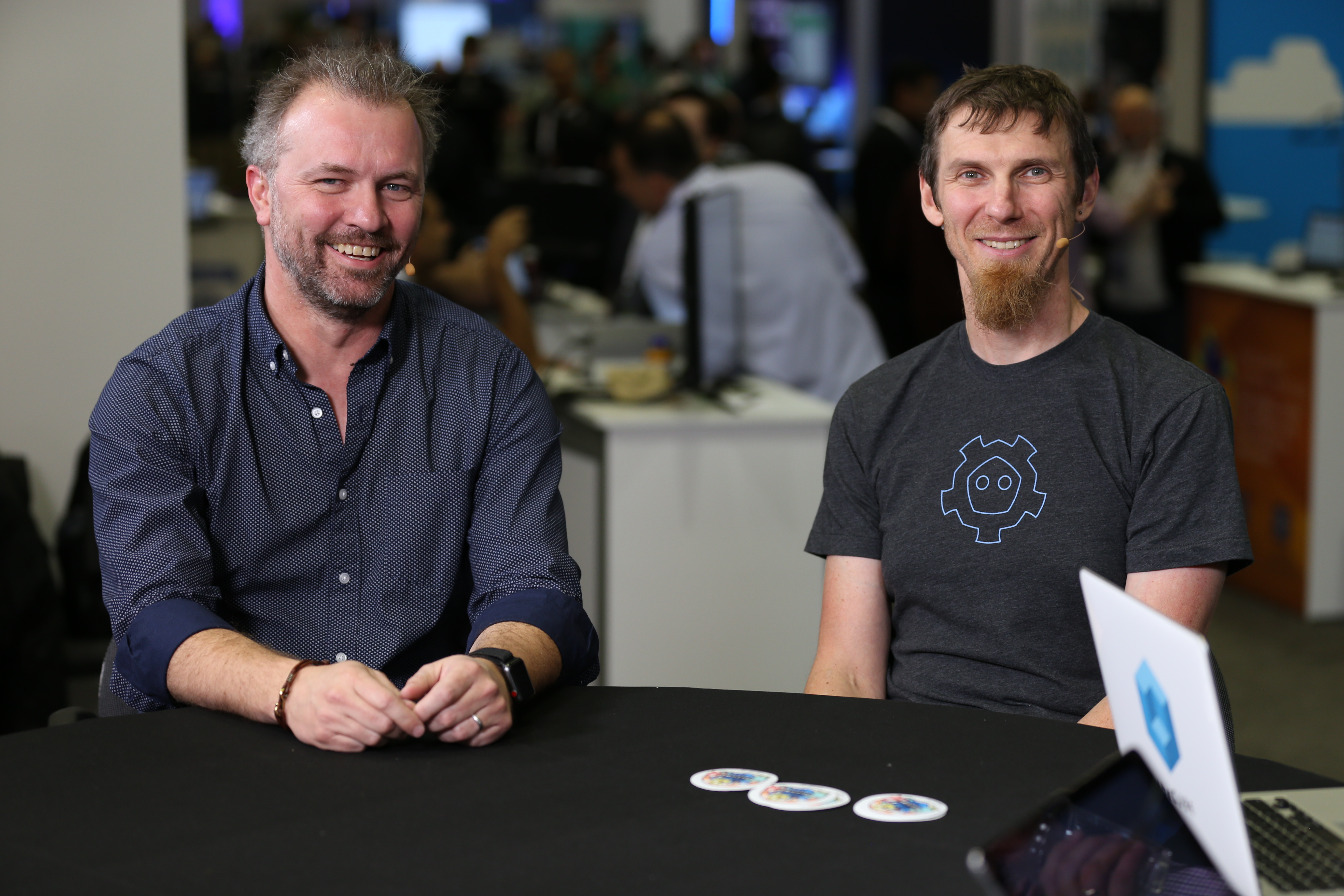
“The app is the thing that’s going to consume these things, and the app developer doesn’t necessarily want to worry about IP address and port numbers and firewall rules and things like that,” said Scott Sneddon (pictured, left), senior director and chief evangelist of cloud at Juniper Networks Inc.
Sneddon and Chris Wright (pictured, right), vice president and chief technology officer of Red Hat Inc., spoke with John Furrier (@furrier) and Stu Miniman (@stu), co-hosts of theCUBE, SiliconANGLE Media’s mobile livestreaming studio, during the KubeCon + CloudNativeCon event in Seattle, Washington. They discussed the companies’ efforts to make open-source networking technology consumable for enterprises with the help of Kubernetes. (* Disclosure below.)
Juniper has done a lot of work with the Cloud Native Computing Foundation and open-source container orchestration platform Kubernetes to abstract away that complexity. It also partners with Red Hat to make its open-source network technology Contrail easier for enterprises to use.
The complexities of scattered multicloud environments are making network connectivity especially tricky, according to Wright. “If you expect your application engineers to become experts in networking, you’re just setting everybody up with mis-set expectations,” he said.
Red Hat is simplifying Contrail for end users in much the same way it simplified Kubernetes, according to Sneddon.
Contrail itself relies on Kubernetes to implement network policies that use cloud-native primitives (basic interfaces or code segments). Then it translates those into the network primitives needed to move packets.
“What we’re doing with Contrail is providing a supported version of our open-source project,” Sneddon said. This ties in installation, tools, packaging “and most importantly a support model that lets a customer have the proverbial single throat to choke,” he said.
Users can call Red Hat for support and escalate to Juniper when necessary.
Watch the complete video interview below, and be sure to check out more of SiliconANGLE’s and theCUBE’s coverage of the KubeCon + CloudNativeCon event. (* Disclosure: Juniper Networks Inc. sponsored this segment of theCUBE. Neither Juniper Networks nor other sponsors have editorial control over content on theCUBE or SiliconANGLE.)
Support our mission to keep content open and free by engaging with theCUBE community. Join theCUBE’s Alumni Trust Network, where technology leaders connect, share intelligence and create opportunities.
Founded by tech visionaries John Furrier and Dave Vellante, SiliconANGLE Media has built a dynamic ecosystem of industry-leading digital media brands that reach 15+ million elite tech professionals. Our new proprietary theCUBE AI Video Cloud is breaking ground in audience interaction, leveraging theCUBEai.com neural network to help technology companies make data-driven decisions and stay at the forefront of industry conversations.





