 CLOUD
CLOUD
CLOUD
CLOUD







CLOUD

Of the unique perks in Amazon Web Services Inc.’s Marketplace is a wealth of service options for customers leveraging the power of cloud computing. But too much flexibility can sometimes work against businesses still discovering their cloud needs and building processes from the ground up.
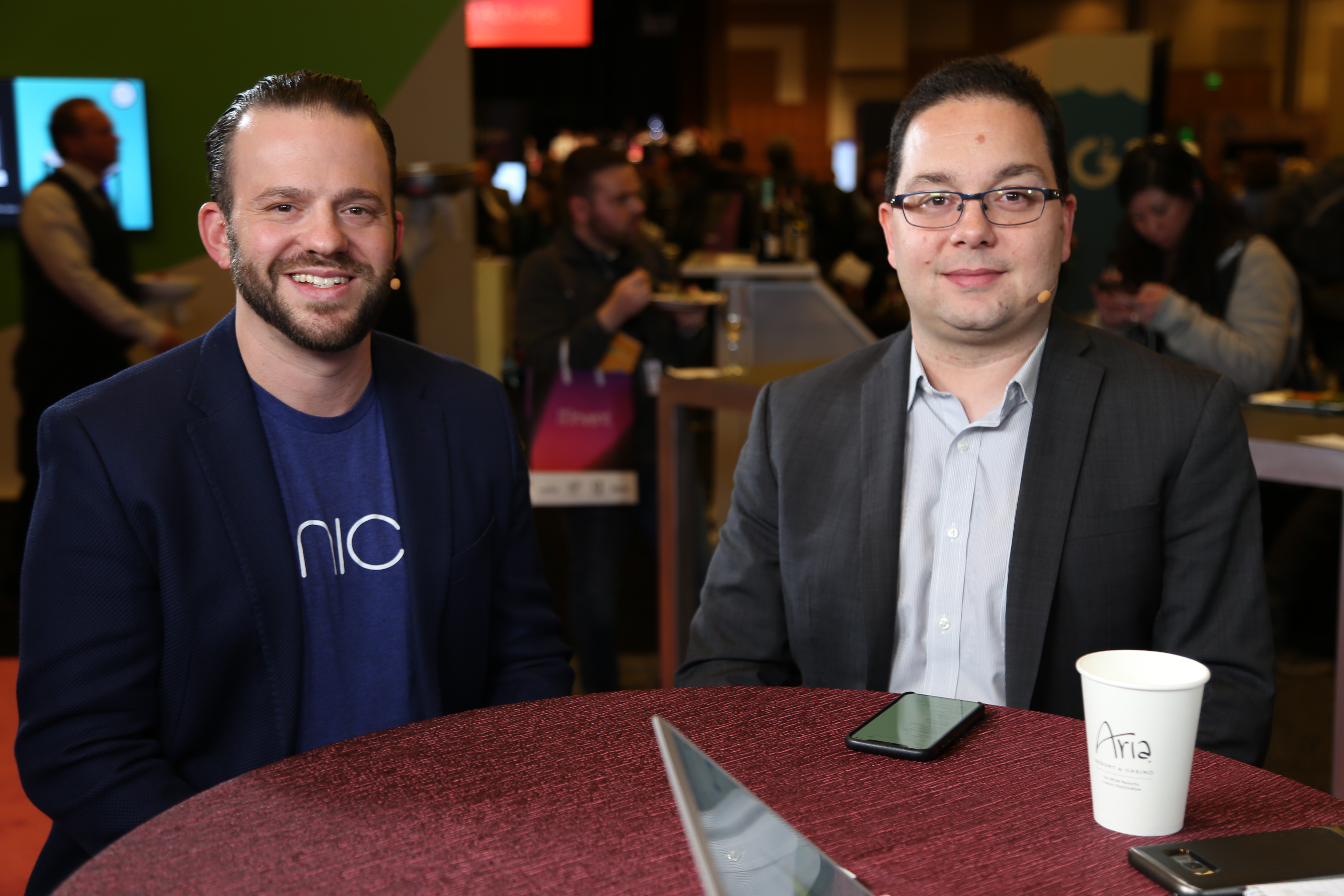
To help untangle these complexities, Tolga Tarhan (pictured, right), chief technology officer of Onica Group LLC, and Jeremy Bendat (pictured, left), director of business development and partnerships at Onica, provide resources that guide AWS customers in managing new tools and embracing habits better suited to the cloud.
Bendat and Tarhan spoke with Jeff Frick (@JeffFrick), host of theCUBE, SiliconANGLE Media’s mobile livestreaming studio, during the AWS Marketplace and Service Catalog Experience Hub event in Las Vegas. They discussed some common cloud pitfalls and how Onica is enabling a more efficient use of the platform for AWS customers. (* Disclosure below.)
[Editor’s note: The following answers have been condensed for clarity.]
What are some things [you do] when you first engage with a customer? How [do] they need to think about cloud differently?
Tarhan: It’s important to not think of AWS as a data center; embrace the cloud for cloud. There’s a common saying about pets versus cattle. You’ve got pets that you love and you care for, and you’ve got cattle for a purpose. In the cloud, we want that latter model, to be able to spin up an instance, do something, have it go away when we’re done, and be responsive to our demand.
In the last couple of years in the cloud, we’re getting even higher density, more flexible deployments, quicker scale-up times. It’s important not just think of [the cloud] as a place to park some [virtual machines].
I would imagine for a lot of people it’s really hard to change behavior and actually turn things off when they’re not being used.
Bendat: That security conversation, that optimization conversation, overall automation of the environment, that conversation is happening the first time we sit down with a customer. We want them to start with good habits.
Tarhan: It’s that friendly consumption model — use what you need, pay for what you use, no long-term lock in. That applies not just to AWS but to the ecosystem they’ve built, so now you’re seeing [software-as-a-service] vendors [and] partner ecosystem folks adopt that same model.
From a customer point of view, it’s great to have options, but how am I supposed to know where to go? What’s the biggest foil when people are getting started?
Tarhan: There’s 100 other services that look like they can help you. Our job is to help identify the right ones for your requirements. The flexibility that AWS provides is part of the value, but it also means you have to be responsible about how to use it. Go into your cloud journey with a DevOps mindset; think about how you’re going to deliver code in an automated way early in the process. If you spin up a giant environment manually and haphazardly, that’s when [you get] cost runaway.
Bendat: Don’t leave your instances on and walk away, because you do pay for what you use. We’re building that automation to turn things off if they’re not being used or have guardrails built in for a customer that [are] enabling access for a team of people that haven’t had access to their own infrastructure previously.
[What’s] your take on working with Amazon as a partner. You guys are different than some of the solution providers. As a services company, how are they to work with?
Bendat: We recently became one of the launch partners on the consulting side that’s able to not only recommend, but also resell products from the AWS Marketplace. We get early access or sometimes even private pricing access to Marketplace items and can offer those to customers. We’ve actually set up direct partnerships with some of the SaaS providers that offer their services on Marketplace to help to strategically drop in or offer that within a Service Catalog to our end customers. It fast tracks that procurement cycle. The Marketplace opens up a ton of doors for these customers.
Watch the complete video interview below, and be sure to check out more of SiliconANGLE’s and theCUBE’s coverage of the AWS Marketplace and Service Catalog Experience Hub event. (* Disclosure: TheCUBE is a paid media partner for the AWS Marketplace and Service Catalog Experience Hub event. Neither Amazon Web Services Inc., the event sponsor, nor other sponsors have editorial control over content on theCUBE or SiliconANGLE.)
Support our mission to keep content open and free by engaging with theCUBE community. Join theCUBE’s Alumni Trust Network, where technology leaders connect, share intelligence and create opportunities.
Founded by tech visionaries John Furrier and Dave Vellante, SiliconANGLE Media has built a dynamic ecosystem of industry-leading digital media brands that reach 15+ million elite tech professionals. Our new proprietary theCUBE AI Video Cloud is breaking ground in audience interaction, leveraging theCUBEai.com neural network to help technology companies make data-driven decisions and stay at the forefront of industry conversations.





