



 CLOUD
CLOUD
CLOUD
CLOUD
CLOUD

Historically, information technology teams have depended on siloed tools, including those for security. As such, security has been an afterthought, and it can be slow to deploy and cumbersome to manage. On the other hand, “born in the cloud” types of companies have a security-first principle already in mind, viewing security as another data source to be managed in a holistic way.
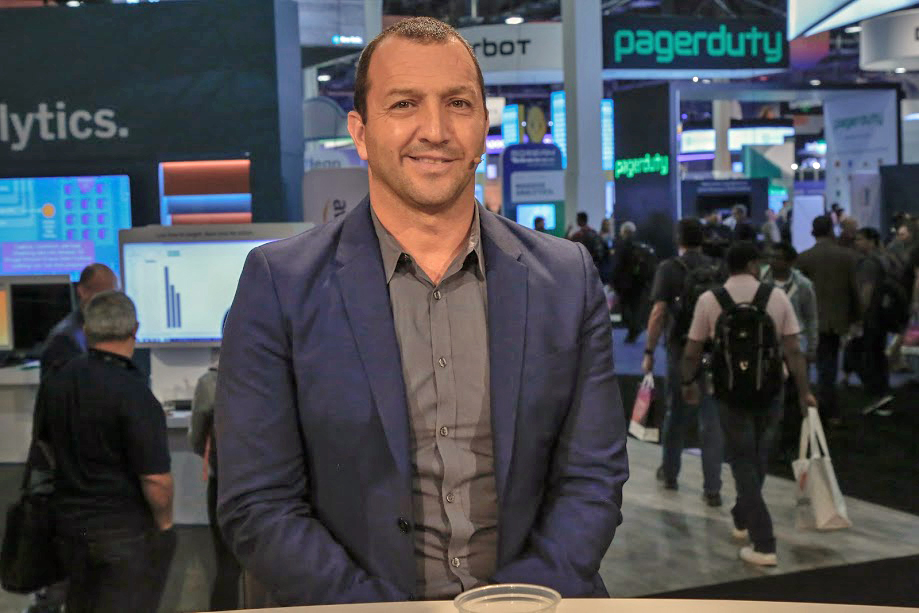
This is profoundly changing the operating model of IT organizations, according to Ramin Sayar (pictured), president and chief executive officer of Sumo Logic Inc.
“This new way of deploying, building, running, securing workloads and … cloud services, it’s fundamentally broke[n] down those barriers and … forced those teams to come together to collaborate,” Sayar said.
Sayar spoke with John Walls (@JohnWalls21), co-host of theCUBE, SiliconANGLE Media’s mobile livestreaming studio, and Justin Warren (@jpwarren), chief analyst at PivotNine Pty Ltd., during AWS re:Invent in Las Vegas. They discussed a new collaboration with AWS, as well as how data security is changing in cloud-first environments. (* Disclosure below.)
[Editor’s note: The following answers have been condensed for clarity.]
Walls: You had an announcement that takes your AWS partnership to a new level. Tell us about that.
Sayar: We’ve been partnering with Amazon for well over eight years. We’ve been born and bred in the cloud as a multi-tenant service, and over the years we’ve been working on a variety of ways to improve operational best practices, not just innovations and products. That’s led us to really push Amazon to do more in security because the security posture of practices [and] understanding in the cloud world is fundamentally different than that on-prem in the traditional world. One of the key points of the announcement was [about] some efforts that we’re continuing with Amazon around security and bringing a cloud-first security posture, as well as integrations.
Walls: Tell us about that discussion [with Amazon]. You say it’s been going on for some time, the need to bring a higher level of awareness or concern to security in the public cloud. How’s that evolved, and where’s that going to go?
Sayar: There’s two ways of looking at it. One is centered on the fact that there’s a big movement right now for the lift and shift of workloads to the cloud. You can’t bring along all the baggage that’s associated with these workloads, because you’re modernizing in these applications and it requires different ways of instrumenting, collecting, analyzing. [The second way is] the tsunami of data [that] is being generated because [of] these distributed applications; you can’t take the old way of writing rules to presuppose events and security issues in this new world.
Warren: It sounds like the security practices born in the cloud are making their way into traditional companies and “cloudifying” the way they run things, parallel to infrastructure where it’s becoming more hybrid.
Sayar: I think the interesting piece of that is [how it is] profoundly changing the operating model. Historically, all these teams have been siloed. They use their silo tools for security over here, for monitoring over there, for troubleshooting over here, for a build and release systems over there. This new way of deploying, building, running, securing workloads and, more importantly, cloud services now has fundamentally broke down those barriers, and so [it’s] forced those teams to come together to collaborate.
Watch the complete video interview below, and be sure to check out more of SiliconANGLE’s and theCUBE’s coverage of AWS re:Invent. (* Disclosure: Sumo Logic Inc. sponsored this segment of theCUBE. Neither Sumo Logic nor other sponsors have editorial control over content on theCUBE or SiliconANGLE.)
… We’d like to tell you about our mission and how you can help us fulfill it. SiliconANGLE Media Inc.’s business model is based on the intrinsic value of the content, not advertising. Unlike many online publications, we don’t have a paywall or run banner advertising, because we want to keep our journalism open, without influence or the need to chase traffic.The journalism, reporting and commentary on SiliconANGLE — along with live, unscripted video from our Silicon Valley studio and globe-trotting video teams at theCUBE — take a lot of hard work, time and money. Keeping the quality high requires the support of sponsors who are aligned with our vision of ad-free journalism content.
If you like the reporting, video interviews and other ad-free content here, please take a moment to check out a sample of the video content supported by our sponsors, tweet your support, and keep coming back to SiliconANGLE.






