



 INFRA
INFRA
INFRA
INFRA
INFRA

The forecast calls for hybrid computing. Vendors have signaled a truce in the cloud-versus-on-premises marketing war. They’re acknowledging the hybrid reality in most enterprises with products built to combine or straddle both environments.
But how do hybrid companies pinpoint where each individual snowflake should fall? How do they know if a workload is happy at home on-prem, or crying out to move to public cloud? Or if it needs some virtualized means to traverse both?
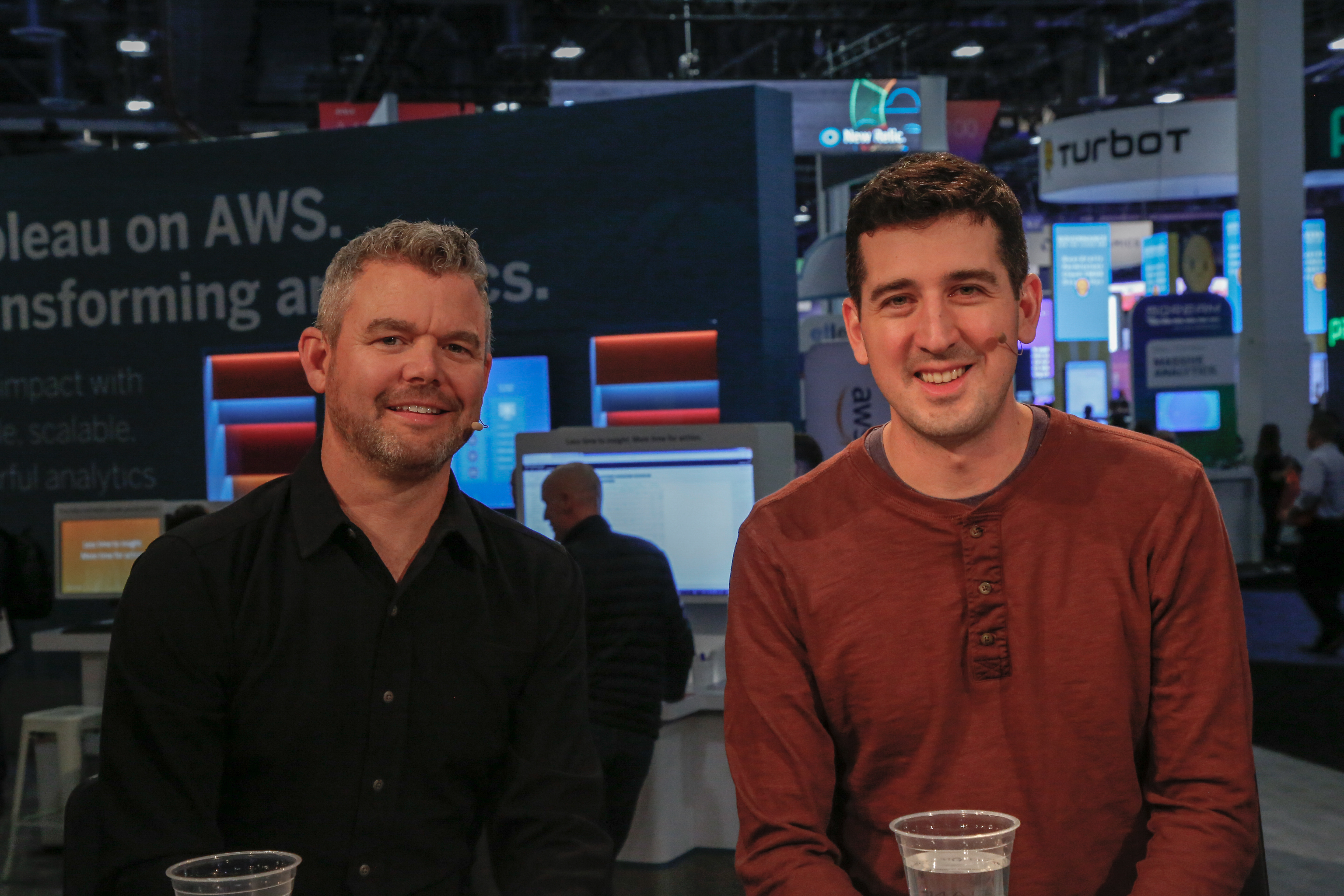
“It comes down to people a lot of the time,” said Matt Yanchyshyn (pictured, right), director of architecture practice and guidance at Amazon Web Services Inc. Yes, the unique requirements of individual applications are a factor, but so too are the skills of people on board.
“Different teams may be at a different point of agility in terms of [developer operations],” Yanchyshyn said.
What are the markers of cloud-readiness?
“If their software runs on x86 infrastructure, and if they’re already using [continuous integration and continuous delivery], for example, and if they’re used to containers [a virtualized method for running distributed applications], then they’re going to be good candidates,” Yanchyshyn stated.
Pivotal Software Inc. has partnered with Amazon Web Services Inc. to meet different companies and teams wherever they are with appropriate software and services.
Yanchyshyn and Nick Cayou (pictured, left), vice president of global ecosystem at Pivotal, spoke with John Walls (@JohnWalls21), host of theCUBE, SiliconANGLE Media’s mobile livestreaming studio, and guest host Justin Warren (@jpwarren), chief analyst at PivotNine Pty Ltd, during AWS re:Invent in Las Vegas. They discussed Pivotal’s work with AWS and the formula for smart hybrid-IT moves. (* Disclosure below.)
About 70 percent of Pivotal customers are running workloads on-prem. But they are expanding those apps out to AWS cloud. Pivotal is trying to teach these customers that cloud is an operating model, not a single destination, according to Cayou.
A big part of the work in hybrid IT is enterprise apps — “legacy monoliths that need to be decomposed and moved into a cloud operating model, modernized through things like data services that we can expose though our platform to something like AWS,” Cayou said.
They can access these services though Pivotal Cloud Foundry’s Service Broker for AWS. “It makes it easier for you to adopt AWS services,” Yanchyshyn stated.
More hybrid customers will likely adopt Pivotal Container Service and blend it with their AWS on-prem cloud services, according to Cayou. These are the types of happy mutations coming out of AWS’ new friendliness with on-prem environments, he concluded.
Watch the complete video interview below, and be sure to check out more of SiliconANGLE’s and theCUBE’s coverage of AWS re:Invent. (* Disclosure: Pivotal Software Inc. sponsored this segment of theCUBE. Neither Pivotal nor other sponsors have editorial control over content on theCUBE or SiliconANGLE.)
… We’d like to tell you about our mission and how you can help us fulfill it. SiliconANGLE Media Inc.’s business model is based on the intrinsic value of the content, not advertising. Unlike many online publications, we don’t have a paywall or run banner advertising, because we want to keep our journalism open, without influence or the need to chase traffic.The journalism, reporting and commentary on SiliconANGLE — along with live, unscripted video from our Silicon Valley studio and globe-trotting video teams at theCUBE — take a lot of hard work, time and money. Keeping the quality high requires the support of sponsors who are aligned with our vision of ad-free journalism content.
If you like the reporting, video interviews and other ad-free content here, please take a moment to check out a sample of the video content supported by our sponsors, tweet your support, and keep coming back to SiliconANGLE.






