



 IOT
IOT
IOT
IOT
IOT

Cellular networks, televisions and other electronic devices give off so-called ambient energy that bounces around the atmosphere in the form of radio waves. Wiliot Inc., a startup led by former Intel Corp. engineers, is building a new kind of chip that scavenges this ambient energy to operate with no need for a battery or a power cord.
Wiliot today announced that it has raised $30 million to support development efforts. The round saw the participation of Amazon Web Services Inc., Samsung Electronics Co. Ltd.’s venture capital arm and Avery Dennison Corp., one of the world’s top makers of RFID tags.
The round reportedly values the startup at $120 million. Previous investors in Wiliot include Qualcomm Inc., Norwest Venture Partners and life sciences giant Merck Group’s M Ventures fund.
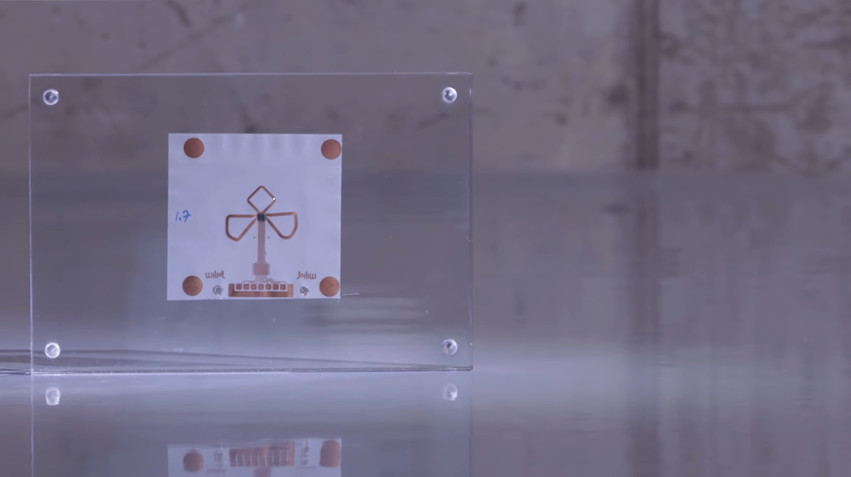
Wiliot’s first product is a chip about the size of a postage stamp (pictured) that is based on an Arm Holdings architecture. It can be attached to an object with a pin or glue to measure temperature, pressure, weight and location. An attached Bluetooth antenna transmits these measurements to the nearest connected device, which will in turn send them to the cloud.
The fact that the silicon relies exclusively ambient energy removes battery life constraints. A pharmaceutical company company, for example, could attach a Wiliot chip to a sensitive package for tracking purposes without worrying about the power running out. The startup’s silicon is capable, among other things, of generating an alert when an object arrives at its intended destination.
Wiliot also sees applications for its technology in consumer industries. Fashion brands, for instance, could use embed chips in laundry symbols to send washing instructions to the user’s phone. A clothing retailer might use the same laundry symbols to show personalized offers for shoppers on in-store displays.
“We believe that disposable electronics based on battery-free, low-cost systems are the foundation for future IoT systems,” Wiliot Chief Executive Tal Talmir said in a statement. “Without batteries or other high-cost components, tags have unlimited power and lifespan, so can be embedded inside of products that were previously unconnected to the Internet of Things.”
Wiliot will use the capital from the funding round to start producing its chips on a large scale. The startup has raised a total of $50 million to date.
… We’d like to tell you about our mission and how you can help us fulfill it. SiliconANGLE Media Inc.’s business model is based on the intrinsic value of the content, not advertising. Unlike many online publications, we don’t have a paywall or run banner advertising, because we want to keep our journalism open, without influence or the need to chase traffic.The journalism, reporting and commentary on SiliconANGLE — along with live, unscripted video from our Silicon Valley studio and globe-trotting video teams at theCUBE — take a lot of hard work, time and money. Keeping the quality high requires the support of sponsors who are aligned with our vision of ad-free journalism content.
If you like the reporting, video interviews and other ad-free content here, please take a moment to check out a sample of the video content supported by our sponsors, tweet your support, and keep coming back to SiliconANGLE.






