



 INFRA
INFRA
INFRA
INFRA
INFRA

Companies are scrounging for duct tape and Silly Putty to hold distributed information technology environments together. There’s much yammering about putting the application first — and it’s mostly on point. But they’d better not forget data. If they leave it in some proprietary storage silo, their cruise around multicloud will hit a speed bump.
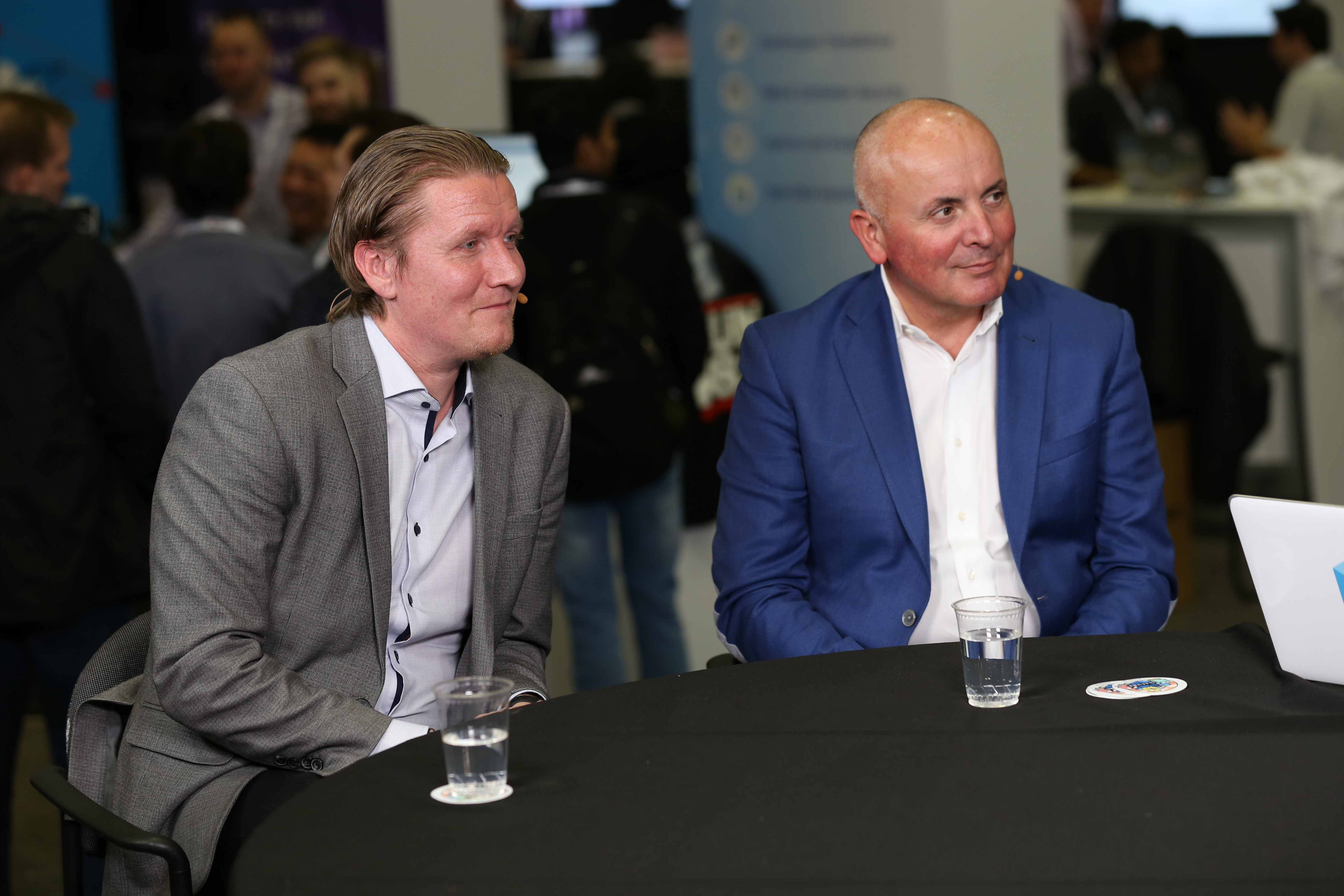
“Everyone talks about their SaaS strategy, their PaaS strategy, their IaaS strategies,” said Anthony Lye (pictured, right), senior vice president and general manager of cloud data services at NetApp Inc. “I always ask people, ‘What’s your data strategy?'”
Containers (a virtualized method for running distributed applications) may solve part of the multicloud migration problem. For some things — application mobility, compute, microservices — containers and Kubernetes (the open-source container orchestrator) do wonders, according to Lye. But they typically have not done much good for storage and data. But that doesn’t mean they can’t be taught new tricks. NetApp’s Kubernetes service makes data portable across environments just like applications.
Lye and Jonsi Stefansson (pictured, left), chief technology officer and vice president of cloud services at NetApp, spoke with John Furrier (@furrier) and Stu Miniman (@stu), co-hosts of theCUBE, SiliconANGLE Media’s mobile livestreaming studio, during the recent KubeCon + CloudNativeCon event in Seattle, Washington. They discussed new trends in data availability for multicloud. (* Disclosure below.)
Every workload in multicloud is a snowflake. A cut-and-dried process for every application will leave some of the lot under-optimized, according to Lye. “Sometimes you want to move the data to compute, and sometimes you want to move compute to the data,” he said.
The latter option — moving the data — has typically been difficult, expensive and high-latency.
“We actually want to use Kubernetes and microservices and persistent [storage] volume claims by taking that data and making that very easily migratable, replicated between locations, between hyperscalers and sort of adopt a true multicloud strategy,” Steffanson said.
NetApp has an open-source project called Trident that enables users to make persistent volume claims. If the container dies, they can essentially start a new container and pick up the storage exactly where they left off.
“Customers are actually coming to us and saying, … ‘We had no idea that you had your own Kubernetes services that actually help solve one of the biggest problems, which is persistent volume claims and application of data,'” Stefansson concluded.
Watch the complete video interview below, and be sure to check out more of SiliconANGLE’s and theCUBE’s coverage of the KubeCon + CloudNativeCon event. (* Disclosure: NetApp Inc. sponsored this segment of theCUBE. Neither NetApp nor other sponsors have editorial control over content on theCUBE or SiliconANGLE.)
… We’d like to tell you about our mission and how you can help us fulfill it. SiliconANGLE Media Inc.’s business model is based on the intrinsic value of the content, not advertising. Unlike many online publications, we don’t have a paywall or run banner advertising, because we want to keep our journalism open, without influence or the need to chase traffic.The journalism, reporting and commentary on SiliconANGLE — along with live, unscripted video from our Silicon Valley studio and globe-trotting video teams at theCUBE — take a lot of hard work, time and money. Keeping the quality high requires the support of sponsors who are aligned with our vision of ad-free journalism content.
If you like the reporting, video interviews and other ad-free content here, please take a moment to check out a sample of the video content supported by our sponsors, tweet your support, and keep coming back to SiliconANGLE.






