



 EMERGING TECH
EMERGING TECH
EMERGING TECH
EMERGING TECH

Loon, an Alphabet Inc. unit working to expand internet access around the world, is teaming up with satellite operator Telesat Inc. to deploy its technology in orbit.
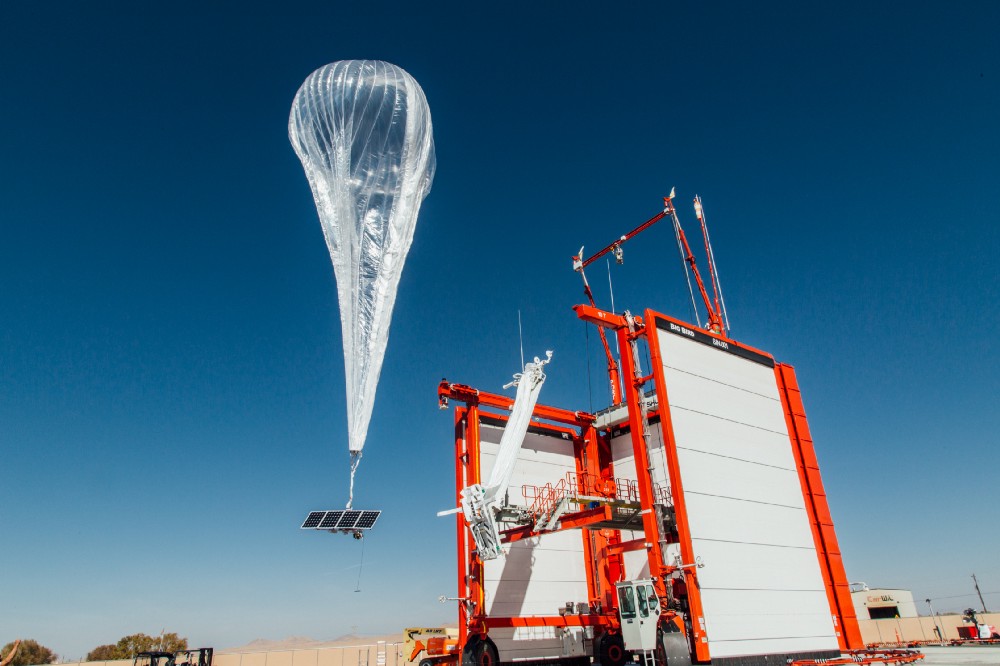
The companies announced the collaboration this morning. The project centers on a piece of technology that Loon has developed to support its budding wireless network, which relies on high-altitude balloons to provide connectivity. These balloons are essentially helium-filled cell towers that float in the stratosphere and can reach areas with no ground-based carrier infrastructure.
Loon’s network is managed by an automated software platform called the Temporospatial SDN. It enables individual balloons to coordinate with each other similarly to traditional cell towers. When one airborne system picks up a signal, it passes on the transmission to a system closer to the signal’s destination, and the process is repeated until the message can be broadcast to the ground.
Loon’s Temporospatial SDN keeps this daisy chain stable as the individual balloons move with the wind. It continuously adjusts data travel paths to account for the changes in the position and orientation of each system.
As part of the collaboration with Telesat, Loon will adapt the Temporospatial SDN for use in the former firm’s satellites. Specifically, Canada-based Telesat plans to deploy the technology in a planned communications network that is expected to include more than 100 crafts.
“The synergy between balloons and non-geostationary orbit (NGSO) satellites comes from a shared characteristic — both are in constant motion relative to the Earth and one another,” Sal Candido, Loon’s head of engineering, explained in a blog post. “The Loon SDN offers a promising solution to power these systems and create hybrid connectivity efforts to bring the reach of the internet even further.”
Telesat’s satellites will fly in low orbit, far below the so-called geostationary altitude normally used for communications constellations. The systems are also set to be much smaller than their traditional counterparts. A growing number of satellite operators are adopting this approach in an effort to improve connectivity, which ties in with Loon’s goal of expanding global internet coverage.
The collaboration will also boost the group’s efforts directly by providing it with a new source of revenue. It’s the second commercial deal that Loon has struck since becoming a standalone business unit last year. Previously, it partnered with a Kenyan carrier to improve internet access in remote parts of the country.
… We’d like to tell you about our mission and how you can help us fulfill it. SiliconANGLE Media Inc.’s business model is based on the intrinsic value of the content, not advertising. Unlike many online publications, we don’t have a paywall or run banner advertising, because we want to keep our journalism open, without influence or the need to chase traffic.The journalism, reporting and commentary on SiliconANGLE — along with live, unscripted video from our Silicon Valley studio and globe-trotting video teams at theCUBE — take a lot of hard work, time and money. Keeping the quality high requires the support of sponsors who are aligned with our vision of ad-free journalism content.
If you like the reporting, video interviews and other ad-free content here, please take a moment to check out a sample of the video content supported by our sponsors, tweet your support, and keep coming back to SiliconANGLE.






