 AI
AI
AI
AI







AI

As Accenture Lab celebrated the launch of it’s flagship Innovation Lab in San Francisco last week, the Lab’s core team talked about the innovations they foresee around smart products, artificial intelligence, and the human-machine interconnectedness of the future.
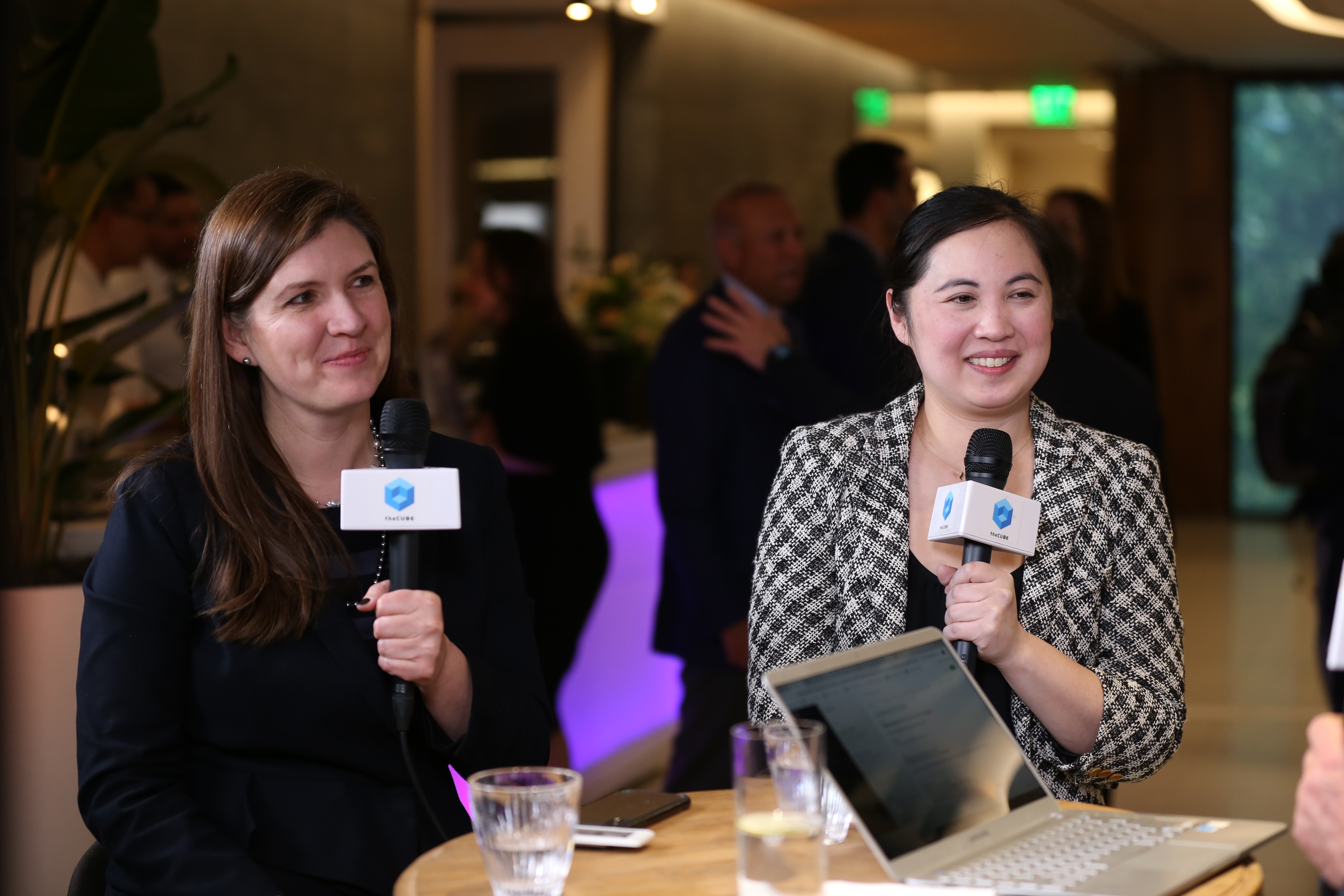
“These innovation hubs are something that we’re growing in the U.S. and around the world, but I think here in San Francisco we have a really unique space and really unique team and opportunity where we’re actually bringing together all of our innovation capabilities,” said Mary Hamilton (pictured, left), managing director of global digital experiences at Accenture Technology Labs. “We have all of them centered here.”
Hamilton and Teresa Tung (pictured, right), managing director at Accenture Labs, spoke with Jeff Frick, host of theCUBE, SiliconANGLE Media’s mobile livestreaming studio, during the recent Accenture Technology Vision event in San Francisco. They discussed the discoveries found at Accenture Innovation Centers through tangible smart products and trends like AI.
The innovation lab in San Francisco has a unique angle in that it is emphasizing the tangle aspect of tech: the merging of software and physical products through AI, smart objects, shared learning, and the partnership between human and machine.
“I’m really excited about some of the area … around material science,” Hamilton said. “So if you start to combine material science plus artificial intelligence, you start to have smart materials for smart products. And that’s where we see the future going.”
The integration of the physical with the software is not just about connected devices that do things. These connected devices can report back to companies about ways people are using them to collect and share information, and it creates more information for everyone, according to Tung and Hamilton.
“It really points to a type of shared pursuits of larger business outcomes,” said Tung. “So by yourself, a company might see their customer and impact their business and their product. But if you think about the outcome for the customer, it’s around taking an ecosystem approach.”
With this shared data using AI, designers can create new innovations for smart products and continue to refine and enhance technological advances. “I think that’s incredibly brilliant,” Hamilton added. “It’s kind of a human plus machine coming together to try to be more intelligent.”
Both Tung and Hamilton also pointed out that the human-plus-machine relationship is crucial for the progress of the future, which will elevate the human worker and bring more opportunities for humanity.
“[It’s] enabling your job to be easier, more efficient, more effective, safer,” Tong concluded. “Now you have human plus machine, whether it’s robotics or AI, to actually make the human a higher-level worker.”
Here’s the complete video interview, part of SiliconANGLE’s and theCUBE’s coverage of Accenture Technology Vision 2019:
Support our mission to keep content open and free by engaging with theCUBE community. Join theCUBE’s Alumni Trust Network, where technology leaders connect, share intelligence and create opportunities.
Founded by tech visionaries John Furrier and Dave Vellante, SiliconANGLE Media has built a dynamic ecosystem of industry-leading digital media brands that reach 15+ million elite tech professionals. Our new proprietary theCUBE AI Video Cloud is breaking ground in audience interaction, leveraging theCUBEai.com neural network to help technology companies make data-driven decisions and stay at the forefront of industry conversations.





