



 AI
AI
AI
AI
AI

Are machine-learning and artificial-intelligence models ready for prime time? Can organizations let them loose and allow intelligent technologies to act on their behalf, making decisions that affect customers?
A special team at IBM Corp. is tuning the educated-guess engine that is a predictive-analytics model. It wants to up the educated factor, reduce the guess factor, and lessen risk.
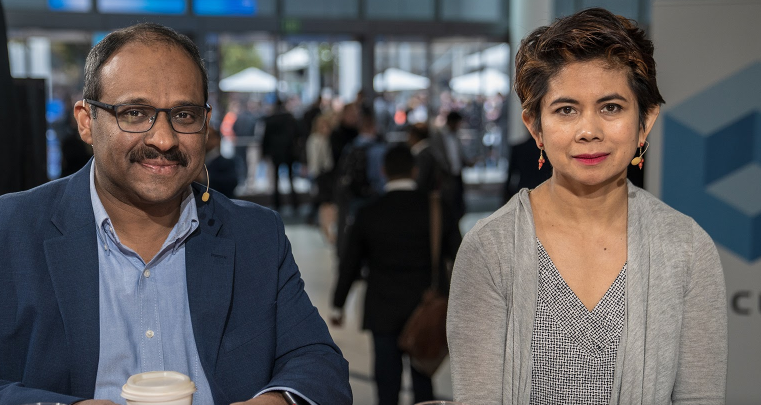
“You’ve got to go beyond model building to: How do you operationalize this model? How do you deploy these models at scale? How do I define workload-management policies for these models?” said John Thomas (pictured, left), distinguished engineer and director, IBM Analytics, and Data Science Elite Team at IBM.
The Data Science Elite Team assists clients along their AI journey. It is working with JPMorgan Chase Bank, N.A. to improve models used in financial transactions.
Thomas and Elenita Elinon (pictured, right), executive director of quantitative research at JPMorgan, spoke with John Furrier (@furrier) and Dave Vellante (@dvellante), co-hosts of theCUBE, SiliconANGLE Media’s mobile livestreaming studio, during the IBM Think event in San Francisco. They discussed how the Data Science Elite team is helping JPMorgan reduce model risk. (* Disclosure below.)
Financial institutions like JPMorgan live or die by managing all types of risks. These days, the company faces a new type of risk: model risk. Its quantitative research team is building a platform called Morpheus to help reduce model risk in trading and other areas.
“We want to make sure that as these trades are getting booked from day to day, we understand which ones are risky. And we flag those,” Elinon said. IBM and JPMorgan are working on potential uses of machine learning to help stave off losses.
Morpheus is tied into the risk-management systems in the investment bank, Elinon explained. “We’re actually running the same exact code that’s pricing these trades. And what that brings is the ability to really understand pretty much the full stack trace of what’s going into the price of a trade,” she said.
Through “model explainability,” Morpheus can see just how a model came to a conclusion. It can detect bias or faults in the model and correct them.
Precisely monitoring a model helps the company comply with standards and still gain a competitive advantage, Elinon pointed out. It hits a sweet spot between managing risk and scoring profitable AI insights.
Watch the complete video interview below, and be sure to check out more of SiliconANGLE’s and theCUBE’s coverage of the IBM Think event. (* Disclosure: IBM Corp. sponsored this segment of theCUBE. Neither IBM nor other sponsors have editorial control over content on theCUBE or SiliconANGLE.)
… We’d like to tell you about our mission and how you can help us fulfill it. SiliconANGLE Media Inc.’s business model is based on the intrinsic value of the content, not advertising. Unlike many online publications, we don’t have a paywall or run banner advertising, because we want to keep our journalism open, without influence or the need to chase traffic.The journalism, reporting and commentary on SiliconANGLE — along with live, unscripted video from our Silicon Valley studio and globe-trotting video teams at theCUBE — take a lot of hard work, time and money. Keeping the quality high requires the support of sponsors who are aligned with our vision of ad-free journalism content.
If you like the reporting, video interviews and other ad-free content here, please take a moment to check out a sample of the video content supported by our sponsors, tweet your support, and keep coming back to SiliconANGLE.






