 BIG DATA
BIG DATA
BIG DATA







BIG DATA

With more than 1.5 billion smartphones sold on an annual basis and the number of users approaching 2.5 billion this year, a case could easily be made that the smartphone model has some appeal. So, why not apply the same principles of a cross-platform interface, machine-learning integration, and app marketplace found in the smartphone to solve data fragmentation?
This is the question asked and answered by Cohesity Inc., a six-year-old secondary storage solutions company that has built its business around solving the problem of silos in the data center. It has created a central platform for backup, but then integrated a wide range of additional solutions to span multiple compute environments.
Today, the company announced that, for the first time, enterprises would be able to run applications on the Cohesity DataPlatform, which stores volumes of unstructured and backup data. Also introduced was the Cohesity MarketPlace, which will include third-party apps.
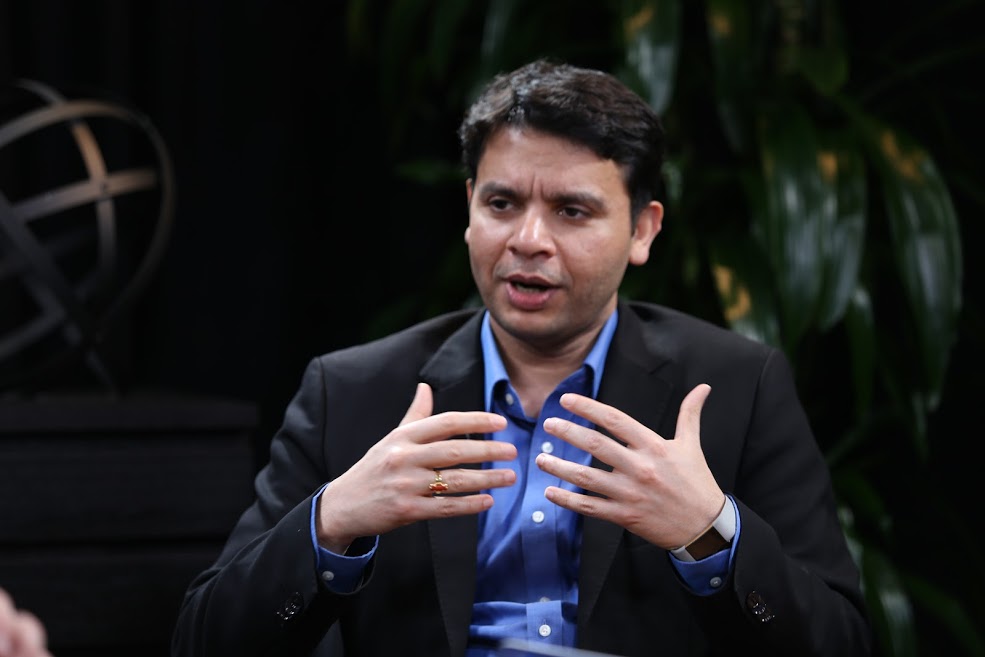
“Just like the smartphone had to be a great phone to begin with, this is a great backup product to begin with,” said Mohit Aron (pictured), founder and chief executive officer of Cohesity, who described various functions, such as file shares and analytics, that are often siloed. “Our vision is to put all of that on one platform, make it very simple, make that platform span the data center and the cloud.”
Aron spoke with John Furrier (@furrier), host of theCUBE, SiliconANGLE Media’s mobile livestreaming studio, at theCUBE’s studio in Palo Alto, California. They discussed Cohesity’s technology model, its appeal to developers, newly released protection against ransomware attacks, and the company’s mission.
Cohesity’s model is built around the core competencies of distributed file systems — SpanFS — and distributed computing. Span is a key concept for the company, as it views its technology as spanning nodes and multiple kinds of storage, on-premises or in the cloud.
Central to this approach is providing customers with the ability to use applications on Cohesity’s platform in much the same way that smartphone users take advantage of services in the marketplace. “Why not move apps to the data rather than data to the apps?” Aron asked. “Moving data is hard; moving apps is easy. That’s what Cohesity is about.”
Cohesity has just announced a software developer kit as part of its Developer Portal to facilitate interest in new applications and workloads on its data platform. Developers can build an app and get paid a percentage when a customer downloads it, according to Aron.
“There are all kinds of people we expect to build on this platform,” Aron said. “It goes back to our philosophy that if you need to do something, you shouldn’t have to buy one more silo to do it. You should be able to extend your existing platform.”
Cohesity recently announced that it would launch a comprehensive set of new capabilities on its DataPlatform to combat ransomware attacks. The SpanFS immutable file system serves as the core defense, and the DataPlatform will write data to a new instance if an attacker tries to tamper with the backup.
“Every enterprise is at risk of being affected by ransomware,” said Aron, during a discussion of the new offering. “It’s built into our data protection environment. That’s how customers like it.”
Cohesity’s CEO, who previously co-founded Nutanix Inc., is seeking to build his company around a spirit of teamwork and family. One year after the firm emerged from stealth mode, Aron sent the entire company, a little more than 100 employees at the time, and their families on a thank-you trip to Hawaii.
That may be a little more difficult today as Cohesity has grown from 200 employees one year ago to over 1,000, according to Aron. But he remains enthusiastic about how the company can reshape the enterprise approach to data storage.
“I do these companies because I want to change the way the world thinks,” Aron said. “That’s the excitement; that’s what our mission is. It’s kind of like a rocket ship, and we’re just hanging on.”
Watch the complete video interview below, and be sure to check out more of SiliconANGLE’s and theCUBE’s CUBE Conversations.
Support our mission to keep content open and free by engaging with theCUBE community. Join theCUBE’s Alumni Trust Network, where technology leaders connect, share intelligence and create opportunities.
Founded by tech visionaries John Furrier and Dave Vellante, SiliconANGLE Media has built a dynamic ecosystem of industry-leading digital media brands that reach 15+ million elite tech professionals. Our new proprietary theCUBE AI Video Cloud is breaking ground in audience interaction, leveraging theCUBEai.com neural network to help technology companies make data-driven decisions and stay at the forefront of industry conversations.





