



 CLOUD
CLOUD
CLOUD
CLOUD
CLOUD

Cloud computing has changed just about everything in information technology. It’s made application development and operations more agile, real-time and elastic. So why are we still transporting data in the cloud with odious old lift-and-shift methods?
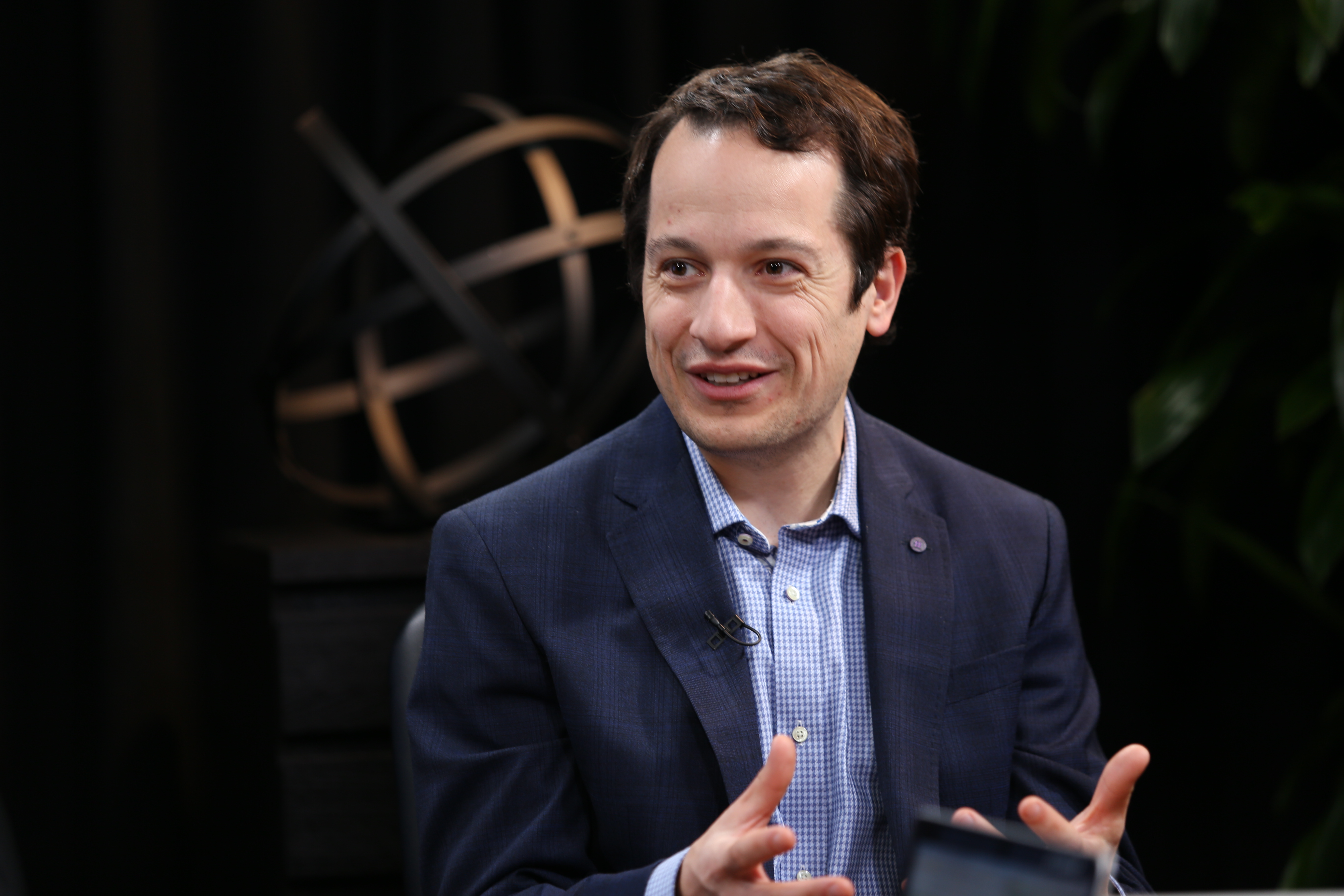
The enterprise must address the gravity of data in the new multicloud world, according to Joel Horwitz (pictured), senior vice president of marketing at WANdisco PLC, because it can’t have flexible, distributed cloud infrastructure with leaden data dragging it down. Most strategies for migrating data to cloud or hybrid-data management cleave to the lift-and-shift orthodoxy, Horwitz added.
“I always picture that image of the forklift lifting all those tape drives onto the airplane. And that’s like a century old at this point,” he said.
Companies need a way to disperse data across multicloud continuously in real time. That is where new, lighter, software-based data replication comes in.
Horwitz sat down with John Furrier (@furrier), host of theCUBE, SiliconANGLE Media’s mobile livestreaming studio, for a CUBEConversation at theCUBE’s studio in Palo Alto, California. They discussed new technology for moving data — and other stuff — around in distributed IT environments. (* Disclosure below.)
The point of moving applications to cloud isn’t to clear out the data center for foosball tables. It’s to adopt a new, agile method of operating with elastic resources. The same is true for data strategies in cloud.
“The end goal isn’t to move data to the cloud. The end goal is to move business processes to the cloud, and then be able to take advantage of the other value-adds that already exist on the cloud,” Horwitz stated.
WANdisco LiveData for MultiCloud replicates data continuously with patented consensus technology. Users can replicate data to different clouds without disrupting business.
WANdisco recently announced support for IBM’s Big SQL query engine. “If you are using a database provided by IBM, you can actually replicate across different databases and still query it with Big SQL, which is a big deal. It means you can still have access to your data while it’s in motion,” Horwitz explained.
WANdisco continues its quest to move stuff easily across environments with its Distributed Coordination Engine, or DConE. “It’s essentially is a form of blockchain,” Horwitz said.
First the company applied the distributed-ledger technology to code, then to data. “But you can expand that to any other enterprise asset … that’s big, that has value, and that you want to manage across different environments,” he concluded.
Watch the complete video interview below, and be sure to check out more of SiliconANGLE’s and theCUBE’s coverage of the IBM Think event. (* Disclosure: WANdisco PLC sponsored this segment of theCUBE. Neither WANdisco nor other sponsors have editorial control over content on theCUBE or SiliconANGLE.)
… We’d like to tell you about our mission and how you can help us fulfill it. SiliconANGLE Media Inc.’s business model is based on the intrinsic value of the content, not advertising. Unlike many online publications, we don’t have a paywall or run banner advertising, because we want to keep our journalism open, without influence or the need to chase traffic.The journalism, reporting and commentary on SiliconANGLE — along with live, unscripted video from our Silicon Valley studio and globe-trotting video teams at theCUBE — take a lot of hard work, time and money. Keeping the quality high requires the support of sponsors who are aligned with our vision of ad-free journalism content.
If you like the reporting, video interviews and other ad-free content here, please take a moment to check out a sample of the video content supported by our sponsors, tweet your support, and keep coming back to SiliconANGLE.






