



 BIG DATA
BIG DATA
BIG DATA
BIG DATA

If only a data set and some pre-packaged data-analytics software were all it takes to solve real-world problems. The reality is that tools require hands to ply them. And just like a comprehensive data set is better than a limited one, a comprehensive set of skills helps people design better solutions.
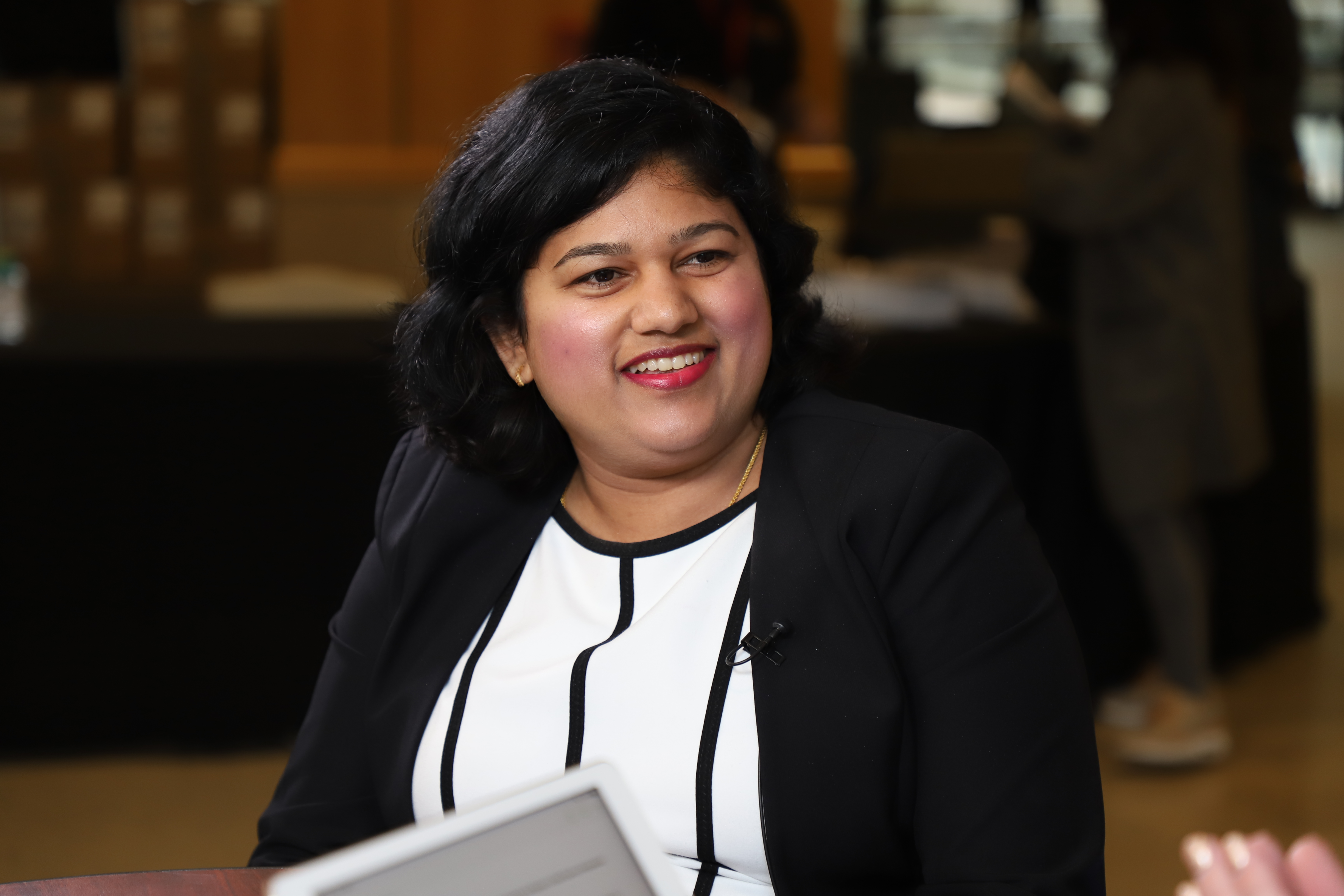
“Looking at the problem from different perspectives and collaboration are the keys to be able to be successful in data science,” said Srujana Kaddevarmuth (pictured), data science and analytics executive at Accenture LLP and ambassador for the Women in Machine Learning & Data Science team in Bengaluru (formerly Bangalore).
Take a problem like deforestation from palm-oil plantations. Consider all the factors that might be involved: agriculture, climate, ecology, economics, politics, etc. What are the odds that one random data expert can ask all the right questions, pull together all the necessary data, and derive actionable insight? Probably not great.
This is the thinking behind collaborative data-science projects, like the Women in Data Science, or WiDS, Datathon. This year, it organized several teams to collaborate and use data and satellite imagery to analyze this particular problem.
Kaddevarmuth spoke with Lisa Martin (@LisaMartinTV), host of theCUBE, SiliconANGLE Media’s mobile livestreaming studio, during the Stanford Women in Data Science event in Stanford, California. They discussed this year’s Datathon and why collaboration results in better outcomes for data scientists.
At the WiDS Bengaluru regional event, organizers set up a community workshop. The goal was to form teams to participate in the Datathon. They would submit the fruits of their endeavors to something called Kaggle, a platform for data-science projects and competitions. In India, Kaggle participation is very male heavy “despite that region having amazing female data scientists who are innovators in their space with multiple patents, publications and innovations to their credit,” Kaddevarmuth said.
WiDS teamed mentors with participating teams to work together for three weeks. One team from the engineering division who was brand new to Kaggle learned new concepts, honed skills in deep learning and neural networks, and submitted original code to the Kaggle leaderboard.
“They were not the top-scoring team, but this entire experience of being able to collaborate, look at the problem from different perspectives, and be able to submit the code despite a lot of these challenges — and also navigate the platform in itself — was a decent achievement from my perspective,” Kaddevarmuth concluded.
Watch the complete video interview below, and be sure to check out more of SiliconANGLE’s and theCUBE’s coverage of the Stanford Women in Data Science event.
… We’d like to tell you about our mission and how you can help us fulfill it. SiliconANGLE Media Inc.’s business model is based on the intrinsic value of the content, not advertising. Unlike many online publications, we don’t have a paywall or run banner advertising, because we want to keep our journalism open, without influence or the need to chase traffic.The journalism, reporting and commentary on SiliconANGLE — along with live, unscripted video from our Silicon Valley studio and globe-trotting video teams at theCUBE — take a lot of hard work, time and money. Keeping the quality high requires the support of sponsors who are aligned with our vision of ad-free journalism content.
If you like the reporting, video interviews and other ad-free content here, please take a moment to check out a sample of the video content supported by our sponsors, tweet your support, and keep coming back to SiliconANGLE.






