



 CLOUD
CLOUD
CLOUD
CLOUD
CLOUD

Google Cloud Platform continues carving out its brand among competing hyperscalers. One way it’s setting itself apart is with its globally dispersed data-center operations: It wants to run the most environmentally sound data centers on the planet.
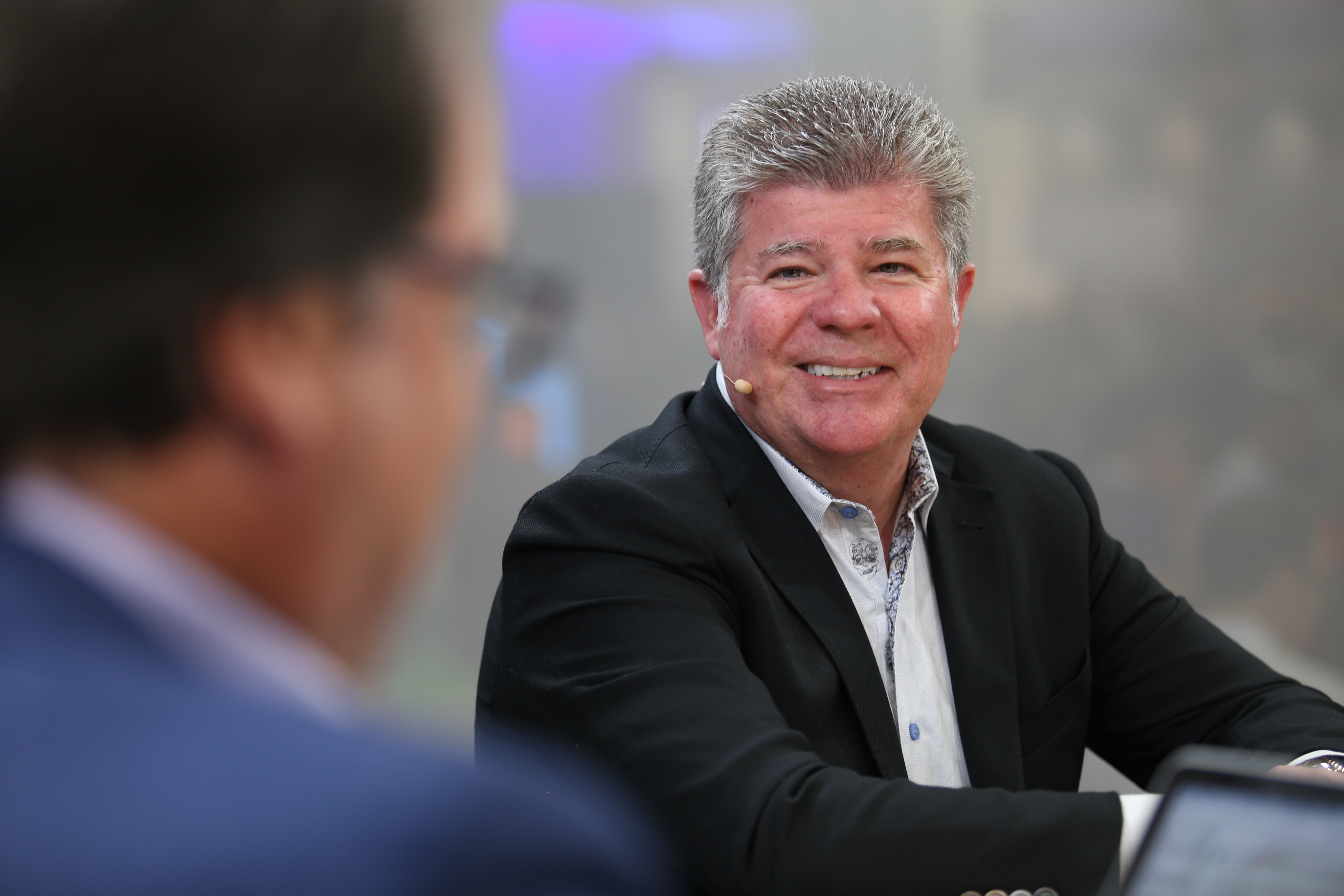
Building “the world’s most sustainable cloud” is the day-to-day work of Joe Kava (pictured), vice president of data center operations at Google Cloud. “We were the first company to announce that we were buying 100% renewable energy,” he said.
In 2017, Google achieved this when its renewable power purchase agreements covered 100% of its energy consumption. It then decided to advance to both renewable and sustainable energy. It began using wind and solar energy.
Google Cloud is continuing efforts to further reduce pollution and leverage environmentally friendly energy sources. “It’s a relentless focus on efficiency and innovation,” Kava said.
Kava spoke with John Furrier and Dave Vellante, co-hosts of theCUBE, SiliconANGLE Media’s mobile livestreaming studio, during the Google Cloud Next event in San Francisco. They discussed Google Cloud’s sustainability mission (see the full interview with transcript here).
Google Cloud is working to optimize power use up and down its stacks. “It’s optimizing software to be efficient, optimizing the server architecture to be more efficient, optimizing the power supplies in the servers, optimizing the racks, designing the racks to be working with the cooling equipment,” Kava said.
Google leverages unique cooling systems in its data centers. Sometimes, locations around the globe have existing natural cooling solutions. “In our data centers right on the Gulf of Finland, we use cold seawater from the Gulf of Finland to cool the data center,” Kava stated.
And Google Cloud has plenty of artificial-intelligence and machine-learning tech to put to good environmental use. “We have ML running some of our cooling systems in fully autonomous mode and doing a much better job of matching the cooling needs to the workloads at the time,” Kava added.
Google’s DeepMind ML project has applied ML to a wind farm to predict output 36 hours in advance. “That allows the operators of the grid to better bring on more energy and get higher value out of that wind energy,” he concluded.
Here’s the complete video interview below, part of SiliconANGLE’s and theCUBE’s extensive coverage of the Google Cloud Next event:
… We’d like to tell you about our mission and how you can help us fulfill it. SiliconANGLE Media Inc.’s business model is based on the intrinsic value of the content, not advertising. Unlike many online publications, we don’t have a paywall or run banner advertising, because we want to keep our journalism open, without influence or the need to chase traffic.The journalism, reporting and commentary on SiliconANGLE — along with live, unscripted video from our Silicon Valley studio and globe-trotting video teams at theCUBE — take a lot of hard work, time and money. Keeping the quality high requires the support of sponsors who are aligned with our vision of ad-free journalism content.
If you like the reporting, video interviews and other ad-free content here, please take a moment to check out a sample of the video content supported by our sponsors, tweet your support, and keep coming back to SiliconANGLE.






