



 SECURITY
SECURITY
SECURITY
SECURITY

Whether it’s in response to concerns from large enterprise customers or from their own global threat intelligence, security is very much on the minds of top executives for the leading cloud providers these days.
At the Amazon Web Services Summit in March, Amazon.com Inc Chief Technology Officer Werner Vogels devoted a significant amount of time in his keynote address to security while wearing a t-shirt with the slogan “Encrypt Everything.” In early April, Microsoft Corp. released a set of new security features for Azure Cloud. And on Wednesday, Google Cloud unveiled new security products and services of its own, wrapped in a number of statements from executives about the need for protection and privacy of customer data.
“Security is really something that we’ve built in from the start,” Urs Hölzle, Google’s senior vice president of technical infrastructure, said in his keynote address on Wednesday. “It’s not something that’s bolted on later. We start with the principle that your data is only your data.”
It’s also possible that news of cloud vulnerabilities within the past two years may be driving the three largest cloud providers to focus more attention on security. More than 540 million Facebook records were recently found to be exposed on AWS servers. Staff emails at Deloitte have been compromised in a breach of Microsoft Azure.
And security researchers have documented how recent waves of hijacking attacks on consumer routers have been linked to abuse of the Google Cloud Platform.
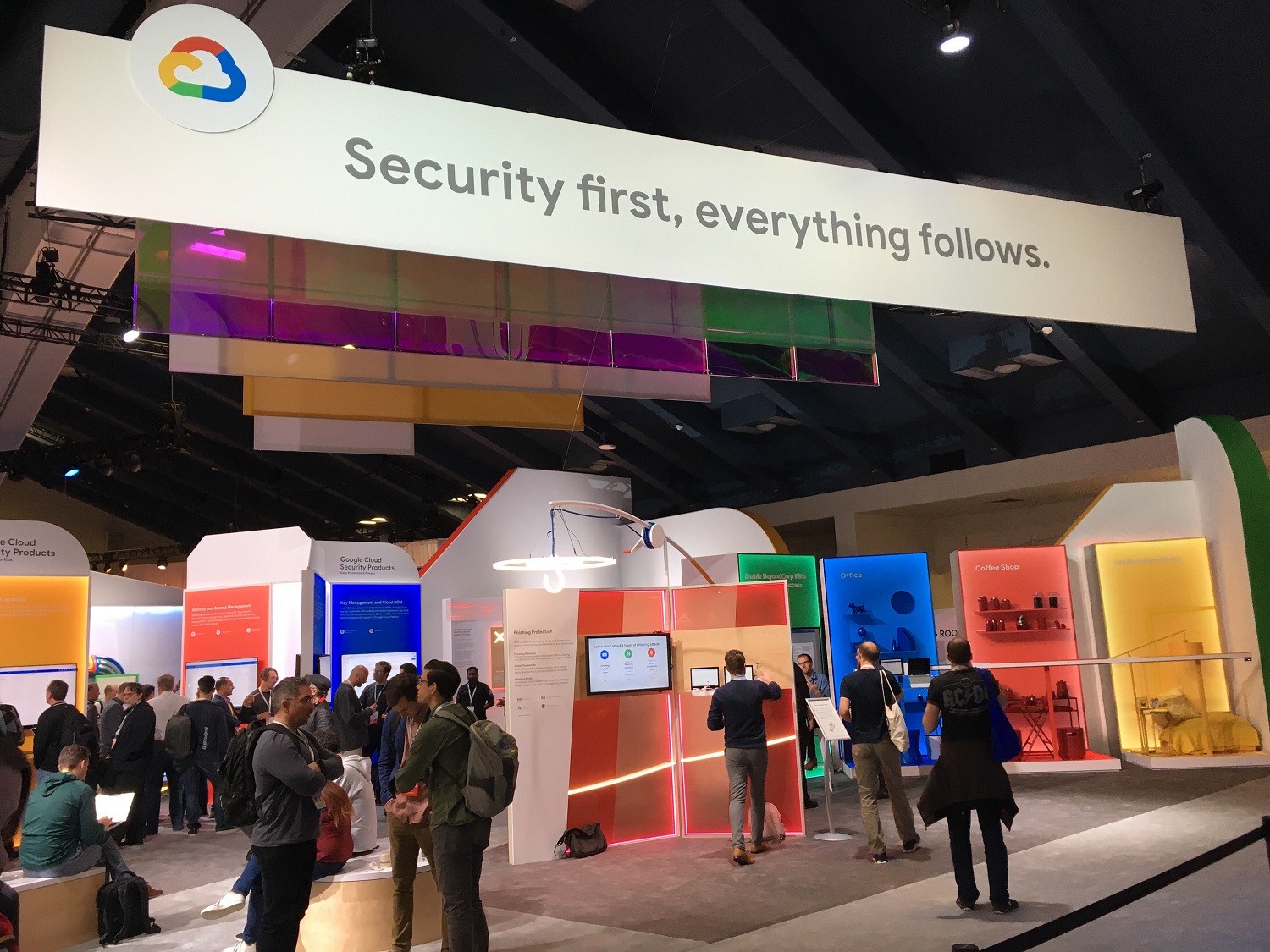
Google Cloud rolled out an estimated 30 new security products and services this week, which ran the gamut from using the Android 7+ smartphone platform as a free security key for cloud accounts to implementing enterprise tools for improving data visibility and control.
One of the announcements involved general availability of the Cloud Security Command Center, a management and data risk platform. A new Command Center feature includes Security Health Analytics which automatically scans a customer’s Google Cloud infrastructure for configuration problems with out-of-date encryption keys or public storage.
“The challenge is complexity and scale,” Andy Chang, senior product manager at Google Cloud, explained in an interview with SiliconANGLE. “You don’t address that with humans. You address that with automation.”
Also announced on Wednesday was general availability of Access Transparency in G Suite Enterprise. The transparency tool creates alert logs whenever a Google employee touches customer data. Accessibility can be further limited through Access Approval, which allows customers to specifically dictate whether specific data can be handled by Google staff at all.
“We’re the only cloud provider that offers access transparency,” Chang said. “Your data is yours. It’s in the contract.”
Protecting user control over data is a simmering issue as policies of the U.S. government and other nations are running into conflict with the tech industry. Governmental calls for “backdoors” or ways that enforcement agencies can access sensitive encrypted user data have raised the stakes for Google Cloud and other providers.
The “Five Eyes” global alliance involving the U.S., Australia, Canada, the U.K. and New Zealand has publicly called for tech companies to establish backdoor access without requiring permission. In November, U.S. Assistant Attorney General Rod Rosenstein renewed the government’s call for law enforcement access.
“There is nothing virtuous about refusing to help develop responsible encryption,” Rosenstein said last year.
If government authorities want to see backdoors implemented for cloud accounts, they are apparently unlikely to get much support from Google. In his keynote remarks on Wednesday, Google Cloud Chief Executive Officer Thomas Kurian carefully stated his company’s approach to data privacy.
“We do not have a backdoor to allow any agency to access your data without your permission,” Kurian said. “No one at Google will access your data without your permission.”
How important is this policy to Google’s cloud customers? At Next, Google made several of its cloud customers available to the media, and they were asked about Kurian’s comments regarding data privacy and backdoors.
“We’re the custodians of that data and it’s our job to protect it,” said Tim Prendergast, chief cloud officer at Palo Alto Networks Inc. “The commitments that Google is making in this sense are important to us. It’s an increasingly meaningful statement.”
Google’s cloud security announcements this week highlight the growing importance of securing the cloud infrastructure to prevent breaches as attacks increase. One study evaluated 316 million real-world attacks on AWS and Azure, and Microsoft has reported a 300 percent increase in attacks on its cloud-based user accounts.
This trend is changing the game for cloud providers who must now become not only experts in data management and storage but security gurus as well.
“A lot of analysts have predicted that the public cloud providers are becoming more like security providers,” Rob Sadowski, Google’s trust and security marketing lead, said Wednesday. “They’re actually right.”
… We’d like to tell you about our mission and how you can help us fulfill it. SiliconANGLE Media Inc.’s business model is based on the intrinsic value of the content, not advertising. Unlike many online publications, we don’t have a paywall or run banner advertising, because we want to keep our journalism open, without influence or the need to chase traffic.The journalism, reporting and commentary on SiliconANGLE — along with live, unscripted video from our Silicon Valley studio and globe-trotting video teams at theCUBE — take a lot of hard work, time and money. Keeping the quality high requires the support of sponsors who are aligned with our vision of ad-free journalism content.
If you like the reporting, video interviews and other ad-free content here, please take a moment to check out a sample of the video content supported by our sponsors, tweet your support, and keep coming back to SiliconANGLE.






