



 IOT
IOT
IOT
IOT
IOT

What does the term edge actually mean in computing? Loosely speaking, it is where internet of things connected devices — watches, windmills or autonomous cars, live. IoT and edge-to-cloud computing are fraught with hard latency, security and analytics problems. Can we expect a single, perfect model for edge computing to emerge soon?
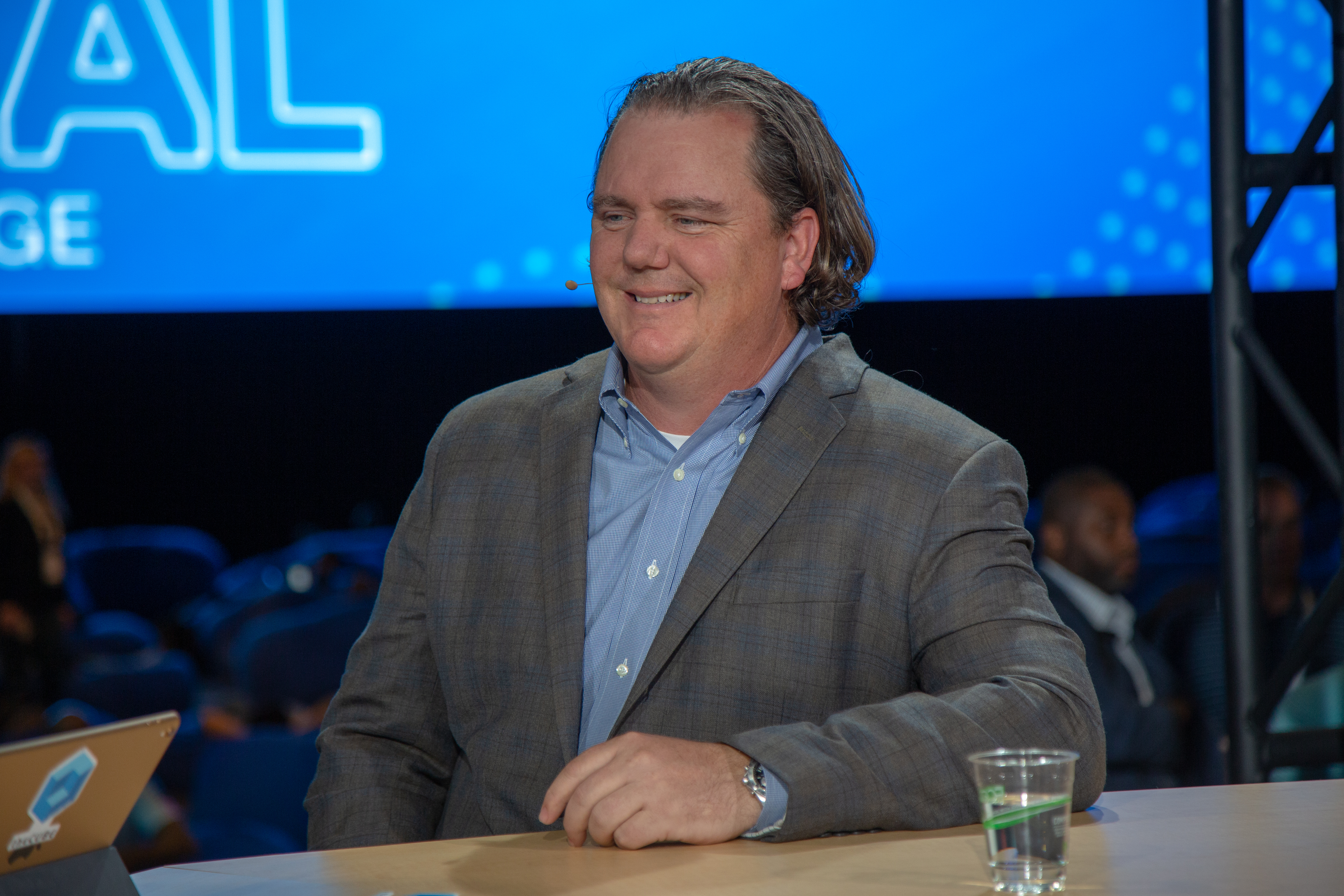
The edge itself is not defining the usage models and products around it, according to Ty Schmitt (pictured), vice president and fellow at Dell EMC. “Human nature is: I want this thing to be defined, I want it to be something stable, bounded, that I can then go and create a workforce or a product line, and I know exactly what we’re doing,” Schmitt said. “Well, I’ve got news for those folks: It’s not that. It’s chaotic. Its dynamic. It’s disruptive.”
The usage models are defining what the edge is, and there are thousands of different usage models, according to Schmitt.
Schmitt spoke with Dave Vellante (@dvellante) and Lisa Martin (@LisaMartinTV), co-hosts of theCUBE, SiliconANGLE Media’s mobile livestreaming studio, during the Dell Tech World event in Las Vegas. They discussed how Dell EMC is helping customers break out of their data centers and discover diverse edge models (see the full interview with transcript here). (* Disclosure below.)
The edge could be just about anything, Schmitt pointed out. Dell EMC is encouraging companies to swirl this thought around in their minds. “What if you weren’t constrained by your facility? What could you do?” he asked.
It’s helping customers to get IT and facility teams talking about what kinds of edge projects are possible out in the wide world.
Of course, planting connected objects in public places has some risks. “How we approach that physically is a tremendous, tremendous concern to customers, and we’re addressing that through the solutions that we’re providing — ballistics, bomb proof, flame proof, intrusion proof, different types of biometric sensors,” Schmitt said. “In some cases, we hide them in plain sight, paint them with graffiti, put some bullet holes on them, make them look like they’re not worth anything.”
Companies are experimenting with different models to see what is productive and feasible in the long term.
“What we’re seeing is a lot of … crawl, walk, run, where they are starting with modeling techniques, then they’re going with proof of concepts to test out: What does this mean from an OpEx standpoint? What does this mean from a CapEx [standpoint]?” he concluded.
Watch the complete video interview below, and be sure to check out more of SiliconANGLE’s and theCUBE’s coverage of the Dell Tech World 2019 event. (* Disclosure: Dell Technologies Inc. sponsored this segment of theCUBE. Neither Dell nor other sponsors have editorial control over content on theCUBE or SiliconANGLE.)
… We’d like to tell you about our mission and how you can help us fulfill it. SiliconANGLE Media Inc.’s business model is based on the intrinsic value of the content, not advertising. Unlike many online publications, we don’t have a paywall or run banner advertising, because we want to keep our journalism open, without influence or the need to chase traffic.The journalism, reporting and commentary on SiliconANGLE — along with live, unscripted video from our Silicon Valley studio and globe-trotting video teams at theCUBE — take a lot of hard work, time and money. Keeping the quality high requires the support of sponsors who are aligned with our vision of ad-free journalism content.
If you like the reporting, video interviews and other ad-free content here, please take a moment to check out a sample of the video content supported by our sponsors, tweet your support, and keep coming back to SiliconANGLE.






