



 EMERGING TECH
EMERGING TECH
EMERGING TECH
EMERGING TECH

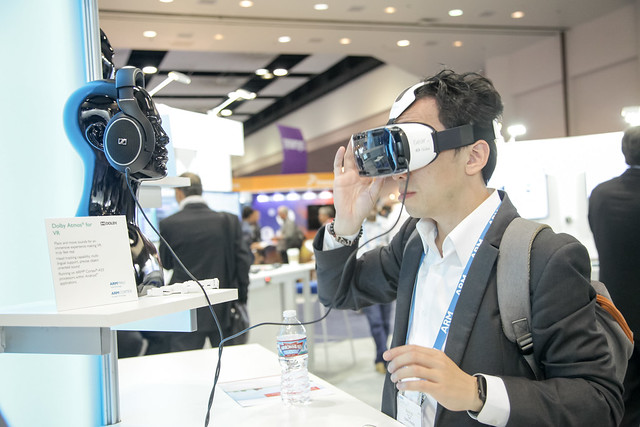
Arm Holdings Ltd. today pulled back the curtains on the Mali-D77, a specialized chip for virtual reality headsets that promises to boost the performance and graphic fidelity of immersive applications.
The Mali-D77 is what’s known as a display processor. It takes over some of the heavy lifting involved in overlaying visuals onto a VR headset’s lens to save work for the graphics processing unit, which usually handles the task on its own. The GPU, in turn, can then invest the freed-up processing cycles to produce smoother and higher-quality graphics.
Vassilis Androutsopoulos, a senior product manager for Arm, explained that this is important because VR device makers are facing strong pressure to increase the resolution of their headsets. That requires not only better screens but also more processing power to support them.
“The bar is already high and expected to be raised even further, with VR HMDs capable of 2.5Kx2.5K [pixels] – or even 3Kx3K [pixels] per eye – likely to be in production by major panel vendors in 2021,” he explained. “Offloading these operations from the GPU to Mali-D77 will allow the scene to be rendered at much higher resolutions and frame rates.”
The Mali-D77 is essentially a beefed-up evolution of the Mali-D71, the chip firm’s existing display processor for high-end smartphones. Arm has added on a number of features engineered specifically with VR headsets in mind.
The first capability implements a graphic rendering method known as asynchronous timewarp. The Mali-D77 can help a headset’s GPU quickly re-project a scene whenever a user moves their head, ensuring that their field of view in the virtual world lines up with the position and angle of their eyes. Arm said the feature will reduce the motion sickness associated with prolonged use of VR applications.
Another addition in the Mali D-77 is automated lens distortion correction. The Mali-D77 counteracts the stretching and warping that occurs when an image is overlaid onto a headset’s lens, which is an especially big concern for high-end systems with a large field of view. Furthermore, the chip offloads some color rendering tasks to prevent the blurred, colorful edges that form around objects inside immersive applications when the GPU is stretched thin.
Arm claims the Mali-D77 can reduce a VR headset’s power consumption by 12% while consuming up to 40% less memory bandwidth. That’s a key metric for GPU performance that determines how much data the chip can process, meaning a 40% boost has the potential to provide a big speed improvement.
“The versatility of Mali-D77 means it can switch between driving different types of displays and/or scenarios,” Androutsopoulos wrote. “It could also drive new emerging display form factors, such as automotive head-up displays, which will digitally correct distortion caused by the windscreen and the driver seating position.”
… We’d like to tell you about our mission and how you can help us fulfill it. SiliconANGLE Media Inc.’s business model is based on the intrinsic value of the content, not advertising. Unlike many online publications, we don’t have a paywall or run banner advertising, because we want to keep our journalism open, without influence or the need to chase traffic.The journalism, reporting and commentary on SiliconANGLE — along with live, unscripted video from our Silicon Valley studio and globe-trotting video teams at theCUBE — take a lot of hard work, time and money. Keeping the quality high requires the support of sponsors who are aligned with our vision of ad-free journalism content.
If you like the reporting, video interviews and other ad-free content here, please take a moment to check out a sample of the video content supported by our sponsors, tweet your support, and keep coming back to SiliconANGLE.






