



 BIG DATA
BIG DATA
BIG DATA
BIG DATA

Riding the virtualization wave to a record billion-dollar year put Veeam Software Inc. in the spotlight of the $15-billion cloud data management market. Act one of the company’s play seems to have concluded, with Veeam the market leader in data management for small and medium companies. Now we enter act two, where Veeam attempts to capitalize on cloud and corner the enterprise market in disaster recovery.
One critical difference is that industry requirements are changing as data becomes dispersed across private and public clouds, on-premises, and at the edge.
“The notion of backup and recovery has moved beyond just an insurance policy into this idea of data protection, what some people call data management … data assurance,” said Dave Vellante (@dvellante), co-hosts of theCUBE, SiliconANGLE Media’s mobile livestreaming studio.
Can Veeam continue to hold 16% year-on-year growth as cloud data management becomes increasingly complicated and ever more critical?
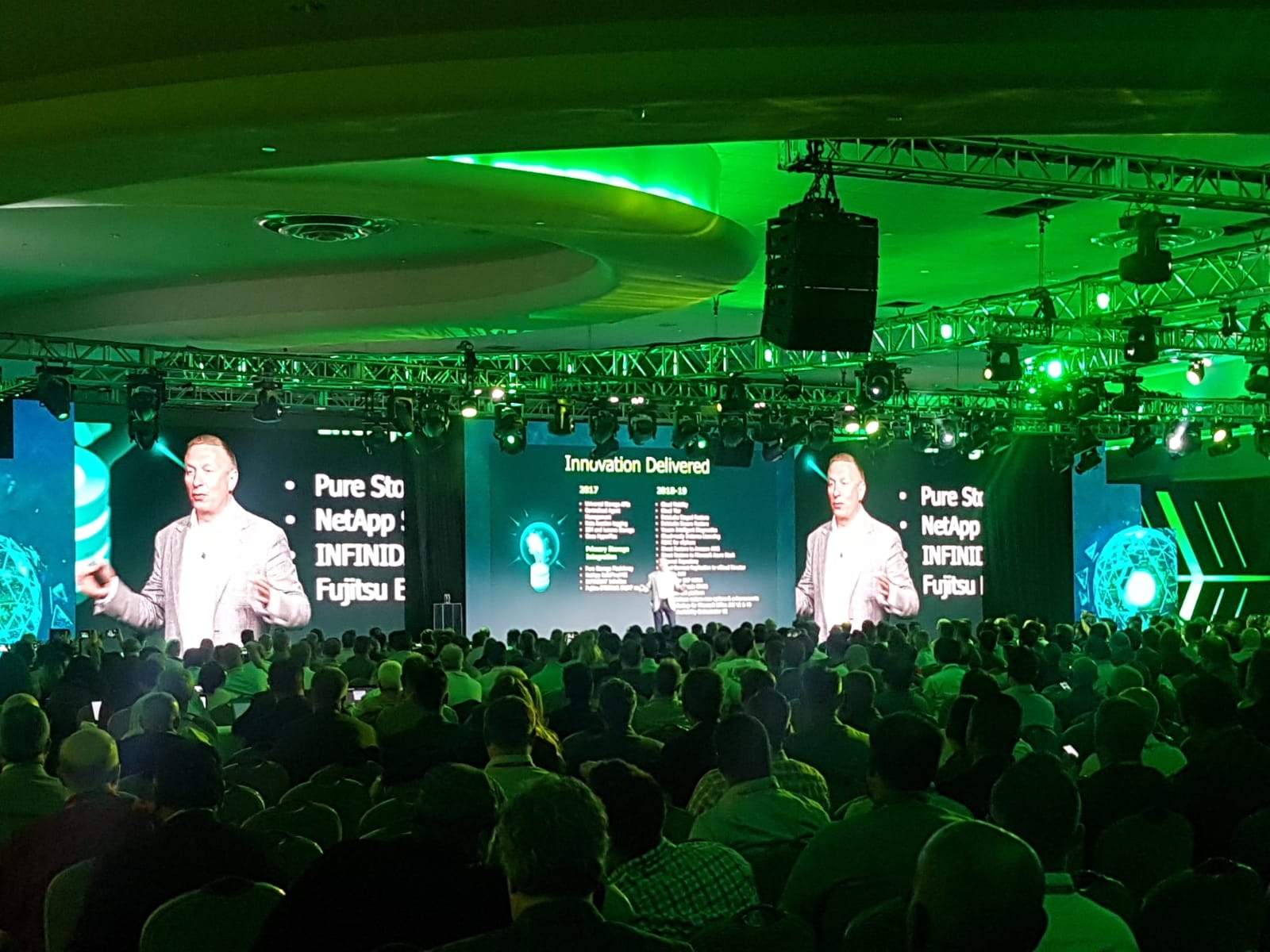
Answering this question and more at the VeeamON event in Miami Beach, Florida, are Vellante and co-host Peter Burris (@plburris). They discuss the future of data management and how Veeam is shaping up against big-name competitors in the market.
Fast recovery is the key promise of Veeam Availability Orchestrator v2, which enables restoration from Veeam backups. Vowing to “dig deeper” into this announcement in later interviews during theCUBE’s coverage of VeeamON, Vellante stated that the complicated process allows recovery without replication, along with other components such as automated testing and dynamic testing.
The introduction of open APIs is “especially important,” according to Burris. “It opens up the possibility that I can have a common platform for data assurance, data protection, but allow an ecosystem to create value in response to different classes of needs, because data protection is going to be a strategic capability within any digital business.”
The opportunity for an ecosystem can create additional layers of value and function on top of Veeam’s core set of services, better serving specific customer needs. “That’s a good thing,” Burris stated.
Add a large ecosystem to a billion-dollar-and-growing company such as Veeam, and that’s a powerful combination, according to Vellante. A huge amount of money is coming into the data protection market, and it is a “very, very hot topic,” Vellante stated.
The reason behind this is the increasing number of businesses now basing assets on data. “Digital business[es] … need to protect data, assure data, be able to recover transparently and very quickly,” Vellante explained.
“Folks have gotten the cloud wrong,” Burris stated. Rather than a strategy for centralizing computing, cloud “really is a strategy for distributing computing with control, with services with protection, with a common management,” he added.
As businesses place more value on data assets, protection across the hybrid cloud taxonomy becomes increasingly important. “Sometimes microservices ain’t so micro; it’s important stuff in there,” Vellante said.
Just as in real estate, location is key for effective and secure data management. “We want to keep data proximate to the activity that it’s going to support, not just where it’s created, but the activities that it’s going to support,” Burris stated.
But making sure the data is in the optimal location is not the only consideration. Data as an asset has services, metadata, and often code associated with it that need to be kept accessible and secure.
“The whole notion is to be able to assure that when I spin up one of these new modern applications that don’t know a lot about state, that the data is there, the services that make that data integris, secure, viable, backup and restorable, etc., are resident,” Burris said. “And, very importantly, that the metadata that describes policy and other types of things also is easily invoked, is easily applied without an enormous amount of administrative headaches.”
The end goal is to have widely distributed data with greater automation, lower administration, and greater security, Burris added.
This is complex, but the complexity has a pay off: “[It’s] raising the cost for the bad guys to get in and hack your systems,” Vellante said.
“The real beauty of this is that ultimately containers are going to reduce threat surface not just by the dimensions of location identity, but also time, because I can vary containers out,” Burris said. “And so it’s going to be a multi-dimensional approach to improving security, enhancing function, and getting greater productivity out of investment.”
Watch the complete video interview below, and be sure to check out more of SiliconANGLE’s and theCUBE’s coverage of the VeeamON event.
… We’d like to tell you about our mission and how you can help us fulfill it. SiliconANGLE Media Inc.’s business model is based on the intrinsic value of the content, not advertising. Unlike many online publications, we don’t have a paywall or run banner advertising, because we want to keep our journalism open, without influence or the need to chase traffic.The journalism, reporting and commentary on SiliconANGLE — along with live, unscripted video from our Silicon Valley studio and globe-trotting video teams at theCUBE — take a lot of hard work, time and money. Keeping the quality high requires the support of sponsors who are aligned with our vision of ad-free journalism content.
If you like the reporting, video interviews and other ad-free content here, please take a moment to check out a sample of the video content supported by our sponsors, tweet your support, and keep coming back to SiliconANGLE.






