



 INFRA
INFRA
INFRA
INFRA
INFRA

Updated:
Hewlett Packard Enterprise Co. Chief Executive Antonio Neri said uncertainty created by international trade tensions and a “shift in market dynamics” were to blame for a mixed quarter that saw the venerable tech company beat expectations on earnings but fall short on revenue.
The company, which sells servers, storage, networking, consulting and support services, today reported second-quarter earnings before certain costs such as stock compensation of 42 cents per share.
Revenue came to $7.2 billion, down 4% from a year ago. Wall Street was expecting earnings of just 37 cents per share, albeit on revenue of $7.4 billion.
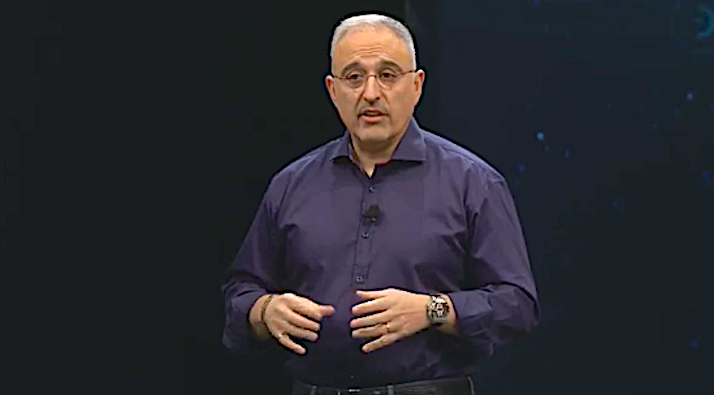
“We continue to believe that an open market where everyone can innovate and participate is important for market stability and customer confidence,” Neri (pictured) said on a conference call. “We also recently experienced an elongation in sales cycles with some customers. We will continue to monitor these and other microeconomic factors.”
It was the second successive quarter in which HPE saw its overall sales decline, though the company did report a bright spot in its storage revenue, which grew by 5%. On the downside, HPE’s overall hybrid IT unit, its biggest business, of which storage is a part, saw revenue fall by 4% to $5.6 billion. Compute revenue fell 5%.
HPE also saw revenue from its Pointnext consulting services fall by 7%. Financial services revenue was down 2%, to $896 million, while intelligent edge revenue also dropped 6%, to $666 million. Within that last segment, Aruba product revenue, which covers most of HPE’s networking equipment, fell by 8%, though Aruba services sales were more positive, growing by 16%.
Elsewhere, the company reported revenue growth of 25% in High Performance Computing, and 78% in Synergy, which is the company’s software-defined infrastructure platform.
Charles King of Pund-IT Inc. told SiliconANGLE that HPE’s hybrid solutions revenue drop is a cause for concern. “Most vendors, HPE included, have come to depend on high margin hybrid IT to drive earnings so a shortfall injures the bottom line,” he said.
HPE’s growth in HPC is encouraging since it’s clearly an area that it intends to dominate following its $1.3 billion bid to acquire supercomputer maker Cray Inc., which was revealed this month and is expected to close in the first quarter of 2020. HPE sees a big revenue opportunity in this area, saying at the time that it expects more than $4 billion-worth of exascale computing contracts to be awarded in the next five years. The HPC market as a whole is expected to grow from $28 billion in 2018 to $35 billion by 2021, and if the Cray acquisition goes through as it hopes, HPE will expect to earn a big chunk of that fortune.
Still, if HPE is hoping for a quick boost to its bottom line once it completes the Cray acquisition, it may be in for some disappointment. King told SiliconANGLE that was more of a long-term bet, since supercomputing is a “long game whose impacts aren’t felt for months or years after deals are done.”
“We continue to make important strategic moves that further enhance our competitive position and ability to better serve our customers in a hybrid world,” Neri continued. “I remain confident that our edge-to-core strategy backed by the important investments we’ve been making will generate positive shareholder returns in the near and longer term.”
Neri’s comments didn’t do much to persuade investors however, with HPE’s stock down just over 1% in after-hours trading, following an initial 2% rise. Update: Shares barely budged Friday, rising 0.2%.
The lukewarm reaction from investors underscores the fact that HPE remains a company in transition, still exiting some older businesses while trying to grow new the ones it’s moving into, said Holger Mueller, an analyst with Constellation Research Inc.
“It’s a potential concern that the revenue of the Intelligent Edge was down, as this one of the big HPE bets,” Mueller said. “On the other hand, it’s good to see the revenue mix shifting towards the more profitable HPC area, which will likely get a boost from the Cray acquisition. The next few quarters will show if HPE can regain speed in changing its revenue mix, or if its bets are not growing fast enough to make up for industry-wide sagging of on-premises server sales.”
Analyst Patrick Moorhead of Moor Insights & Strategy told SiliconANGLE that despite the revenue drop, the company actually did better than expected. He noted that factoring in “Tier-1 server sales,” which is the company’s shorthand for commodity hardware supplied to companies running large clouds and data centers, and the impact of currency conversions, its revenue grew by 1% in the quarter.
“I was a bit surprised by the Aruba decline, but I’m glad the company gave such a detailed explanation on what’s happening, and I expect a surge in the business next quarter as it sorts out its North American execution issues,” Moorhead said. “Overall, I am glad to see HPE is doing well in its targeted, higher value areas, and where it is not growing, it understands the issue and what it will do about it.”
HPE also raised its full-year earnings guidance for the sixth straight quarter. It’s now expecting full-year earnings of $1.62 to $1.72, up from $1.56 to $1.66 per share it forecast in the preceding quarter. Analysts had forecast full-year earnings of $1.65.
For the current quarter, HPE is expecting earnings of 40 to 44 cents per share, which is more or less in line with Wall Street’s forecast of earnings of 42 cents per share.
… We’d like to tell you about our mission and how you can help us fulfill it. SiliconANGLE Media Inc.’s business model is based on the intrinsic value of the content, not advertising. Unlike many online publications, we don’t have a paywall or run banner advertising, because we want to keep our journalism open, without influence or the need to chase traffic.The journalism, reporting and commentary on SiliconANGLE — along with live, unscripted video from our Silicon Valley studio and globe-trotting video teams at theCUBE — take a lot of hard work, time and money. Keeping the quality high requires the support of sponsors who are aligned with our vision of ad-free journalism content.
If you like the reporting, video interviews and other ad-free content here, please take a moment to check out a sample of the video content supported by our sponsors, tweet your support, and keep coming back to SiliconANGLE.






