 CLOUD
CLOUD
CLOUD
CLOUD







CLOUD

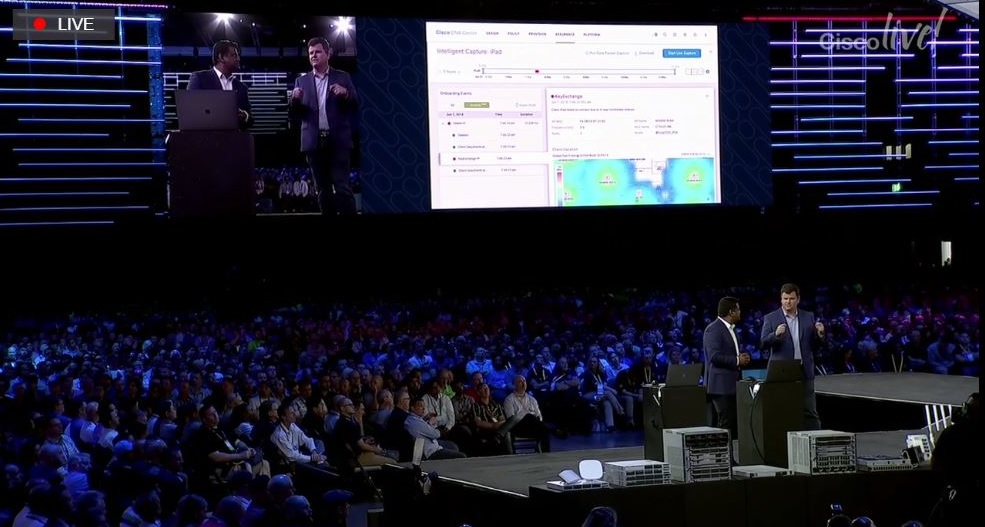
Company executives at the Cisco Live event in San Diego kicked off the conference today by pointing out that this year marked the 30th anniversary of the event. It was actually called “Networkers” back in 1989, and Cisco Systems Inc. has shown it aims to survive the significant transition that has taken place in the technology world from hardware-driven networks to software-powered platforms since then.
“It’s software driven,” Stu Miniman, host of theCUBE, SiliconANGLE Media’s mobile livestreaming studio, said during the opening day of Cisco Live 2019. “The point they want to make is that cloud and software-defined networking was going to destroy Cisco. Well, here we are five to 10 years into these waves and Cisco is going strong.”
Miniman was joined by co-hosts Lisa Martin and Dave Vellante, and they discussed the impact of Cisco’s software focus on its revenues, the recent acquisition of a security company, and challenges the company will face as it moves into new areas (see the full interview with transcript here).
Cisco’s current software focus is echoed in its balance sheet as well. The firm’s ability to ride the wave of transition from hardware to software and embark on a subscription-based revenue model have led to string of revenue growth quarters.
“They’ve got a $250 billion market cap, which is almost a 5x revenue model,” Vellante noted. “That’s softwarelike revenue multiples. Hardware companies don’t typically get that.”
Prior to the start of the conference, Cisco announced that it would acquire Sentryo SAS, a French company that provides real-time threat detection for internet of things platforms. Cisco has been actively bolstering its cybersecurity offerings, having acquired another security firm — Duo Security Inc. — last year.
“Cybersecurity is one of their fastest-growing businesses,” Martin said.
Although Cisco has shown success in transitioning from a hardware provider to a software and security services business, there remain other areas where some analysts will need convincing that the company can compete effectively. One of those surrounds initiatives involving 5G technologies for the new mobile broadband standard, which will be deployed over the next few years.
“Look at something like 5G,” Miniman said. “Cisco is not the leader in 4G and LTE. There’s areas where Cisco is trying to go into that have not necessarily been their strongholds in the past.”
Here’s the complete video analysis, part of SiliconANGLE’s and theCUBE’s coverage of the Cisco Live 2019 event:
Support our mission to keep content open and free by engaging with theCUBE community. Join theCUBE’s Alumni Trust Network, where technology leaders connect, share intelligence and create opportunities.
Founded by tech visionaries John Furrier and Dave Vellante, SiliconANGLE Media has built a dynamic ecosystem of industry-leading digital media brands that reach 15+ million elite tech professionals. Our new proprietary theCUBE AI Video Cloud is breaking ground in audience interaction, leveraging theCUBEai.com neural network to help technology companies make data-driven decisions and stay at the forefront of industry conversations.





