



 AI
AI
AI
AI
AI

Habana Labs Ltd. is throwing down the gauntlet to Nvidia Corp. in the artificial intelligence market.
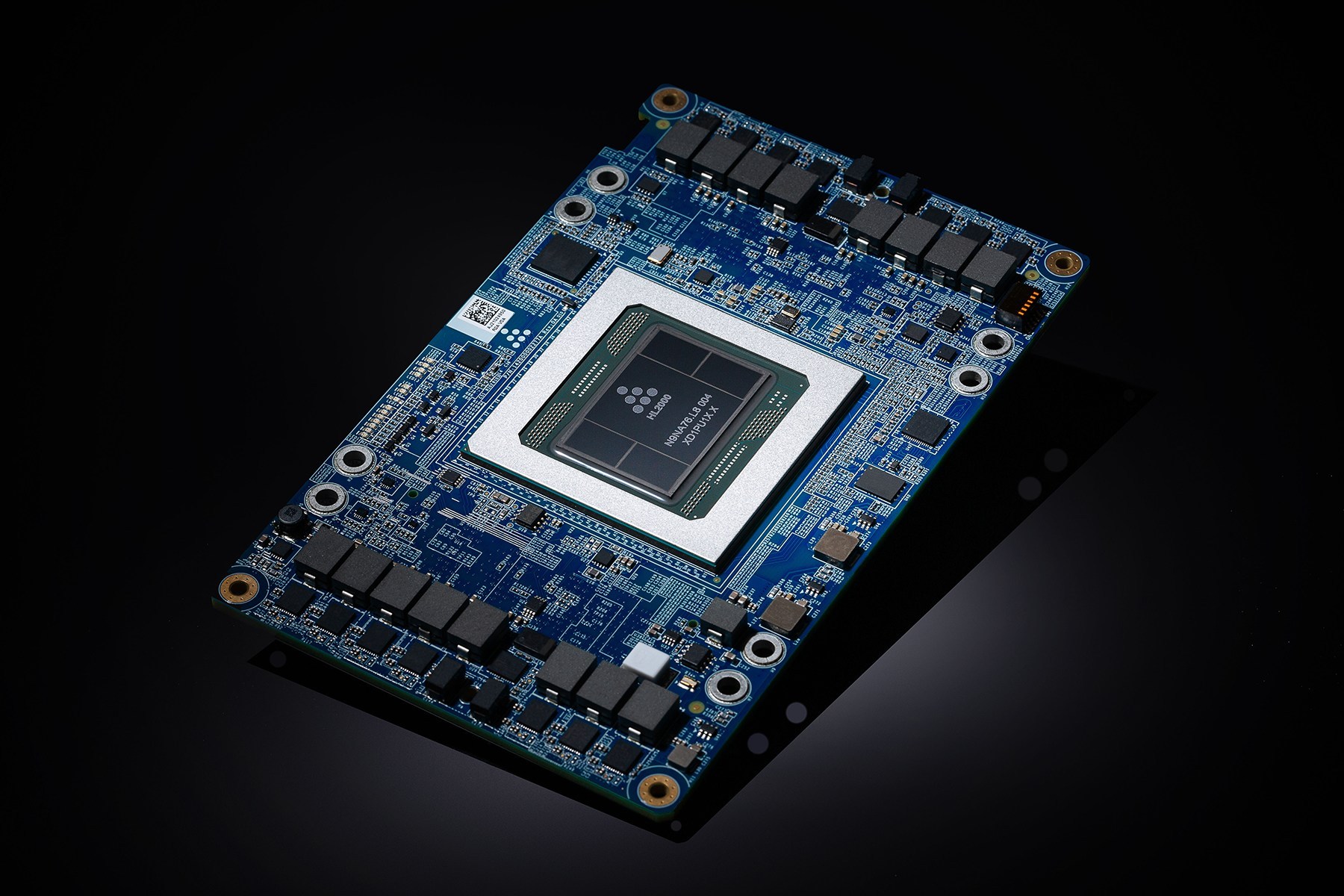
The Israeli startup, which is backed by $120 million in funding, today unveiled a chip called Gaudi (pictured) built for the sole purpose of training AI models.
That’s the part of the development lifecycle in which engineers hone their algorithms’ performance through repeated trial and error. An AI can take tens of millions of attempts to master a task, which means any technology that speeds up the process has the potential to pay big dividends.
Gaudi promises to provide major performance gains. To demonstrate its speed, Habana conducted an internal test that pitted the chip against Nvidia Corp.’s flagship V100 data center graphics card. The startup claims that Gaudi ran ResNet-50, a popular AI model commonly used for benchmarks, 3.8 times faster than the V100 and set a new industry performance record in the process.
It’s the second RestNet-50 record Habana has racked up in the past year. The startup achieved the previous one with Goya, its first chip, which is designed to power AI models that have already been trained and are used in production to process live data.
Gaudi shares a common design with Goya. They’re both comprised of eight processing cores based on a so-called very long instruction word architecture, which executes computations in parallel rather than one-by-one as a central processing unit does. What sets Gaudi apart is that it has different memory and throughout specifications better suited for AI training.
Habana will bring the chip to market in two forms: a PCIe card and a mezzanine accelerator designed to be loaded onto other, bigger cards. The startup has also developed a data center appliance called HLS that is loaded with eight mezzanine accelerators.
On top of providing fast processing speeds, Gaudi is also scalable. The mezzanine and PCIe cards feature eight and 10 built-in Ethernet ports, respectively, with each port supporting a 100-gigabit-per-second connection. That removes the need for companies to add in extra chips to handle networking, which will improve the efficiency of large-scale AI environments with a high number of Gaudi processors.
Habana plans to start sampling the chip later this year. The startup claims that its earlier Goya processor is already used by several customers, including cloud providers and autonomous vehicle firms. Habana also boasts big-name backers: Its most recent $75 million round was led by Intel Corp. with participation from Bessemer Venture Partners, Battery Ventures and others.
… We’d like to tell you about our mission and how you can help us fulfill it. SiliconANGLE Media Inc.’s business model is based on the intrinsic value of the content, not advertising. Unlike many online publications, we don’t have a paywall or run banner advertising, because we want to keep our journalism open, without influence or the need to chase traffic.The journalism, reporting and commentary on SiliconANGLE — along with live, unscripted video from our Silicon Valley studio and globe-trotting video teams at theCUBE — take a lot of hard work, time and money. Keeping the quality high requires the support of sponsors who are aligned with our vision of ad-free journalism content.
If you like the reporting, video interviews and other ad-free content here, please take a moment to check out a sample of the video content supported by our sponsors, tweet your support, and keep coming back to SiliconANGLE.






