



 CLOUD
CLOUD
CLOUD
CLOUD
CLOUD

In 2010, the administration of then President Barack Obama issued a 25-point implementation plan to reform federal information-technology management. That plan was soon followed by a “cloud-first” strategy for the nation’s government agencies.
As companies such as Amazon Web Services Inc. continued to work with its customers in the federal government, the level of tech understanding has changed dramatically since the administration’s directives were issued.
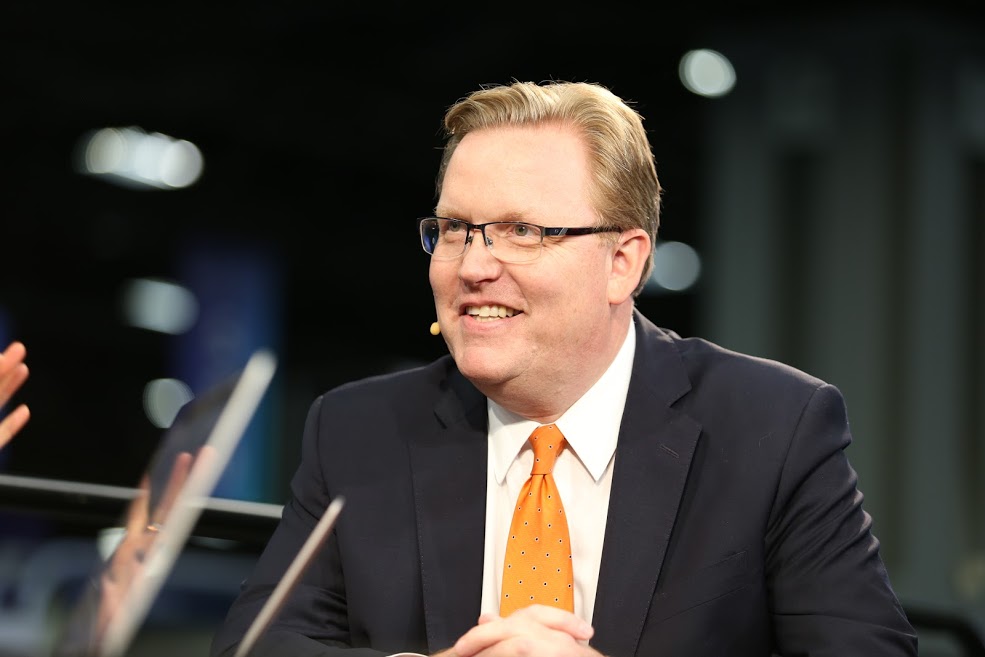
“When I started working for AWS seven years ago here in Washington D.C., a lot of people didn’t understand what cloud computing even was,” said Shannon Kellogg (pictured), vice president of public policy, Americas at AWS. “Now that conversation has completely changed. Policy makers more and more are seeing cloud computing as part of the answer to help organizations and even governments strengthen their cybersecurity posture.”
Kellogg spoke with John Furrier (@furrier) and Rebecca Knight (@knightrm), co-hosts of theCUBE, SiliconANGLE Media’s mobile livestreaming studio, during the AWS Public Sector Summit in Washington, D.C. They discussed the different views of working with government customers by some AWS competitors and how the company helped facilitate federal Open Data legislation (see the full interview with transcript here). (* Disclosure below.)
While Amazon’s dialogue with agency officials and policy makers has changed in less than a decade, the company has found itself in the middle of an old-fashioned dispute with one of its competitors over a highly prized cloud computing contract for the Department of Defense. The $10-billion contract for cloud-computing services, known as Joint Enterprise Defense Infrastructure, or JEDI, has been embroiled in a legal struggle over claims by Oracle Corp. that the process for awarding the lucrative deal, presumably to AWS, was biased in favor of the cloud computing giant because of its prior ties to Defense Department officials.
“We generally look at them as the legacy players, the legacy IT companies that are trying to protect their particular business model and their margins and the way they’re doing business versus listening to your customers, listen to where they want to go, and try to align to that,” Kellogg said. “Oracle is doing the exact opposite. It doesn’t appear they are listening to their customers at all.”
Kellogg pointed to the OPEN Government Data Act, first introduced in 2016 and signed into law in January, as a way that tech companies can work with government customers for the public good. The act required that non-sensitive government data be made publicly available. AWS had previously established the Registry of Open Data on AWS to help facilitate the data-sharing process.
“It’s one of the areas over the last few years that we’ve gotten some important things done,” Kellogg noted. “It took a lot of education, it took a lot of outreach to policy makers to get them to understand the benefits of Open Data.”
Watch the complete video interview below, and be sure to check out more of SiliconANGLE’s and theCUBE’s coverage of the AWS Public Sector Summit. (* Disclosure: TheCUBE is a paid media partner for the AWS Public Sector Summit. Neither Amazon Web Services Inc., the sponsor for theCUBE’s event coverage, nor other sponsors have editorial control over content on theCUBE or SiliconANGLE.)
… We’d like to tell you about our mission and how you can help us fulfill it. SiliconANGLE Media Inc.’s business model is based on the intrinsic value of the content, not advertising. Unlike many online publications, we don’t have a paywall or run banner advertising, because we want to keep our journalism open, without influence or the need to chase traffic.The journalism, reporting and commentary on SiliconANGLE — along with live, unscripted video from our Silicon Valley studio and globe-trotting video teams at theCUBE — take a lot of hard work, time and money. Keeping the quality high requires the support of sponsors who are aligned with our vision of ad-free journalism content.
If you like the reporting, video interviews and other ad-free content here, please take a moment to check out a sample of the video content supported by our sponsors, tweet your support, and keep coming back to SiliconANGLE.






