



 EMERGING TECH
EMERGING TECH
EMERGING TECH
EMERGING TECH

Researchers at IBM Corp.’s Zurich lab today unveiled their latest project: a chemical detection system called Hypertaste that uses artificial intelligence to classify liquids.
Distinguishing different beverages and food items is usually a trivial task for humans, but the same can’t be said for the machines that experts use when the taste test doesn’t cut it.
Systems capable of performing chemical analysis on liquids generally fall into one of two categories. They’re either portable instruments that provide only limited information such as the pH level of a lake or bulky, expensive systems built for use in labs.
IBM developed Hypertaste for scenarios where a detailed chemical analysis is necessary but it’s not possible or economically feasible to send a sample to a lab. One application the company envisions for the system is evaluating the water quality of rivers. Another is finding counterfeit goods, such as low-quality perishable items shipped to a grocery chain by an untrustworthy supplier.
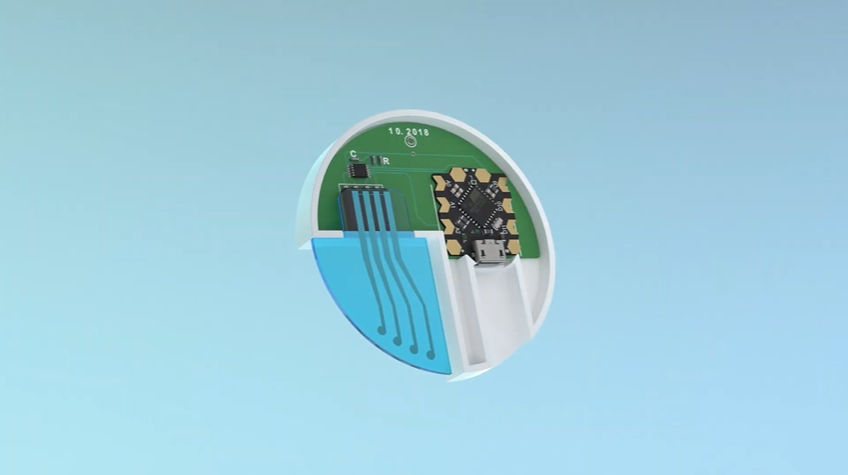
Hypertaste checks chemicals with an array of miniature sensors developed in-house by IBM. Each sensor is comprised of a pair of electrodes coated with special, chemically sensitive polymer coatings. They produce an electrical signal when they come into contact with specific compounds.
IBM has engineered the polymer coatings to generate a unique, easily distinguishable signal for each compound. This allows Hypertaste to combine the readings into a detailed chemical profile of a liquid.
“Most liquids of practical use are complex, meaning they comprise a rather large number of chemical compounds, none of which can serve as an identifier alone,” Patrick Ruch, a researcher at IBM’s Zurich lab, explained in a blog post. “By building an array of such cross-sensitive sensors one can obtain a holistic signal, or fingerprint, of the liquid in question.”
Hypertaste doesn’t process this information on its own. Instead, the device sends measurements to a cloud-based analytics environment, where a machine learning model compares the analyzed liquid against a database of known chemicals. The algorithm identifies the closest matches and sends them to a companion app meant to run on researchers’ smartphones.
The entire process takes less than a minute, according to IBM. “Hypertaste proves that a portable device could be capable of rapid fingerprinting of complex liquids – a capability currently lacking in the toolkit of chemical analytics,” Ruch wrote.
Another advantage of Hypertaste is versatility. Since the chemical analysis is done by a cloud-based model, reconfiguring the device to detect a new set of liquids is simply a matter of updating or changing the algorithm.
“Sensors could learn from one another by exchanging information about new liquids they encounter,” Ruch wrote. “Deploying many such sensors in the field would add an important but missing building block to the Internet of Things: chemical sensors.”
… We’d like to tell you about our mission and how you can help us fulfill it. SiliconANGLE Media Inc.’s business model is based on the intrinsic value of the content, not advertising. Unlike many online publications, we don’t have a paywall or run banner advertising, because we want to keep our journalism open, without influence or the need to chase traffic.The journalism, reporting and commentary on SiliconANGLE — along with live, unscripted video from our Silicon Valley studio and globe-trotting video teams at theCUBE — take a lot of hard work, time and money. Keeping the quality high requires the support of sponsors who are aligned with our vision of ad-free journalism content.
If you like the reporting, video interviews and other ad-free content here, please take a moment to check out a sample of the video content supported by our sponsors, tweet your support, and keep coming back to SiliconANGLE.






