




 It’s a big week for Google – the company surpassed Microsoft on the New York Stock Exchange, becoming the second largest tech firm by market cap after Apple. It’s a troubling time for Microsoft, as cloud and mobile trends continue to shift away from Microsoft’s core technology and services.
GOOG was up one percent at $761.78 when the markets closed yesterday, with market capitalization of about $249.9 billion compared with Microsoft’s $247.2 billion. The PC software maker’s stock fell less than one percent to $29.49, according to Bloomberg.
“The PC hardware business is obviously struggling,” said Martin Pyykkonen, a Greenwood Village, Colorado-based analyst at Wedge Partners Corp. “The transition here is pretty straightforward in terms of where things have moved to and certainly that’s cloud, that’s Web.”
Apple, the most valuable company on the stock exchange, is a mobile powerhouse, and Google rivals the iPhone maker with the most popular handset operating system on the market today. Microsoft outperforms both firms in the PC software space, but the numbers clearly show where the trend is going. Microsoft is having a hard time expanding its presence in the mobile market, but hopes to change that with a new strategy that relies on the cloud and Windows 8.
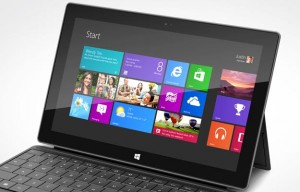
Microsoft is looking to replicate the core functionality of the desktop to tablets with the upcoming release of its OS, which for the first targets both personal computers and mobile devices. Windows 8 couples the enormous software ecosystem PC users are so appreciative of with the Metro interface from Windows Phone 7 and a built-in app store – and Microsoft is not stopping here.
The next release of the Office suite will not bind licenses to individual end points. Office 2013 will be accessible from any device, not as a local app but as a web service that will require only an internet connection, a username and a password.
… We’d like to tell you about our mission and how you can help us fulfill it. SiliconANGLE Media Inc.’s business model is based on the intrinsic value of the content, not advertising. Unlike many online publications, we don’t have a paywall or run banner advertising, because we want to keep our journalism open, without influence or the need to chase traffic.The journalism, reporting and commentary on SiliconANGLE — along with live, unscripted video from our Silicon Valley studio and globe-trotting video teams at theCUBE — take a lot of hard work, time and money. Keeping the quality high requires the support of sponsors who are aligned with our vision of ad-free journalism content.
If you like the reporting, video interviews and other ad-free content here, please take a moment to check out a sample of the video content supported by our sponsors, tweet your support, and keep coming back to SiliconANGLE.






