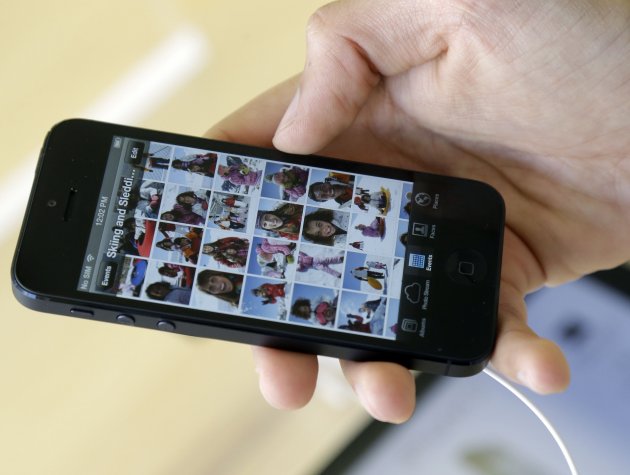







 Okay, here’s some hard-hitting news for Research In Motion (RIM), as the U.S. Immigration & Customs Enforcement (ICE) has ditched BlackBerry in favor of iPhone by giving the $2.1 million contract to supply iPhone devices to Apple, and shifting the services of more than 17,600 users into Apple’s kitty. The contract was awarded to Apple by ICE back in September, but was made public just a few days back.
As per the contract award document, Apple’s strict control of the hardware platform and operating system, independent of the telecommunication service provider provides ICE with the greatest degree of control and management to ensure reliable services to its mission users. From the last eight years, ICE was relying on RIM’s technology, but now it lacked due to its commercial viability as it could not meet the mobile needs of the agency. Almost all mobile platforms were considered for the contract, but it was Apple that won the race. Nokia lost it because it failed to innovate, making it laggard in the consumer market and too risky for adoption as a “go to” choice for enterprise use.
Next, Microsoft smartphones with Windows 7 platform were also rejected as those were identified risky because of their limited use in the market. While other operating systems such as Linux, Bada, Symbian, Palm, and Windows were eliminated from further evaluation, RIM’s platform was kept for further evaluation because of its status as a legacy product in ICE. Google’s Android also lost as the operating system is an open source across various manufacturers, and includes implementations that can modify elements of the operating system to accommodate new features. This posed a security risk for the ICE.
“Government organizations globally have relied on the security of BlackBerry technology for over a decade, and it is trusted by some of the most security conscious global organizations and over 90 percent of Fortune 500 companies, RIM said today. “We have 1 million government customers in North America alone who depend on BlackBerry, and more than 400,000 government customers worldwide upgraded their devices in the past year,” it added. “We are committed to the mobility needs of government agencies around the world.”
Not only here, Apple and other companies are threatening BlackBerry in other domains as well. A recent instance is of the BYOD capabilities, where Apple and Google are threatening to take over RIM’s market as companies look into alternative platforms for the iPhone, Android devices and tablets.
Support our mission to keep content open and free by engaging with theCUBE community. Join theCUBE’s Alumni Trust Network, where technology leaders connect, share intelligence and create opportunities.
Founded by tech visionaries John Furrier and Dave Vellante, SiliconANGLE Media has built a dynamic ecosystem of industry-leading digital media brands that reach 15+ million elite tech professionals. Our new proprietary theCUBE AI Video Cloud is breaking ground in audience interaction, leveraging theCUBEai.com neural network to help technology companies make data-driven decisions and stay at the forefront of industry conversations.





