







 “Merry Christmas,” was the very first short messaging service (SMS), or popularly referred to as text, sent on December 3, 1992 by British engineer Neil Papworth using his computer. The message was sent to Richard Jarvis of Vodafone who was using an Orbitel 901 mobile phone.
As we mentioned earlier, today marks the 20th anniversary of SMS. Though texting has come a long way, reshaping our language around 160 characters, the interest in SMS is waning as the web takes over mobile devices. There’s a rising interest in data-hungry social platforms and instant messaging services, riding the smartphone wave.
Earlier in November, the Chetan Sharma Consulting revealed that mobile operators experienced the first-ever overall decline in text traffic. SiliconANGLE News Desk Editor Kristen Nicole notes that the decline signals a business opportunity for network carriers, indicative of consumers’ shift away from GSM networks to web data.
Chetan’s research shows that texting is in decline and it’s because more people are using apps that connect via WiFi or use data plans to communicate. And it doesn’t help that more companies are showing interest in this industry.
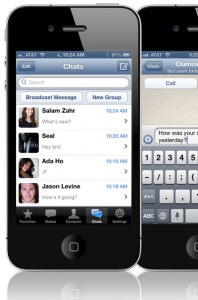 Rumor has it Facebook is eyeing Whatsapp – a paid mobile messaging app that delivers ad-free service. This is said to be in conjunction with Facebook’s plan of conquering the mobile scene. In 2011, Whatsapp claimed that they are serving over one billion messages per day. That translates to “41,666,667 messages an hour, 694,444 messages a minute, and 11,574 messages a second.” They didn’t exactly disclose how many users they have, but those numbers suggest that they have more than enough users to boost Facebook’s mobile mark.
Here’s more proof of the growing interest in SMS alternatives. Plivo, the cloud service for developing voice and messaging platform, just secured a $1.75 million funding from investment firms Andreessen Horowitz, Battery Ventures, Qualcomm Incorporated and SV Angel. Plivo provides a powerful, open platform, flexible API, and backed by 24/7 support which means they don’t force their clients to use their carrier contracts.
“There are three key aspects to building voice and messaging apps,” Venky Balasubramanian, Co-Founder of Plivo, explained. “Establishing carrier contracts, building the technology for the infrastructure and then a team for operating and scaling it.
“We discovered it’s easy for our customers to get carrier contracts in place once they have decent volumes, so there’s little value-add for a platform provider to resell minutes. So instead of focusing on just reselling carrier minutes, we concentrated on building a platform that offers the most reliable infrastructure and the highest level of scale with no carrier lock-in. We do provide carrier services if needed by our customers; we have local phone numbers in 50 countries. The market response to our platform has been incredibly positive.”
But are we really over texting? Not quite.
 Short and quick
If you need to get a hold of someone but you’re too busy to chat, you can just send a quick text and end it with “We’ll talk more about it later.” Problem solved.
Wireless woes
A lot of people have grown fond of using services such Viber that let you call and send messages via WiFi. But WiFi connections aren’t always available, and turning off data-hungry social apps can minimize data usage to keep bills low.
Poor signal
And of course, in instances that you need to contact someone but your carrier’s signal is quite unstable in your current location and calling someone is quite frustrating, your best bet is just sending a text message.
Support our mission to keep content open and free by engaging with theCUBE community. Join theCUBE’s Alumni Trust Network, where technology leaders connect, share intelligence and create opportunities.
Founded by tech visionaries John Furrier and Dave Vellante, SiliconANGLE Media has built a dynamic ecosystem of industry-leading digital media brands that reach 15+ million elite tech professionals. Our new proprietary theCUBE AI Video Cloud is breaking ground in audience interaction, leveraging theCUBEai.com neural network to help technology companies make data-driven decisions and stay at the forefront of industry conversations.




