







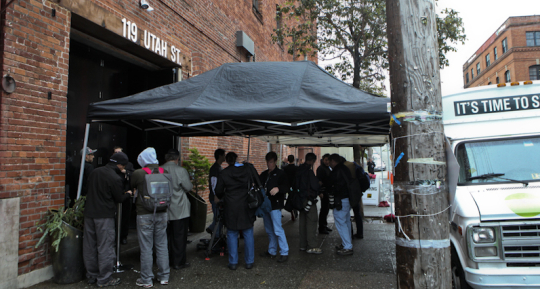
 Right now, Microsoft has gathered several dozen of their closest friends in the press to make an announcement about the upcoming Windows Mobile development track that’s been running under codename “Project Pink.”
According to Ina Fried at the event:
The pair of slider phones, each with a touch screen and keyboard, can be thought of as successors to the Sidekick line that Microsoft got with its Danger acquisition. Part of a long-running internal project called "Pink," they will be heavy on social networking and also will be the first phones to be able to access the Zune music service.
 What Ina describes doesn’t sound much like what I got to preview in Austin, but we’ll shortly know what Microsoft is debuting. There’s not a lot else to report at the moment other than the event is being held in San Francisco at club Mighty, and according to John Furrier (who’s there), they’re serving waffles.
We’ll be following the announcements as they come down the pike. Stay tuned to the site, and we’ll inform you of what’s important as soon as we know.
UPDATE: The conference is over. Microsoft has unveiled two new phones, both designed after the same basic premise, physically.
The devices will be available exclusively through Verizon in May this year, and in Europe later in 2010 via Vodafone.
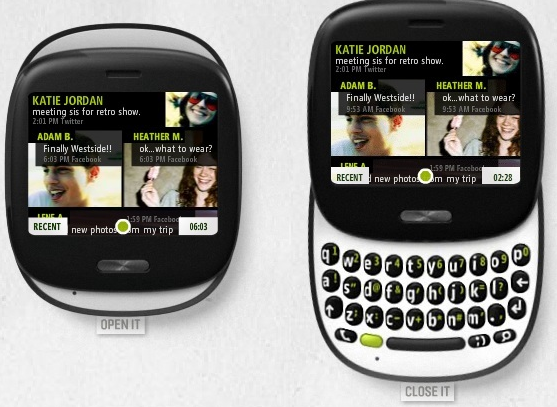
The devices are dubbed the Kin Spot, and the Kin Loop. The Spot is geared around content sharing, with a touchscreen that allows you drag content, images and video around for instant sharing to people in your contact database, or direct interface with Facebook.
The Loop is geared around being a content consumption device centered on real time news feeds.
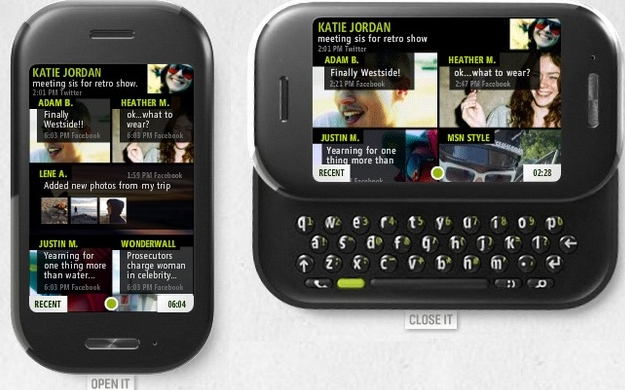
Both phones connect with something called “Kin Studio,” which is a site that, under an interface that I’ve never seen the likes of before, stores all the content generated by you on your phone.
It’s an interesting first stab at the Windows 7 phone concept that Microsoft has been talking about extensively in recent months. It’s drastically different from what I’ve been shown before, but definitely takes the idea of a news feed, particularly in the instances demonstrated in Studio and the Loop, to the next level. Data still seems to be represented in reverse chronological order, but it has a next generation magazine-like look and feel that I haven’t seen demonstrated in any other service I’ve seen to date.
If the public latches on to this method of data representation, this could be a runaway hit. Any time you mess with the standard ways of representing data like this, it’s a risk. The public could love it or hate it, and the only way to really tell if it’s going to be accepted is to put it in peoples’ hands and see if they’re able to make use of it.
Support our mission to keep content open and free by engaging with theCUBE community. Join theCUBE’s Alumni Trust Network, where technology leaders connect, share intelligence and create opportunities.
Founded by tech visionaries John Furrier and Dave Vellante, SiliconANGLE Media has built a dynamic ecosystem of industry-leading digital media brands that reach 15+ million elite tech professionals. Our new proprietary theCUBE AI Video Cloud is breaking ground in audience interaction, leveraging theCUBEai.com neural network to help technology companies make data-driven decisions and stay at the forefront of industry conversations.




