



 NEWS
NEWS
NEWS
NEWS
NEWS

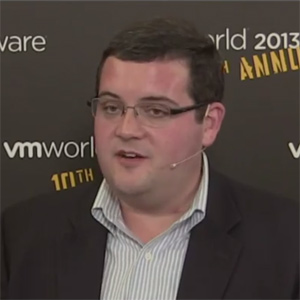 Phillip Reynolds, the Data Center Director for collection agency William & Fudge, stopped by theCube during VMworld 2013 to discuss how EMC and VMware are fueling his company’s growth.
William & Fudge employs 400 staffers, up from 160 four years ago. Reynolds’ main responsibility is addressing the needs of his IT’s organizations rapidly growing user base while keeping overheads down. He tells theCube hosts Dave Vellante and Stu Miniman that his agency’s data center houses 60 VMware-virtualized servers, a View-based VDI deployment and a backup environment that consists of an EMC VNX array and a Cisco UCS compute platform.
Reynolds reflects that disaster recovery was a challenge before his company adopted virtualization four years ago. William & Fudge had since implemented vCenter Site Recovery Manager with EMC RecoverPoint to realize a 30- and 5-minute RPO and RTO, respectively. This approach enables the firm to protect its data without investing in continuous data protection.
The director boasts that he never had to perform a recovery, but he did use RecoverPoint to migrate six servers from a colocation facility to the primary site.
Asked to elaborate on his management tools, Reynolds says that he uses vSphere and EMC plugins. He adds that he will consider deploying VMware’s newly announced vCloud Hybrid Service after it becomes compliant with the Payment Card Industry Data Security Standard (PCI DSS) and other regulations William & Fudge has to meet.
On the storage size, the company uses 10 flash drives, or six racks worth, to reduce latency in its 27-terabyte environment and accelerate virtual desktop replication. The technology speeds up boot times and enables sales personnel to access their desktops on the road, improving productivity in the process.
… We’d like to tell you about our mission and how you can help us fulfill it. SiliconANGLE Media Inc.’s business model is based on the intrinsic value of the content, not advertising. Unlike many online publications, we don’t have a paywall or run banner advertising, because we want to keep our journalism open, without influence or the need to chase traffic.The journalism, reporting and commentary on SiliconANGLE — along with live, unscripted video from our Silicon Valley studio and globe-trotting video teams at theCUBE — take a lot of hard work, time and money. Keeping the quality high requires the support of sponsors who are aligned with our vision of ad-free journalism content.
If you like the reporting, video interviews and other ad-free content here, please take a moment to check out a sample of the video content supported by our sponsors, tweet your support, and keep coming back to SiliconANGLE.






