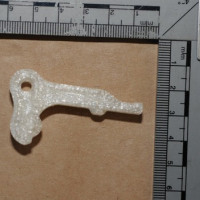







 Police in Manchester, UK, found a 3D printer and initially believed that criminals may have been used in an attempt to manufacture a weapon. During an raid on a local property in the area of Greater Manchester on October 24, the officers discovered what they thought was a trigger mechanism, and another part that was originally identified as a magazine capable of holding bullets.
The seizure, initially described as “a really significant discovery”, was part of a much-heralded crackdown on organized crime, Operation Challenger, launched by Greater Manchester Police (GMP). The police described how they had seized a MakerBot Replicator 2 3D printer and printed components they suspected of being gun parts.
“If what we have seized is proven to be viable components capable of constructing a genuine firearm, then it demonstrates that organized crime groups are acquiring technology that can be bought on the high street to produce the next generation of weapons,” the police said.
A 38-year-old man from Wythenshawe, who also makes and sells 3D models from his store, has been arrested on suspicion of making gunpowder. He admitted to downloading a blueprint of how to make part of a gun out of curious, called the receiver, onto his computer. The shopkeeper said he used the 3D printer, which he bought nine months ago, to make plastic models for customers–including dinosaurs, insects and statues for cake decoration.
But hours after the initial press, GMP’s Assistant Chief Constable Steve Heywood released a second statement saying the 3D printer components recovered weren’t part of the 3D gun. It said detectives were attempting to establish exactly what these parts can be used for and whether they pose any threat.
It has been well documented across the web, including on Gigaom, that the parts seized by the GMP are not “gun parts” but instead space components for the 3D printer itself. As the market for 3D printers expands, it’s possible for printers to print their own space components (or even upgrades) making 3D printers one of the few devices that can be part of their own repair and enhancement.
Meanwhile, the GMP have defended the raid and initial identification as part of straying on the safe side of the fence when criminality intersects with 3D printing. The initial press documents as to the raid and the seizure on the GMP’s website, however, appear to have gone offline.
“We need to be absolutely clear that at that this stage, we cannot categorically say we have recovered the component parts for a 3-D gun,” Heywood said. “Clearly the fact we have seized a 3D printer and have intelligence about the possible production of a weapon using this technology is of concern. It is prudent we establish exactly what these parts can be used for and whether they pose any threat. The worrying thing is that the potential behind these printers which could allow people to construct a firearm in their own home.”

3D printer for gun
The first known successful firing of a 3D-printed gun took place earlier this year in May. The gun fired by American Cody Wilson from the non-profit 3D firm Defense Distributed, which has a stated goal of making weapons available to everyone. Cody Wilson uploaded therefore instructions for making the gun to the Internet, where 100,000 managed to download it before the authorities closed his site.
The situation is so severe that the weapons produced by these instructions is dangerous not only for the people it affected, but also for the shooter. Moreover, it can easily be hide and sneak, because it is plastic, and thus invisible to metal detectors.
The 3D gun was made with a Dimension SST printer from 3D printing company Stratasys and is mostly made out of ABS plastic. Stratasys and MakerBot, the leader in desktop 3D printing, recently signed a deal that to extend Stratasys’ product offering to include a full range of 3D printing capabilities. MakerBot currently leads the desktop 3D printer market, selling 22,000 units and half of that number is from sales of the MakerBot Replicator 2.
Support our mission to keep content open and free by engaging with theCUBE community. Join theCUBE’s Alumni Trust Network, where technology leaders connect, share intelligence and create opportunities.
Founded by tech visionaries John Furrier and Dave Vellante, SiliconANGLE Media has built a dynamic ecosystem of industry-leading digital media brands that reach 15+ million elite tech professionals. Our new proprietary theCUBE AI Video Cloud is breaking ground in audience interaction, leveraging theCUBEai.com neural network to help technology companies make data-driven decisions and stay at the forefront of industry conversations.





