







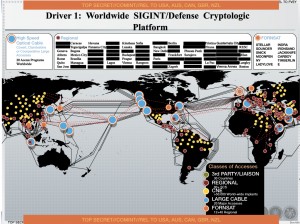
 Quite a few familiar headlines cropped up this week, with Edward Snowden leaking yet more classifying documents detailing the NSA’s cyber-espionage operations. The latest reports indicate that the agency infiltrated tens of thousands of networks around the world using specialized hardware designed from the ground up to collect sensitive information.
A slide dated 2012 outlines the NSA’s use of “Computer Network Exploitation” or CNE throughout more than 50,000 locations worldwide, spanning 20 “Access Programs” and five continents. SiliconANGLE CyberSecurity Editor John Casaretto observed that the agency uses the same tactics employed by hacktivists and cyber criminals to operate digital sleeper cells that can be activated as needed to siphon information from infected end-points.
The NSA has a deep bag of tricks. Besides operating sophisticated command-and-control networks, it also taps fiber-optic connections to eavesdrop major tech companies. Google and Yahoo insiders reportedly believe that the spy agency compromised undersea cabling operated by providers like Verizon Communications and Level 3 Communications to intercept their data center traffic.
While still at the center of the Snowden controversy, the NSA’s spying activities have been overshadowed by the revelation that the whistleblower possesses a “doomsday” cache believed to contain personal information belonging to U.S. and allied intelligence personnel. The highly classified documents that some suspect to be stashed away in the cloud contain names and resumes of employees working for the UK’s Government Communications Headquarters, according to “sources familiar with the matter.”
Over in the Bitcoin ecosystem, hackers stole about $990,000 worth of the crypto-currency from Bitcoin Internet Payment Services (BIPS), one of the largest bitcoin payment processors in Europe. Founding CEO Kris Henriksen gave users a detailed account of the heist, which started with a distributed denial of service that brought BIPS down and enabled the hackers to uncover a vulnerability they would exploit to walk away with 1,295 Bitcoins two days later.
Support our mission to keep content open and free by engaging with theCUBE community. Join theCUBE’s Alumni Trust Network, where technology leaders connect, share intelligence and create opportunities.
Founded by tech visionaries John Furrier and Dave Vellante, SiliconANGLE Media has built a dynamic ecosystem of industry-leading digital media brands that reach 15+ million elite tech professionals. Our new proprietary theCUBE AI Video Cloud is breaking ground in audience interaction, leveraging theCUBEai.com neural network to help technology companies make data-driven decisions and stay at the forefront of industry conversations.




