







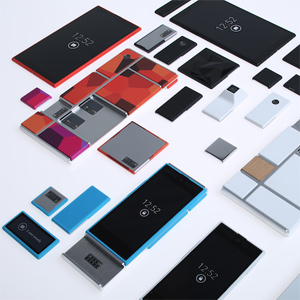
 Google announced that Project Ara, its modular smartphone, on which work began not so long ago, would be a real device, not just a concept. Google holds the Advanced Technology and Projects division of Motorola after selling out to Lenovo. The division is working on Project Ara, a new initiative to create the smartphone modular and upgradeable over time. It is an ambitious project that follows the trail of Project Tango that had captured the attention of the public and press.
With Project Ara, users can decide how to create their own smartphone, choosing from several separate modules.
This means that the Google will give the opportunity to build a mobile where consumers can choose the screen, the camera and other hardware components and also change whole parts over time. The purpose of Google project is to create unique and customizable smartphones that do for hardware what the Android platform has done for software.
Google is talking about a further step forward in terms of customization–those who want a more powerful product they can choose CPU, GPU, RAM and those who want to focus on a high quality camera can change with a better one.
Mobile developer is the key of success of Project Ara
Google emphasizes that the modules can be anything such as a new battery or keyboard, and even the addition of unusual components such as a pulse oximeter. Obviously the developer community (in this case, both hardware and software developers) will be a big part of this project. Google is keen to work closely with developers to start creating modules, and estimated that the alpha version of the development kit is ready for this winter.
Google has announced that the first conference for developers interested in the initiative to create a modular Project Ara smartphone will be held from 15 to 16 April in California.
It is noted that the conference will be conducted primarily online with the opportunity to participate in an interactive session of questions and answers. However, a limited number of developers invited to Computer History Museum, located in Mountain View, California. The main theme of the event will be the alpha release Ara Module Developers Kit (MDK). Google also tells about the features and functions of the planned Ara platform.
The MDK is a free and open platform specification and reference implementation that contains everything you need to develop an Ara module. Google says the Developers’ Conference will consist of a detailed walk-through of existing and planned features of the Ara platform, a briefing and community feedback sessions on the alpha MDK, and an announcement of a series of prize challenges for module developers.
“This first version of the MDK relies on a prototype implementation of the Ara on-device network using the MIPI UniPro protocol implemented on FPGA and running over an LVDS physical layer. Subsequent versions will soon be built around a much more efficient and higher performance ASIC implementation of UniPro, running over a capacitive M-PHY physical layer,” Google said.
The platform has the potential to let developers and users get really creative, with multi-textured smartphone skins and multiple camera lenses on one side. The company says the first MDK will be based on a prototype specification for the Ara’s on-device communication network, while future versions will run on a more efficient technology.
Google wants to develop a vibrant ecosystem of development, break down the barriers to entry and increase the pace of innovation and significantly shorten development time. The goal is to create a more open, thoughtful, expressive relation between users, developers, and their phones.
[Image credit: Motorola Mobility LLC, 2013 from The Official Motorola Blog, http://motorola-blog.blogspot.com/2013/10/goodbye-sticky-hello-ara.html]
Support our mission to keep content open and free by engaging with theCUBE community. Join theCUBE’s Alumni Trust Network, where technology leaders connect, share intelligence and create opportunities.
Founded by tech visionaries John Furrier and Dave Vellante, SiliconANGLE Media has built a dynamic ecosystem of industry-leading digital media brands that reach 15+ million elite tech professionals. Our new proprietary theCUBE AI Video Cloud is breaking ground in audience interaction, leveraging theCUBEai.com neural network to help technology companies make data-driven decisions and stay at the forefront of industry conversations.




