







One of the biggest hindrances Bitcoin faces is convincing people that it is secure and safe to use. Another issue is accessibility. But these hurdles may soon be addressed, if Jeff Garzik, a core bitcoin developer, succeeds in raising enough funds to send BitSats, or Bitcoin satellites into outer space.
 The initiative to propel Bitcoins in space will be a collaboration between Garzik’s company Dunvegan Space Systems and Deep Space Industries Inc. The project intends to develop an orbital system for a non-profit project called BitSat.
BitSats will essentially be customize CubeSats, which are miniature satellites about 10 centimeters in diameter that weigh about a kilo, and can be attached to other spacecraft launched from Earth. The idea is that the BitSats will form a constellation floating in Earth’s orbit which will continuously broadcast the latest Bitcoin block chain. BitSats will serve as a backup for the existing Bitcoin P2P mesh network here on Earth, and are expected to enhance the resiliency of the cryptocurrency in case of disruptions or outages.
“Private spaceflight is driving down costs so that great ideas like BitSats are within reach of even volunteer nonprofits,” said Garzik, organizer of a donation-supported campaign to build and fly the system. “We want to keep Bitcoin healthy and free by finding alternative ways to distribute block chain data.”
The developers of the project stated that once in place, the BitSats will provide extra verification layers for encoded blocks of Bitcoin, which hopefully will make the cryptocurrency more reliable and more people will see its potential as a real currency.
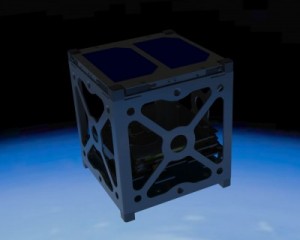 DSI will be developing the detailed requirements for the space and ground segments of the BitSat constellation as well as the preliminary plans for the architecture, operations concept, and spacecraft design.
This research will be published by September, and will be made available to the wider Bitcoin community for evaluation.
“Deep Space is about using space resources – including space itself,” said Rick Tumlinson, DSI Chairman. “BitSat is actually very much in line with our spacecraft development plans, including another private system we will be announcing in a few months using many of the same components and systems. This means much lower costs – very important for the BitSat effort.”
Dunvegan Space Systems is collecting BitSat donations via the Bitcoin address: 1M9MyyPsAak7zRjW4D96pTxDaAEpDDZLR7.
“I believe space is the future, and can also be useful right now,” said Garzik. “I chose DSI for this project based on their proposal, the expertise they have internally and within their network and the fact that they are pushing the cutting edge – just as we are at Dunvegan.”
The main goal of the project is to create “a system that is as open and inexpensive as possible.”
The idea of sending Bitcoins in space has been around since December of last year, when Garzik floated the idea on an Internet forum. But why space? Because Garzik believes the satellite node can fight off a Sybil attack or malicious computers that flood a node on the peer-to-peer network with bad data, something that could allow hackers to spend Bitcoins more than once.
Garzik doesn’t see funding as the biggest hurdle, but technical and bureaucratic elements like figuring out the radio frequency to be used by the space nodes, structuring the organization that will launch the satellite, and navigating international space regulations will all cause some major headaches.
Support our mission to keep content open and free by engaging with theCUBE community. Join theCUBE’s Alumni Trust Network, where technology leaders connect, share intelligence and create opportunities.
Founded by tech visionaries John Furrier and Dave Vellante, SiliconANGLE Media has built a dynamic ecosystem of industry-leading digital media brands that reach 15+ million elite tech professionals. Our new proprietary theCUBE AI Video Cloud is breaking ground in audience interaction, leveraging theCUBEai.com neural network to help technology companies make data-driven decisions and stay at the forefront of industry conversations.




