







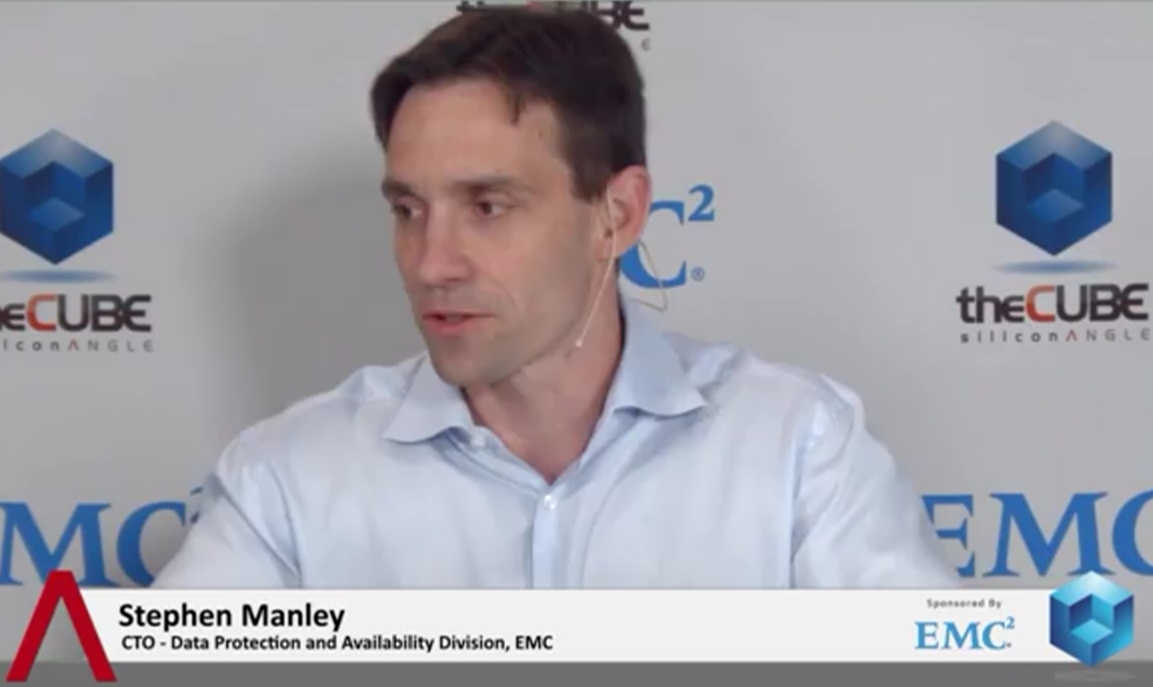
In the early days of data protection and recovery, most data was backed up to tape. The role of data at that point was as a backup in case you lost access to the data you worked with on a daily basis. Fortunately, the backup market as a whole is evolving, according to Steve Manley, CTO of the Data Protection and Availability Group at EMC. Manley recently sat down with Dave Vellante and Steve Kenniston of theCUBE at EMC World 2014.
When asked about the changes taking place regarding how companies deal with data, Manley said that, for the most part, many companies are transitioning to disk as opposed to using tape for their storage needs. The vision at EMC is that, not only does it want to replace tape, but backup as a whole. This allows data to take a more crucial role in disaster and operational recovery. The size of the market has increased in the past few years, due primarily to doing more with disk than tape was ever able to do.
Manley also touched on the changing role of the backup administrator. Before recent innovations in data storage, the backup admin pretty much performed the same task day after day. But that role is changing. The implementation of VMware and the integration of various applications with Oracle, SAP, and SEQUEL allows the backup team to focus on higher levels of service to the customer. This includes the SAP admin.
“First and foremost, as we tend to go through these things we look and say, ‘I want to enable the SAP admin to have as much control over their backup and recovery as possible,’” Manley explained. “Again, saving that one phone call, that one trouble ticket to the backup team, is a win.”
When asked what EMC customers had to say about the changes to data storage and protection, Manley responded, “I had a customer, it was one of those meetings where we were talking about, ‘Hey, look we’re going to replicate this number of copies, and we we’re going to get your data there; it’s going to be really efficient.’ And the first thing the customer said to me was, ‘If you don’t have some sort of catalog that helps me understand what is inside those copies, all you’ve made is a really shiny, fancy bucket of bits. Nothing against buckets, but if you can’t tell me what the heck is actually going on, I’m not really willing to pay that much for the bucket.’”
The discovery here was that the customer just doesn’t want data stored “somewhere,” they also want a service that helps them manage their data.
“When you get to that, then you’ve got something,” Manley concluded.
Support our mission to keep content open and free by engaging with theCUBE community. Join theCUBE’s Alumni Trust Network, where technology leaders connect, share intelligence and create opportunities.
Founded by tech visionaries John Furrier and Dave Vellante, SiliconANGLE Media has built a dynamic ecosystem of industry-leading digital media brands that reach 15+ million elite tech professionals. Our new proprietary theCUBE AI Video Cloud is breaking ground in audience interaction, leveraging theCUBEai.com neural network to help technology companies make data-driven decisions and stay at the forefront of industry conversations.




