







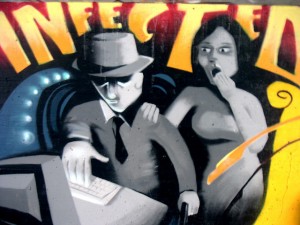
 Shedding light on the dark world of spamming, sketchy online pharmacies and the shady people behind devastating online account hacks, cyber-security expert Brian Krebs recently authored a new book entitled “Spam Nation”.
The book details how a single hacked account can have a domino effect, leveraging that account’s contacts to duping more people. A message to these contacts often contains a sappy but untruthful tale of being stranded in a foreign country, requesting monetary help in order to return home.
“What I find is that there are people who order from spam, and there are people who engage in risky activities online that turn their systems into the tools of spammers. Usually that comes as a result of a little apathy by the computer user, and this is something that I spent a lot of time unfortunately trying to educate my family and friends about. People will come to me like, ‘I don’t know what happened. My computer’s all infected. This stuff is hard. Why do I have to care?’” Krebs stated.
He explained that people need to care about protecting their online lives and it shouldn’t be someone’s problem to protect it. Though he agrees that software-makers could be held more accountable, users themselves should be responsible.
“[I]f you’re not part of the solution, you’re part of the problem,” Krebs added.
To educate people about online scam tactics and to help them identify and thwart threats, Krebs offers some basic tips on how you can keep your online life safe from prying eyes.
.
Paraphrases for passwords
Use passphrases instead of simple passwords. It can be the first sentence from your favorite book, a line from your favorite song, or a phrase that only makes sense to you.
.
Add a deadbolt lock
Like adding a deadbolt lock as a secondary way to secure a door, your online services should have two-factor authentication. Many services such as Facebook Inc. and Twitter Inc. offer two-factor authentication which requires a code sent to your mobile phone so you can continue logging into your account when using a different device. Learn more about two-factor authentication here.
.
Don’t take candy from strangers
If a site offers you a free software to install, don’t install it. There’s a good chance that the software is laced with malware. If you are looking for a software to install, take time to learn more about the software before installing it.
.
Update software
Don’t forget to update. Anything you install on your computer needs to be updated. Software isn’t flawless and the developers are continuously discovering and fix bugs, so keeping your programs updated to ensure these vulnerabilities cannot be exploited.
.
Trash unused software
Remove unused software. Aside from freeing up space on your computer, you no longer have to worry about updating the software.
Support our mission to keep content open and free by engaging with theCUBE community. Join theCUBE’s Alumni Trust Network, where technology leaders connect, share intelligence and create opportunities.
Founded by tech visionaries John Furrier and Dave Vellante, SiliconANGLE Media has built a dynamic ecosystem of industry-leading digital media brands that reach 15+ million elite tech professionals. Our new proprietary theCUBE AI Video Cloud is breaking ground in audience interaction, leveraging theCUBEai.com neural network to help technology companies make data-driven decisions and stay at the forefront of industry conversations.




