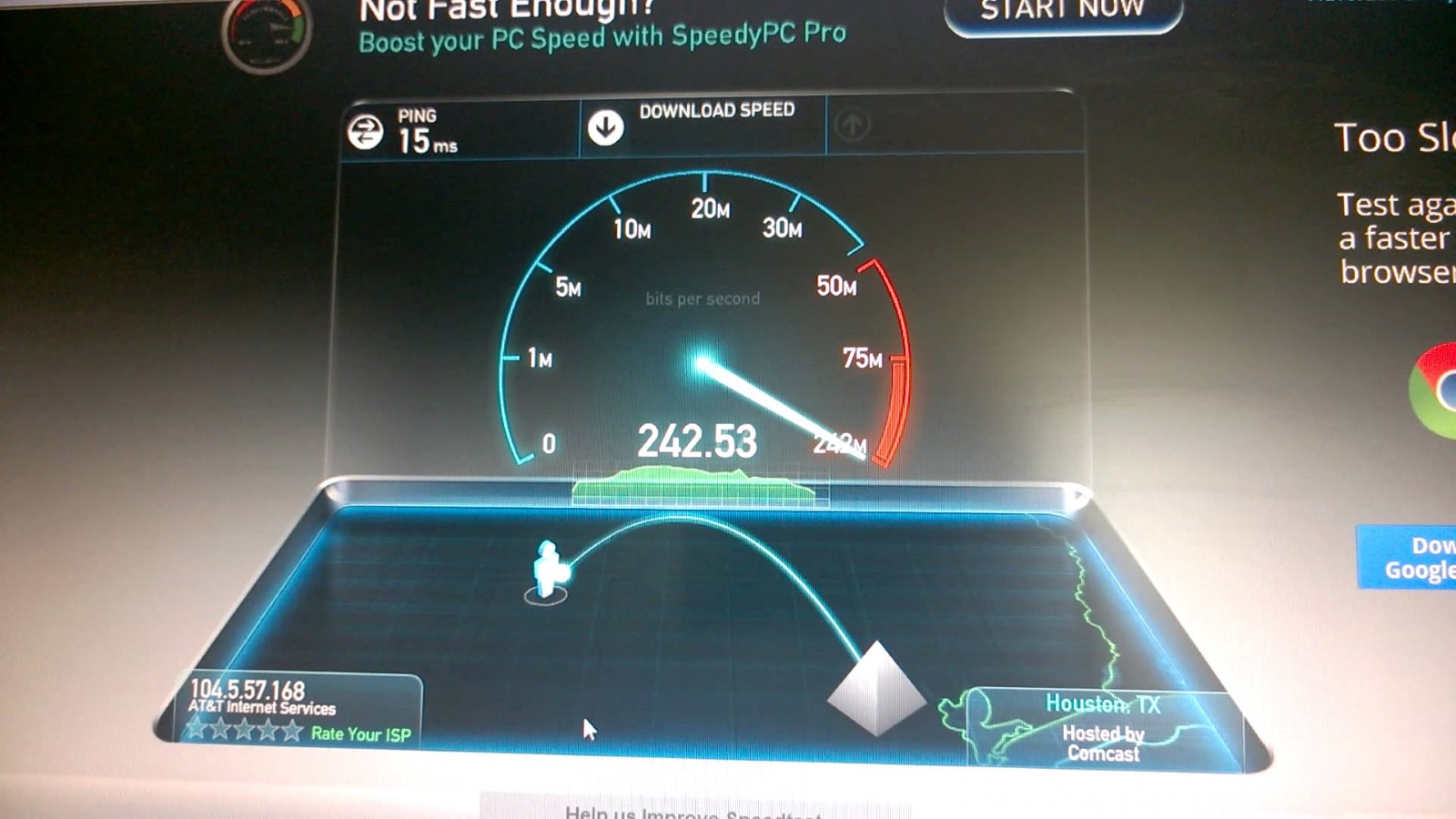








On Thursday, the Federal Communications Commission (FCC) revised the benchmark for what it defines as broadband when it concerns how many Americans have access to high-speed Internet connections. The new definition states that, in order to be classified as broadband, an Internet connection must provide speeds of 25 megabits per second (Mbps) and 3 Mbps for download and upload connections respectively. This is more than six times faster than the old definition of 4 Mbps download speed and 1 Mbps upload speed; last revised in 2010.
According to the FCC the revised definition reflects advances in technology, market offerings by broadband providers and consumer demand.
Passed by three votes to two, the move, proposed earlier this month by FCC Chairman Tom Wheeler, comes as no surprise. Under mandate from Congress, the FCC is charged with determining whether broadband is being deployed to all Americans in a reasonable and timely fashion. The latest report from the FCC (PDF download link) found that this is not the case, especially in rural areas, on Tribal lands and in U.S. territories.
A 2014 “State of the Internet” report by networking company Akamai Technologies shows that the U.S. ranks 14th worldwide for broadband speed, with an average connection speed of 11.4 Mbps.
Based on the revised minimum speed requirement for broadband, the FCC found the following:
Not everyone has welcomed the move by the FCC. “Instead of an accurate assessment of America’s broadband marketplace and the needs and uses of consumers, the FCC action is industrial policy that is not faithful to Congress’ direction in Section 706 [of the Telecommunications Act of 1996] to assess the market, but a clear effort to justify and expand the bounds of the FCC’s own authority,” the National Cable & Telecommunications Association said in response.
It remains to be seen whether the FCC ruling will have any effect on actual Internet speeds being delivered in the near future, since the revised definition has no regulatory effect on offerings from service providers.
Support our mission to keep content open and free by engaging with theCUBE community. Join theCUBE’s Alumni Trust Network, where technology leaders connect, share intelligence and create opportunities.
Founded by tech visionaries John Furrier and Dave Vellante, SiliconANGLE Media has built a dynamic ecosystem of industry-leading digital media brands that reach 15+ million elite tech professionals. Our new proprietary theCUBE AI Video Cloud is breaking ground in audience interaction, leveraging theCUBEai.com neural network to help technology companies make data-driven decisions and stay at the forefront of industry conversations.





