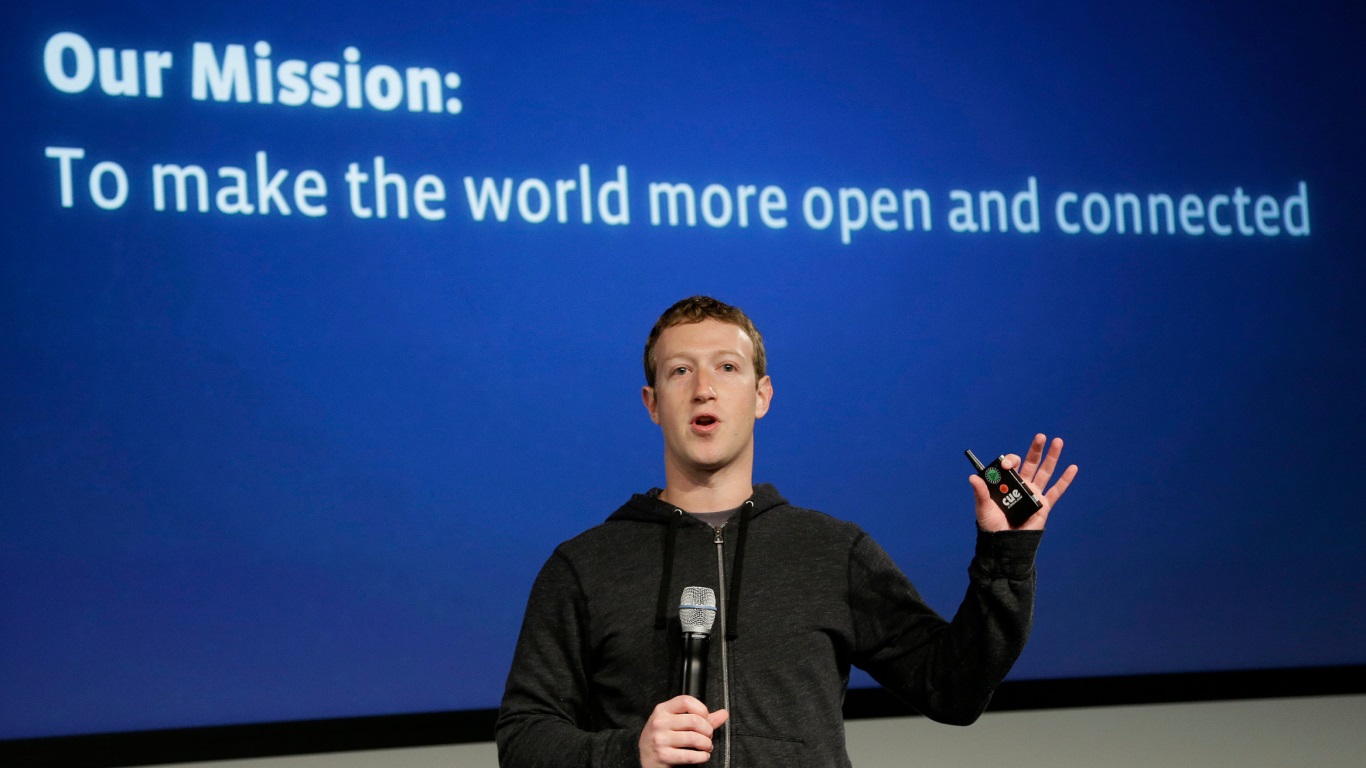







 It is no secret that India has enormous potential as an emerging market, and as the fastest growing economy in the world, western companies are scrambling to find a foothold in the subcontinent. Earlier this year, Twitter Inc. purchased Indian startup Zipdial to deliver its services to users without access to reliable mobile internet, and now Facebook Inc. has taken the plunge into India by introducing its Internet.org program to the country.
Internet.org is a non-profit organization spearheaded by Facebook in conjunction with several large technology companies and telecoms such as Microsoft, Ericsson, and Qualcomm. The stated goal of Internet.org is to make “affordable internet access available to the two thirds of the world not yet connected.”
“Today, Facebook and Reliance Communications are making the internet available to millions of people in India through the launch of the Internet.org app and free basic services,” Internet.org wrote on its official blog. “This is the first time the Internet.org app will be available in the region. Reliance customers in six Indian states (Tamil Nadu, Mahararashtra, Andhra Pradesh, Gujarat, Kerala, and Telangana) will now have access to more than three dozen services ranging from news, maternal health, travel, local jobs, sports, communication, and local government information.”
Internet.org’s app uses extremely pared down tools that can run on low-end hardware with slow connections. This provides users access to basic internet functionality at an extremely low cost.
The app includes nearly 40 different utilities, including tools for news, parenting and health tips, music, and – of course – Facebook and Facebook Messenger.
A recent article by Quartz found multiple studies that showed that a number of people in several developing countries responded that they used Facebook but not the internet, not realising that they were, in fact, accessing Facebook through the internet. Quartz conducted its own small scale surveys and found that around 11 percent of Indonesians said they used Facebook but not the internet.
Because of Facebook’s efforts to introduce its products to developing nations at the lowest cost possible, both in terms of money and system requirements, Facebook is often one of the only applications people in those countries can access, giving the social network an effective monopoly on the way people communicate.
While Quartz admits that its sample size was rather small, the numbers do pose an interesting question: Is Internet.org better for its users or better for Facebook?
Support our mission to keep content open and free by engaging with theCUBE community. Join theCUBE’s Alumni Trust Network, where technology leaders connect, share intelligence and create opportunities.
Founded by tech visionaries John Furrier and Dave Vellante, SiliconANGLE Media has built a dynamic ecosystem of industry-leading digital media brands that reach 15+ million elite tech professionals. Our new proprietary theCUBE AI Video Cloud is breaking ground in audience interaction, leveraging theCUBEai.com neural network to help technology companies make data-driven decisions and stay at the forefront of industry conversations.





