






 One of the greatest challenges facing developers of Virtual Reality programs is the tendency for people using their devices to occasionally become violently ill. At a session during Game Developers Conference 2015 in San Francisco, video game legend and Oculus VR Inc CTO John Carmack spoke about the concern he and the team at Oculus had about releasing a product too soon.
Carmack said, “The nightmare scenario was [customers] go out there, people like the demo, they buy them, they take them home, and then they start throwing up. They start having these horrible experiences, and they return them all in droves and we’re tagged as the product with an 80 percent return rate.”
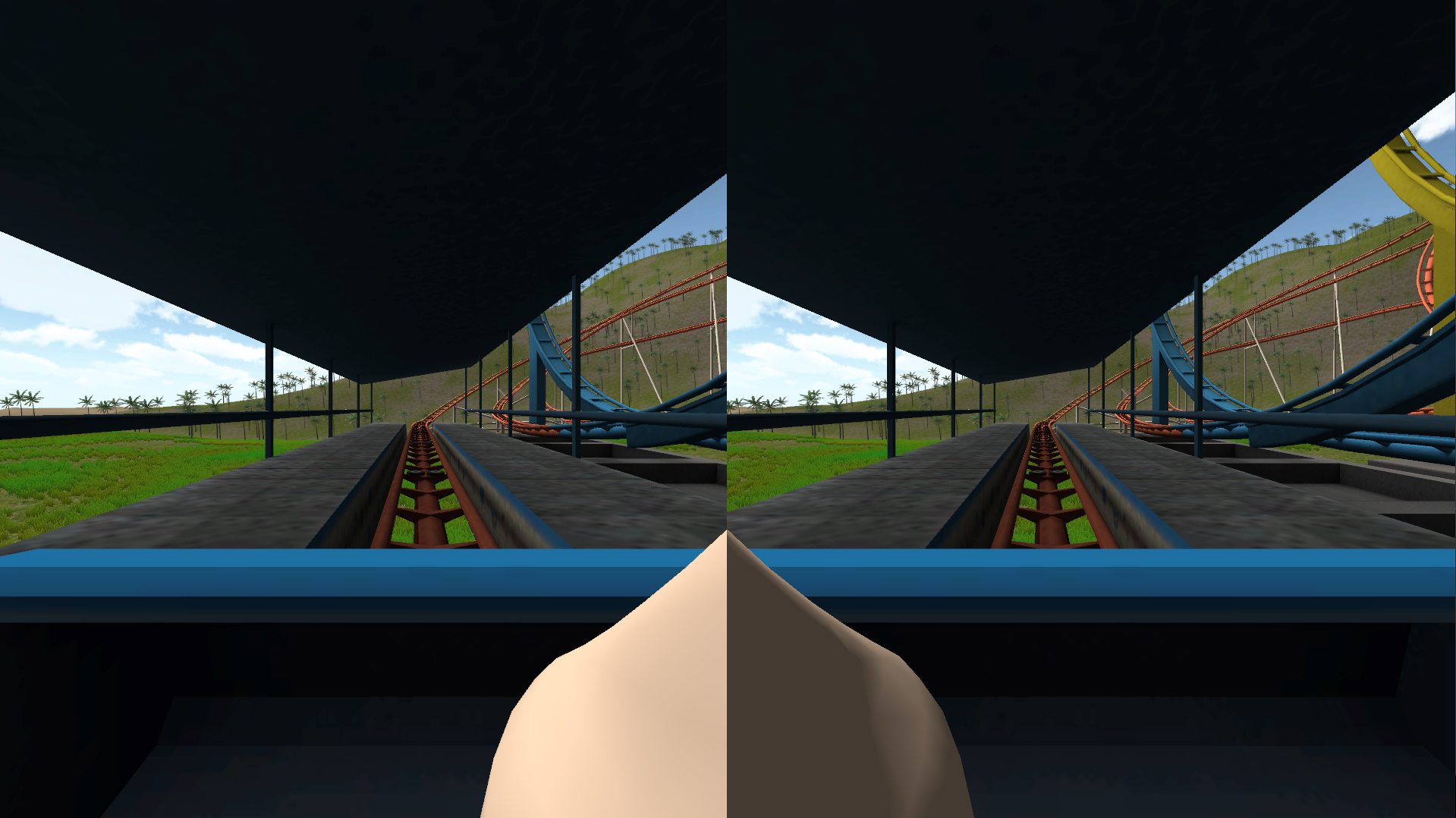
A team at Purdue University may have discovered a simple, if a little strange, solution to this problem: Add a virtual nose to the VR display.
“Simulator sickness is very common,” said David Whittinghill, assistant professor of Computer Graphics Technology at Purdue. “The problem is your perceptual system does not like it when the motion of your body and your visual system are out of synch. So if you see motion in your field of view you expect to be moving, and if you have motion in your eyes without motion in your vestibular system you get sick.”
Whittinghill explained that fixed reference points in a simulator, such as the frame of a cockpit, can reduce feelings of motion sickness, but since not every game could use a cockpit, an undergrad student named Bradley Ziegler suggested the idea of a virtual nose instead.
“It was a stroke of genius,” Whittinghill said. “You are constantly seeing your own nose. You tune it out, but it’s still there, perhaps giving you a frame of reference to help ground you.”
The research team humorously refers to the feature as “nasum virtualis,” and they were able to show a strong correlation between its use and a reduction in simulator sickness. In one test simulation set in a Tuscan villa, participants with a virtual nose were able to play and average of 94.2 seconds longer without feeling sick.
“Our long-term goal is to create a fully predictive model of simulator sickness that will allow us to predict, given a specific set of perceptual and individual inputs, what level of simulator sickness one can expect,” Whittinghill said.
Image credit: Purdue University
Support our mission to keep content open and free by engaging with theCUBE community. Join theCUBE’s Alumni Trust Network, where technology leaders connect, share intelligence and create opportunities.
Founded by tech visionaries John Furrier and Dave Vellante, SiliconANGLE Media has built a dynamic ecosystem of industry-leading digital media brands that reach 15+ million elite tech professionals. Our new proprietary theCUBE AI Video Cloud is breaking ground in audience interaction, leveraging theCUBEai.com neural network to help technology companies make data-driven decisions and stay at the forefront of industry conversations.





