







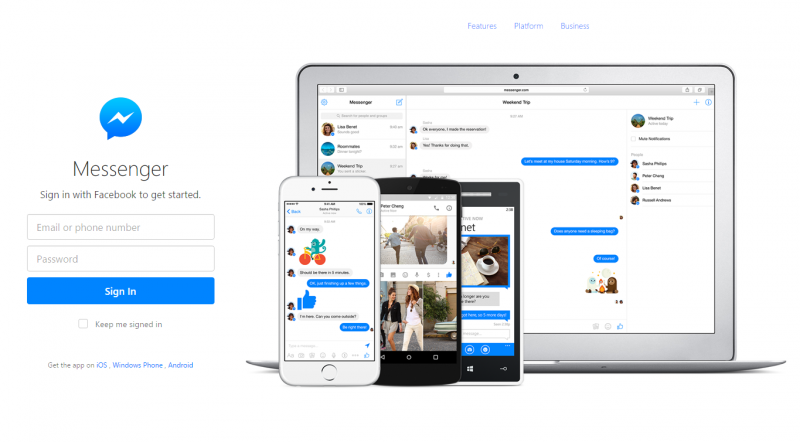
 Facebook Inc has taken another step forward in its long term plan of spinning out Messenger into its own platform. Today, the social network announced the release of a standalone Messenger client for web browsers, which provides a cleaner, more streamlined chat experience free of the main site’s plethora of alerts and game invites.
“Today, we’re launching Messenger for web browsers – a standalone web chat product accessible via Messenger.com,” a Facebook spokesperson told VentureBeat. “Once logged in, people can dive directly into a dedicated desktop messaging experience, keeping their conversations going and picking up where they left off.”
If you are already logged in to Facebook on your web browser, you can simply visit the new Messenger site and click “Continue as <your name>.” Otherwise, you can access the site using the same email address or phone number.
The new direction for Messenger is part of Facebook’s plan to turn the service into its own app development and media platform, which the company outlined at its recent F8 conference. For mobile, this means that Messenger will act as Facebook’s own app platform separate from iTunes or Google Play, but so far it is unclear where the browser client fits in with this plan.
The new Messenger web client allows user to chat with their Facebook friends with an interface that is not very different from the core site’s semi-obscure “View Full Conversation” feature. It includes a search feature to find conversations, as well as the usual options to post emote stickers or attach files.
While the client is a bit sparse on features at the moment, the extra screen real estate and separation from the core Facebook site gives Messenger room grow into its own entity with new features and uses. An obvious candidate would be a bigger focus on video chat, positioning Messenger to better compete with the likes of Google Hangouts and Skype.
Facebook still lets users chat through the main site as well, and a spokesperson for the social network claims that the site will not alienate users by arbitrarily forcing them to use a separate app to chat with their friends. Not again, anyway. For now.
Support our mission to keep content open and free by engaging with theCUBE community. Join theCUBE’s Alumni Trust Network, where technology leaders connect, share intelligence and create opportunities.
Founded by tech visionaries John Furrier and Dave Vellante, SiliconANGLE Media has built a dynamic ecosystem of industry-leading digital media brands that reach 15+ million elite tech professionals. Our new proprietary theCUBE AI Video Cloud is breaking ground in audience interaction, leveraging theCUBEai.com neural network to help technology companies make data-driven decisions and stay at the forefront of industry conversations.




