 WIKIBON
WIKIBON
WIKIBON






WIKIBON

Data management emerged as an unexpected highlight of Microsoft’s annual developer event this week alongside augmented reality and mobile devices with the introduction of new services meant to provide a convenient way of parking large amounts of information in the public cloud. The most significant of the additions is a distributed file system promising to help organizations accomplish that at petabyte scale.
The Azure Data Lake is a implementation of Hadoop that has been modified to run on the company’s infrastructure without requiring the end-user to sort out complex logistical details such as ensuring their data remains available in the event of an outage. That’s the same pitch that Amazon is making for the competing cloud-based file system it introduced just a few weeks ago, with one major exception.
Microsoft says that its service is compatible with on-premise Hadoop installations out-of-the-box, which can potentially make moving information back and forth much easier than between two completely different systems. That reflects a focus on hybrid use cases that has become a hallmark of the company’s cloud strategy under CEO Satya Nadella.
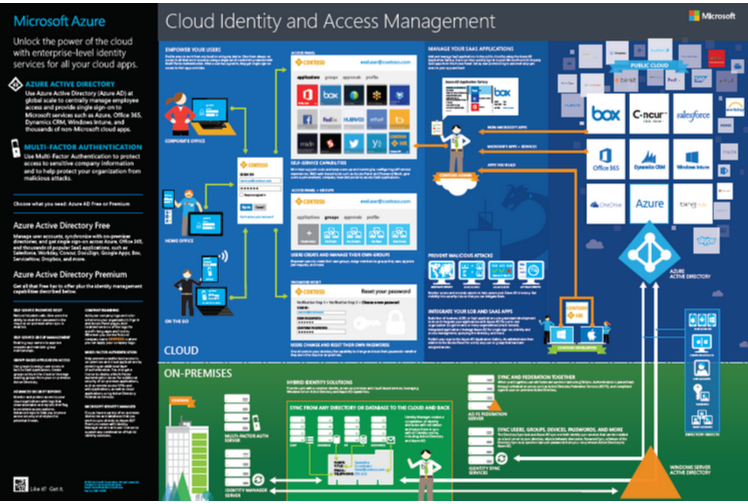
Redmond is trying to draw upon its existing presence on the corporate network as part of that effort in a bid to offset – or at least mitigate – Amazon’s lead in the public cloud, where its infrastructure-as-a-service platform is generating more than ten times the revenue of Azure. To that end, the new service plugs into Active Directory to let administrators use existing log-in procedures instead of having to re-create authorizations from scratch for every user. It’s also compatible with Microsoft’s data processing software.
That includes the statistical modeling language obtained through its acquisition of Revolution Analytics Inc. earlier this year. The tecnology is specifically designed to help manipulate the kind of large unstructured datasets that the file system targets but poses a steep entry barrier for organizations without a mathematician on hand, which Microsoft hopes to accommodate with a new warehousing service.
The aptly-named Azure SQL Data Warehouse enables users to take advantage of the simplified configuration and scalability offered by its Hadoop-based counterpart through a familiar SQL interface at the expense of limiting analytics by a relational schema. It’s an answer to Amazon’s Redshift service that likewise attempts to exploit Microsoft’s external advantages, particularly the popularity of its business intelligence software among business analysts, to level the playing field in the public cloud.
But that is not to say the company has forgotten about its other audiences. Operations professionals also got a boost as part of the update in the form of a new pooling capability for the existing database services on Azure that provides the ability to provision a fixed amount of resources among multiple instances. That offers a much more convenient alternative to individually managing the capacity requirements of each, particularly in larger enterprise environments.
Microsoft is also courting organizations with improved encryption ported from the on-premise version of its relational database that ensures hackers can’t read data in its raw form even if they somehow obtain access to the disk on which it’s stored. Even though such a scenario is highly unlikely, addressing that risk will make it easier for customers across heavily regulated industries, such as healthcare and banking, to meet compliance requirements, putting Azure in a that much stronger position against Amazon Web Services.
Image via Microsoft
Support our mission to keep content open and free by engaging with theCUBE community. Join theCUBE’s Alumni Trust Network, where technology leaders connect, share intelligence and create opportunities.
Founded by tech visionaries John Furrier and Dave Vellante, SiliconANGLE Media has built a dynamic ecosystem of industry-leading digital media brands that reach 15+ million elite tech professionals. Our new proprietary theCUBE AI Video Cloud is breaking ground in audience interaction, leveraging theCUBEai.com neural network to help technology companies make data-driven decisions and stay at the forefront of industry conversations.





