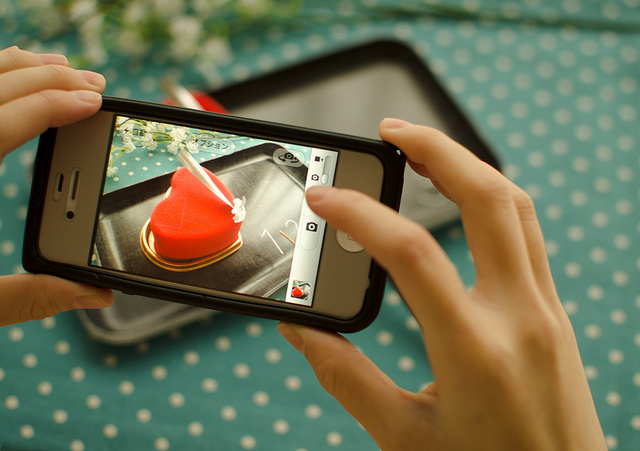







Do you like to post food pictures to Instagram? keen on artificial intelligence? worried about your waist line? then Google, Inc.’s new project might be for you.
Demoed at Boston’s Rework Deep Learning Summit last week, Im2Calorie is reported to analyse food photographs on Instagram for their calorie count.
According to Popular Science, the platform is more than simply looking at an image and matching say a slice of Hawaiian pizza to what a standard slice of Hawaiian pizza is:
Like many deep learning applications, it marries visual analysis—in this case, determining the depth of each pixel in an image—with pattern recognition. Im2Calories can draw connections between what a given piece of food looks like, and vast amounts of available caloric data.
The results aren’t perfect at this stage but will improve over time, however that would appear to be beside the point as the ultimate aim may not be a consumer-facing app, but one with science and public health applications
“Ok fine, maybe we get the calories off by 20 percent. It doesn’t matter.” Google research scientist Kevin Murphy said. “We’re going to average over a week or a month or a year. And now we can start to potentially join information from multiple people and start to do population level statistics. I have colleagues in epidemiology and public health, and they really want this stuff.”
The successful application of artificial intelligence in the project will also have utility outside of it, such as new Google services that apply the lessons learned in other areas.
“If we can do this for food, that’s just the killer app,” Murphy added. “Suppose we did street scene analysis…we want to do things like localize cars, count the cars, get attributes of the cars, which way are they facing. Then we can do things like traffic scene analysis, predict where the most likely parking spot is. And since this is all learned from data, the technology is the same, you just change the data.”
There was no indication whether the demonstration will ever make its way to a consumer app, but it certainly is an interesting insight into some of the future technologies we could be seeing from Google.
Support our mission to keep content open and free by engaging with theCUBE community. Join theCUBE’s Alumni Trust Network, where technology leaders connect, share intelligence and create opportunities.
Founded by tech visionaries John Furrier and Dave Vellante, SiliconANGLE Media has built a dynamic ecosystem of industry-leading digital media brands that reach 15+ million elite tech professionals. Our new proprietary theCUBE AI Video Cloud is breaking ground in audience interaction, leveraging theCUBEai.com neural network to help technology companies make data-driven decisions and stay at the forefront of industry conversations.





