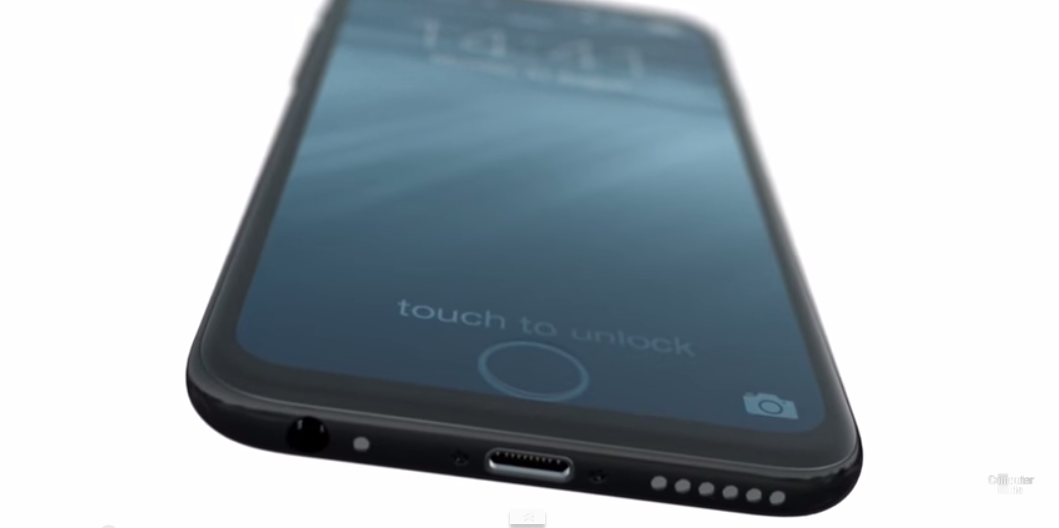







A new rumor surfaced Monday purporting that Apple is developing technology that will allow it to incorporate its fingerprint sensing Touch ID directly into a future iPhone’s touchscreen.
While this is not the first time it’s been suggested, the report from DigiTimes claims that the feature is already under development:
Apple is internally developing touch and display driver integration (TDDI) single-chip solutions for its iPhones, according to sources in Taiwan’s IC design industry.
The TDDI single-chip solutions will also come with integrated fingerprint sensors, said the sources. The integrated design would fit into future iPhone designs – models with ultra-thin and ultra-narrow displays, and with a whole plane design eliminating the Home button.
As noted by various other publications, DigiTimes has a somewhat unreliable track record when it comes to predicting or claiming to know what Apple is up to.
Nevertheless, this time they may be onto something. AppleInsider subsequently reported that “Apple is indeed planning on removing the home button from future iPhone hardware.”
AppleInsider claims its information came from “a source who in the past has correctly shared information about Apple’s future product plans.”
That source warned that replacing the physical home button with a virtual home button is a long-term goal for Apple and that customers should not expect to see this feature on the iPhone until at least 2017.
An Apple patent application published in February described embedding a fingerprint sensor in an iPhone or iPad’s touchscreen to enable fingerprint recognition in one fixed point or at multiple touch points on a screen.
Then, in May, the iPhone maker filed another patent describing how Touch ID could add functionality to the iPhone’s home button.
Rumors have also suggested that the upcoming iPhone 6s could feature Force Touch technology, making it possible to control iPhone functions with finger presses varying in pressure.
As it stands, Touch ID is integrated with the physical home button, but if Apple moves Touch ID to the screen, it is likely the home button will follow and make use of Force Touch to perform current and new functions.
Support our mission to keep content open and free by engaging with theCUBE community. Join theCUBE’s Alumni Trust Network, where technology leaders connect, share intelligence and create opportunities.
Founded by tech visionaries John Furrier and Dave Vellante, SiliconANGLE Media has built a dynamic ecosystem of industry-leading digital media brands that reach 15+ million elite tech professionals. Our new proprietary theCUBE AI Video Cloud is breaking ground in audience interaction, leveraging theCUBEai.com neural network to help technology companies make data-driven decisions and stay at the forefront of industry conversations.





