






Speculation remains of the actual number of Apple Watches sold, but it is fair to say that the smartwatch market is booming. However, there is a portion of the global population that often is left behind when it comes to technology advancements. People with severe visual impairment do not get to enjoy the smartwatch benefits, but this is due to change.
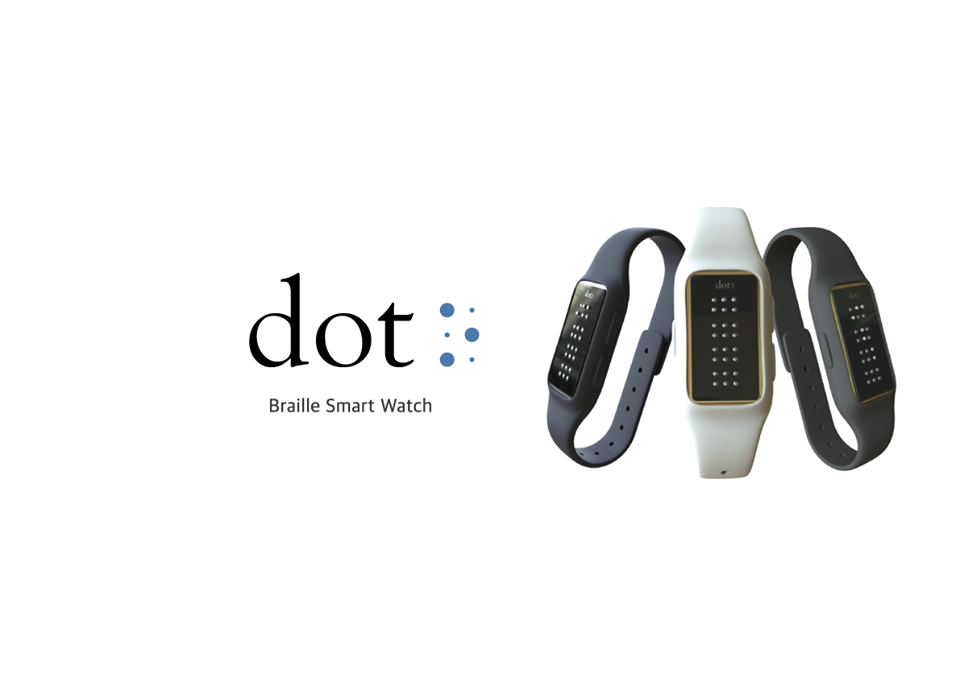
A startup company in South Korea called Dot is looking to disrupt the braille market both at home and internationally with the invention on an active braille smartwatch. The Dot smartwatch looks similar to many of the smartwatches on the market; however, it contains a grid of pins and magnets that is able to display four braille characters at a time. Users are then able to adjust the speed at which the next character will display, ranging from 1 hertz to 100 hertz.
Prior to the Dot smartwatch, visually impaired users had to rely on Siri or other text to voice services to read their messages to them. By linking any Bluetooth device, a Dot smartwatch user can now read their own messages. With a battery life of 10 hours, users will get average use of five days between charging, claims the company.
Eric Kim and Titus Cheng, who were classmates at the University of Washington, founded the company. They received $100,000 from the ActnerLab accelerator and $500,000 from the South Korean government’s Tech Incubator Program for Startup. In their second round of funding, which will begin in August, they hope to reach their goal of $1 million.
However, Kim and the rest of Dot team are also focusing on trying out other applications for its active Braille modules in South Korea, with the installation of modules at train stations and ATMs. The programmable modules can display real-time information offering users access to subway schedules and account balances.
In an interview with Tech in Asia, Kim confirmed that when the Dot smartwatch goes on sale in the U.S. in December it would retail for less than $300, a price tag that is well below the current braille keyboards that cost upwards of thousands of dollars.
See the Dot in action below:
Support our mission to keep content open and free by engaging with theCUBE community. Join theCUBE’s Alumni Trust Network, where technology leaders connect, share intelligence and create opportunities.
Founded by tech visionaries John Furrier and Dave Vellante, SiliconANGLE Media has built a dynamic ecosystem of industry-leading digital media brands that reach 15+ million elite tech professionals. Our new proprietary theCUBE AI Video Cloud is breaking ground in audience interaction, leveraging theCUBEai.com neural network to help technology companies make data-driven decisions and stay at the forefront of industry conversations.





