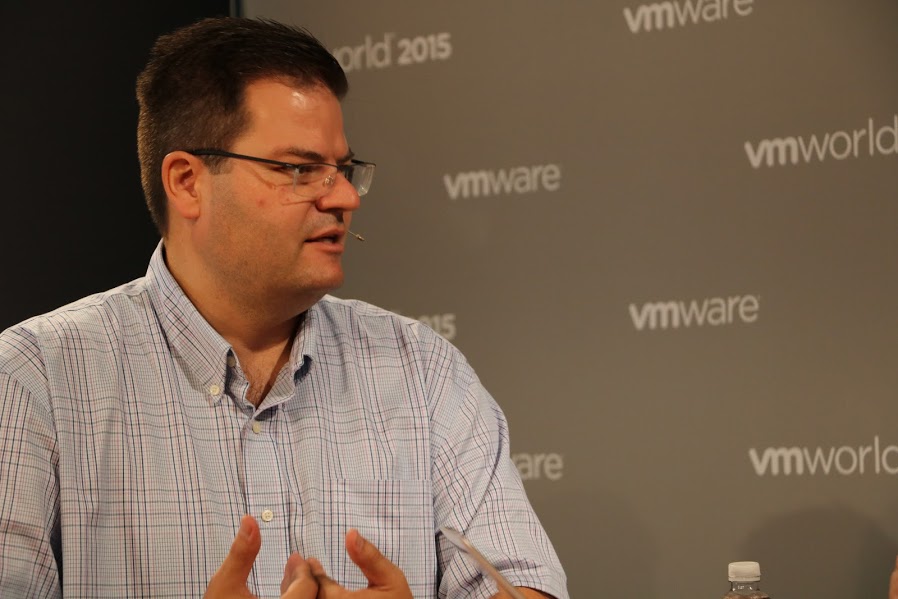







Ninety-five percent virtualized and with more than 1,000 production machines and just over 800 production servers, eHealth Saskatchewan has been though the virtualization journey. But Jay Benson, manager of IT Architecture at eHealth Saskatchewan’s, joined Dave Vellante of theCUBE, from the SiliconANGLE Media team, during VMworld 2015 that this only presents a new set of challenges.
Benson is excited to be at VMworld 2015 to connect and learn from the 23,000+ other IT professionals in attendance. “What I like to do is talk to others that are doing the same things I am trying to do,” he said.
Although Canadian healthcare is very different from the U.S. healthcare system, the drivers are similar: delivering excellence with an eye always on the budget. Benson jokingly refers to his job as “architecting for cost.”
eHealth Saskatchewan is responsible for overseeing medical records for the entire Canadian province of Saskatchewan, which encompasses 13 different provinces and over 1 million residents. Collecting and integrating electronic records that include diagnostics, prescriptions, immunizations, births and deaths requires a lot of data normalization and data stewardship, as each person’s data must be combined to create one record that holds a full history of their “journey though the health system.” Add to this that there is no standardized method, with each of the 13 provinces doing things their own way, and you have a very confused end-user experience.
Benson said that his solution is an EMC and VMware end-user computer platform. Federation is valuable to him because: “We’re all about outcomes, getting to the end of the job, and we expect the stuff to work.” With Federation, he knows that he benefits from each member driving to same outcome, as well as the simplicity of having one help center to avoid finger pointing when things do go wrong.
eHealth Saskatchewan is in the process of moving from a single data center to dual centers for both redundancy and data security reasons. In a province the size of Texas, bringing the desktops closer to the data center will improve the end-user experience by bypassing slow links. Benson’s goal is to provide better service to medical practitioners, and therefore ultimately better medical care to the people of Saskatchewan. As he said it’s about “getting the right data to the right people in the right manner.”
Watch the full interview below, and be sure to check out more of SiliconANGLE and theCUBE’s coverage of VMworld 2015.
Support our mission to keep content open and free by engaging with theCUBE community. Join theCUBE’s Alumni Trust Network, where technology leaders connect, share intelligence and create opportunities.
Founded by tech visionaries John Furrier and Dave Vellante, SiliconANGLE Media has built a dynamic ecosystem of industry-leading digital media brands that reach 15+ million elite tech professionals. Our new proprietary theCUBE AI Video Cloud is breaking ground in audience interaction, leveraging theCUBEai.com neural network to help technology companies make data-driven decisions and stay at the forefront of industry conversations.





