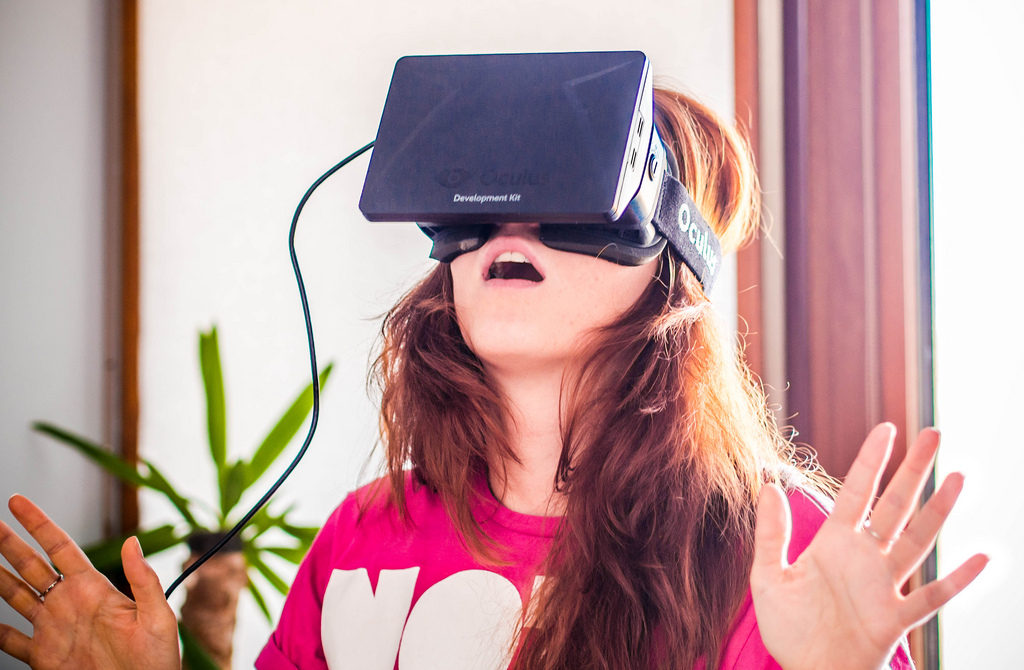







While Oculus Rift may have been the first virtual reality device on everyone’s lips (for this current round of VR hype anyway), it will not be hitting the market before the Valve Corp-developed HTC Vive. In spite of that, however, Oculus creator Palmer Luckey said he is not worried about more competition in the VR space. In fact, he thinks it is a good sign.
“We’re still at the forefront,” Luckey told Eurogamer in a recent interview. “Other people getting into the industry: that’s great. It shows that it’s not just one crazy company that thinks VR is going to take off. It would be a bad sign if other people didn’t think VR was something they should copy and get into. But we’re currently in the best technological position in terms of bringing VR to a lot of people.”
One of the big questions right now about the future of VR devices like Oculus Rift, HTC Vive, PlayStation VR (formerly Project Morpheus) and so on is how much the headsets themselves will cost, and Luckey says that while VR technology may not come cheap, Oculus is not looking to inflate the price more than it needs to be.
“We’re not trying to make a big profit on hardware,” Luckey said. “For us it’s about getting it out there and growing the VR industry, and then we have a lot of VR software that we’ve been investing in that we think people will want to buy, so it’s not a matter of making a profit on hardware alone.”
This is not exactly a new strategy, as many types of hardware, especially in the video game industry, are traditionally sold on razor-thin margins or even at a loss. For example, the original Xbox console has been estimated to have cost Microsoft $125 for each unit sold, and more recently there was some hubbub about how Xbox One might actually turn a profit.
“We’ll announce the price when we launch pre-orders later in the year,” Luckey continued. “We’re selling it as affordably as we possibly can. People are going to get really good value for what they’re paying.”
Support our mission to keep content open and free by engaging with theCUBE community. Join theCUBE’s Alumni Trust Network, where technology leaders connect, share intelligence and create opportunities.
Founded by tech visionaries John Furrier and Dave Vellante, SiliconANGLE Media has built a dynamic ecosystem of industry-leading digital media brands that reach 15+ million elite tech professionals. Our new proprietary theCUBE AI Video Cloud is breaking ground in audience interaction, leveraging theCUBEai.com neural network to help technology companies make data-driven decisions and stay at the forefront of industry conversations.





