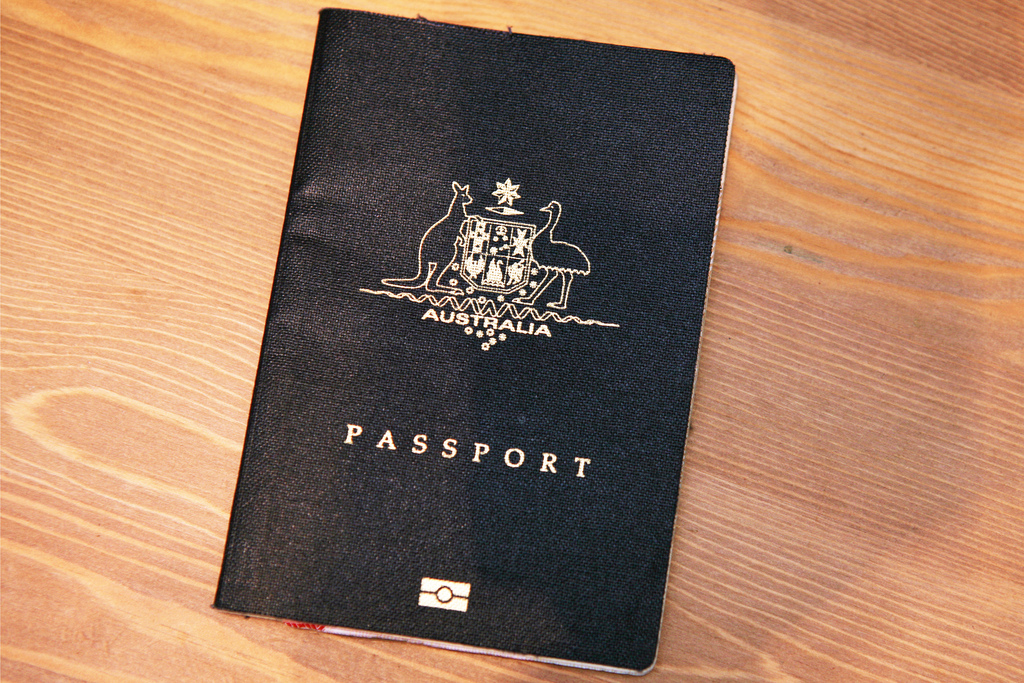







We live in a digital age where our data can cross borders in the blink of an eye, but little has changed when it comes to doing the same in person in a century; to cross most country borders we require a physical passport (the current form first agreed on in 1920). But given the wonder of the digital age, isn’t there a better, more efficient way of doing so?
That’s exactly the proposition the Australian Government will be challenging with a new trial of what is being called a “Cloud Passport.”
The proposal came about from a hackathon called the Ideas Challenge, held by the Australian Department of Foreign Affairs and Trade (DFAT), where of 392 ideas proposed the idea of a Cloud Passport was found to be groundbreaking.
A Cloud Passport would replace a physical passport for international travel and would instead rely on biometric screening at international entry and exit points, with that screening linked back to travel/ passport documentation stored in the cloud.
Logistically it would require all countries to be on the same system for it to be implemented globally, hence why at this stage it is only being proposed as a trial between Australia and New Zealand.
Australia and New Zealand have a very close relationship (New Zealand is often referred to as Australia’s Canada), and citizens between the two countries already are already free to travel and live in each country, but currently still require a passport to cross each other’s borders; under the trial Australian and New Zealand citizens would be free to travel to the other country without the use of a passport but with the biometric scanning at the border.
Although it may seem like a large step to remove a passport from the process, at least with the trial, it would not be a large one as all Australian passports already contain a chip that stores passport data and a citizen’s photograph (often referred to as ePassports) that allow passage through automated border checks at an airport; the current system compares a photograph taken at the airport with the photograph currently stored in the chip embedded in the citizen’s passport to make sure they are one in the same person.
While on paper the idea of a Cloud Passport could be called a brilliant one, there are inherent risks in storing this data on the cloud given we live in an age of what at times appears to be perpetual data breaches.
That said, if the security risks can be overcome we’re long overdue for a better system of crossing borders and presenting as physical passport, and it will interesting to see how the trial plays out, and whether other countries may eventually decide to participate as well.
Support our mission to keep content open and free by engaging with theCUBE community. Join theCUBE’s Alumni Trust Network, where technology leaders connect, share intelligence and create opportunities.
Founded by tech visionaries John Furrier and Dave Vellante, SiliconANGLE Media has built a dynamic ecosystem of industry-leading digital media brands that reach 15+ million elite tech professionals. Our new proprietary theCUBE AI Video Cloud is breaking ground in audience interaction, leveraging theCUBEai.com neural network to help technology companies make data-driven decisions and stay at the forefront of industry conversations.





