






Facebook has come a long way since the days of being a hookup site for college kids. The social network does a lot of other things now too, including groundbreaking artificial intelligence research that focuses on creating computer programs that can intelligently answer questions about text and images.
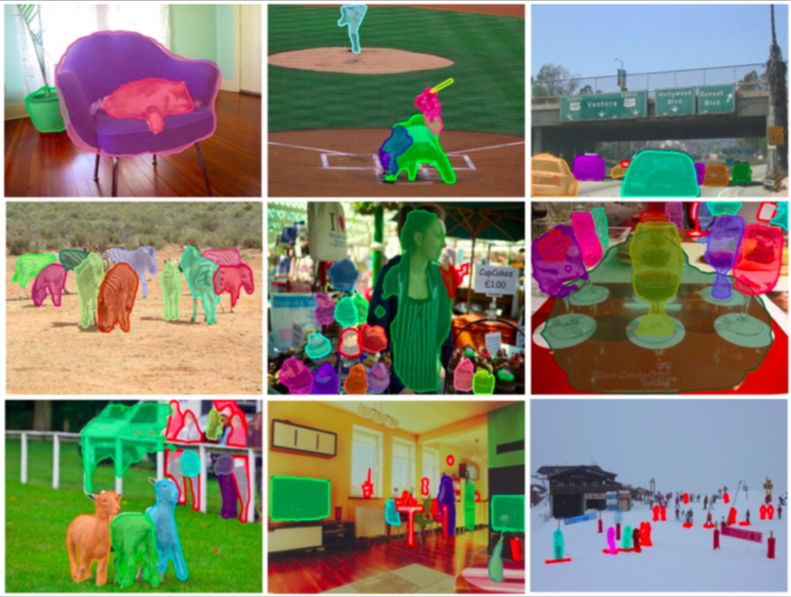
Today, the company revealed that Facebook’s AI Research (FAIR) team has made significant progress on some of its projects, especially when it comes to programs that analyze images.
“Next month FAIR will be presenting a new paper at NIPS, a leading artificial intelligence conference,” Facebook Chief Technology Officer Mike Schroepfer said in an announcement. “In the paper the team details a state-of-the-art system that segments, or distinguishes between, objects in a photo. This new system segments images 30 percent faster, using 10x less training data, than previous industry benchmarks.”
Facebook had previously been working on an AI system called Memory Networks (MemNets) that could answer questions about short texts, and FAIR was recently able to combine MemNets with its image recognition technology to create an AI that can intelligently answer questions about images.
In a video demo of the new system, which FAIR calls Visual Q&A (VQA), Facebook demonstrated that the system was able to correctly recognize that a baby was in the photo, that the picture was taken in the bathroom, and that the baby was having his teeth brushed. While this could certainly be useful for photo tagging features used by Facebook and Instagram, it also could also have major implications for accessibility programs for people with poor vision.
Facebook said that it has also made progress with one of AI’s most notorious challenges: playing the Chinese board game Go. Unlike chess, which was famously conquered by IBM with Deep Blue in 1996, Go is an incredibly difficult game for an AI to play, and there are currently no programs capable of challenging the world’s top players.
Through a combination of machine learning and pattern recognition, Facebook says that its Go-playing robot has taught itself to play as well as other AI-powered systems in just a few months, and it is currently equivalent in skill to “a very strong human player.”
Support our mission to keep content open and free by engaging with theCUBE community. Join theCUBE’s Alumni Trust Network, where technology leaders connect, share intelligence and create opportunities.
Founded by tech visionaries John Furrier and Dave Vellante, SiliconANGLE Media has built a dynamic ecosystem of industry-leading digital media brands that reach 15+ million elite tech professionals. Our new proprietary theCUBE AI Video Cloud is breaking ground in audience interaction, leveraging theCUBEai.com neural network to help technology companies make data-driven decisions and stay at the forefront of industry conversations.





