 WIKIBON
WIKIBON
WIKIBON






WIKIBON

As CEOs watch upstarts leverage software and cloud to disrupt their industries, they are beginning to believe pundits who say that in the new era every company has to become software-driven. But, warns Wikibon Analyst Brian Gracely in “Evolving Organizational Dynamics for Cloud Native Applications,” this is a radical organizational transition that is difficult to pull off.
Companies like Amazon.com, Uber Technologies Inc., Netflix Inc., Airbnb Inc., Square Inc., Esurance Insurance Services Inc., Twitter and Facebook are changing the face of business verticals by eliminating traditional supply chains and intermediaries to provide better service at lower cost. Established international enterprises are redefining their core value propositions. Software and cloud are at the core of those revolutions.
As a result, increasing numbers of companies are reversing the trend toward using off-the-shelf applications and offshoring IT development. They are competing for top software development talent to create their own disruptive technology before they are disrupted.
For these old-line companies, though, disrupting the market starts with disrupting their organization. It isn’t just a matter of creating a DevOps group in IT or fielding an innovative service based on software and cloud. They need to change their entire organization, breaking down silos between IT and business across the company.
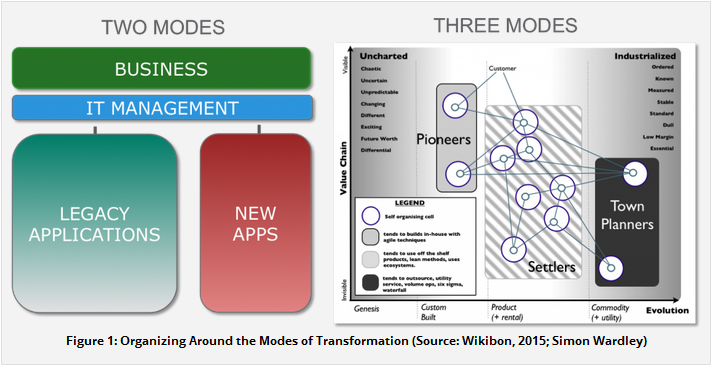
Many companies approach the problem by creating a new team, either internally or as a separate organization with a different mode of organization. This two-mode transformation model often fails either because the new organization is unable to scale or because it’s isolated from the rest of the enterprise. Companies trying to leverage software to remain competitive in their markets, says Gracely, should instead employ a three-mode structure to disseminate the new business approach throughout the enterprise (see graphic above). They need to focus on four core areas:
Companies embarking on this journey should start by studying the lessons from their predecessors who are successfully become cloud-native organizations. They also might want to hire consultants who have experience in transitioning large organizations to software-based businesses.
Successful cloud native transitions follow several core principles:
Companies need to understand the importance of talent and collaboration, Gracely concludes. Those that hire and retain the best software development talent are more likely to excel in driving new value from their businesses.
Support our mission to keep content open and free by engaging with theCUBE community. Join theCUBE’s Alumni Trust Network, where technology leaders connect, share intelligence and create opportunities.
Founded by tech visionaries John Furrier and Dave Vellante, SiliconANGLE Media has built a dynamic ecosystem of industry-leading digital media brands that reach 15+ million elite tech professionals. Our new proprietary theCUBE AI Video Cloud is breaking ground in audience interaction, leveraging theCUBEai.com neural network to help technology companies make data-driven decisions and stay at the forefront of industry conversations.





