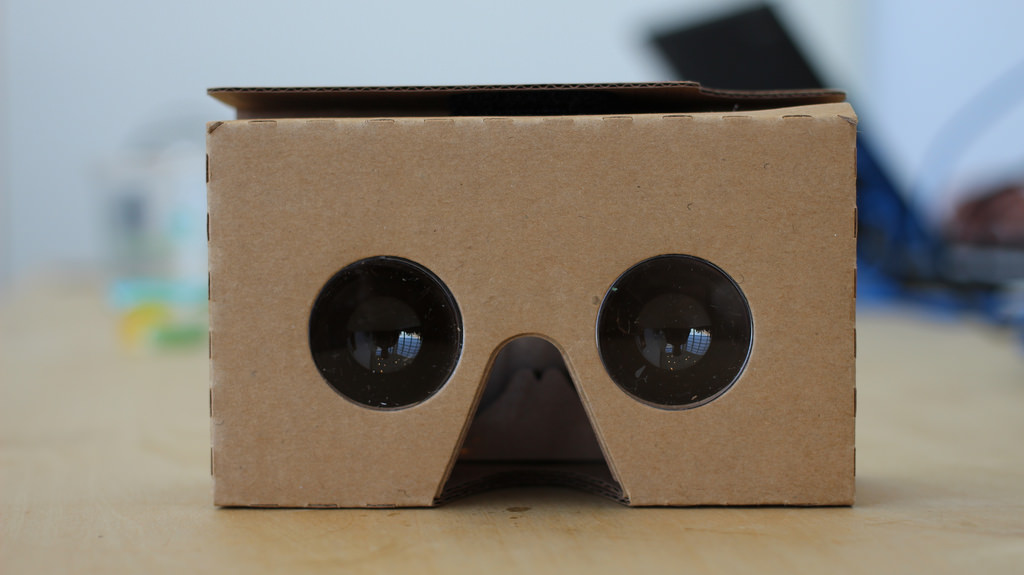







Google’s low-cost virtual reality (VR) platform Google Cardboard just got a little more immersive thanks to new spatial audio capabilities added to its software developer kit (SDK).
While it would be easy to assume that visuals are the most important aspect of creating an immersive VR experience, Google Cardboard product manager Nathan Martz says that audio is equally as important, if not more so.
“An old game developer maxim is that it’s the sound that makes it real,” Martz told Polygon. “If you want to create an immersive experience that runs on your phone, the best way to do that, the most cost-effective way to do that computationally is actually through audio.”
Martz explained that the new SDK will allow developers to better replicate real world sound based on the way human hearing actually works.
“What happens in the real world is if you hear a sound to your left, you don’t just hear it in your left ear, you hear it in your left ear and your right ear with the sound in the right ear being delayed and it sounds a bit different. It hears sounds after they’ve passed through your skull. We can perform that kind of modeling in real time.”
According to Martz, the real accomplishment for Google’s spatial audio technology was in making it run efficiently on a mobile phone.
While Google Cardboard certainly is not as flashy as something like the $599 Oculus Rift, it appeals to a much wider audience due to its low cost and low barrier to entry. Unlike Oculus Rift or HTC Vive, Google Cardboard does not require a top of the line gaming PC.
According to a recent report by analytics firm SuperData Research Inc, 71 percent of the virtual reality install base in 2016 will belong to “light mobile VR” systems like Google Cardboard.
“Consumers will use their smartphones to first explore virtual reality, before committing to the more expensive platforms,” SuperData said in its report.
Google Cardboard will never see jaw dropping eye candy like Eve: Valkyrie, but as many mobile games have already proven, you do not need to be graphically impressive to rake in tens of millions of dollars in revenue.
Support our mission to keep content open and free by engaging with theCUBE community. Join theCUBE’s Alumni Trust Network, where technology leaders connect, share intelligence and create opportunities.
Founded by tech visionaries John Furrier and Dave Vellante, SiliconANGLE Media has built a dynamic ecosystem of industry-leading digital media brands that reach 15+ million elite tech professionals. Our new proprietary theCUBE AI Video Cloud is breaking ground in audience interaction, leveraging theCUBEai.com neural network to help technology companies make data-driven decisions and stay at the forefront of industry conversations.





